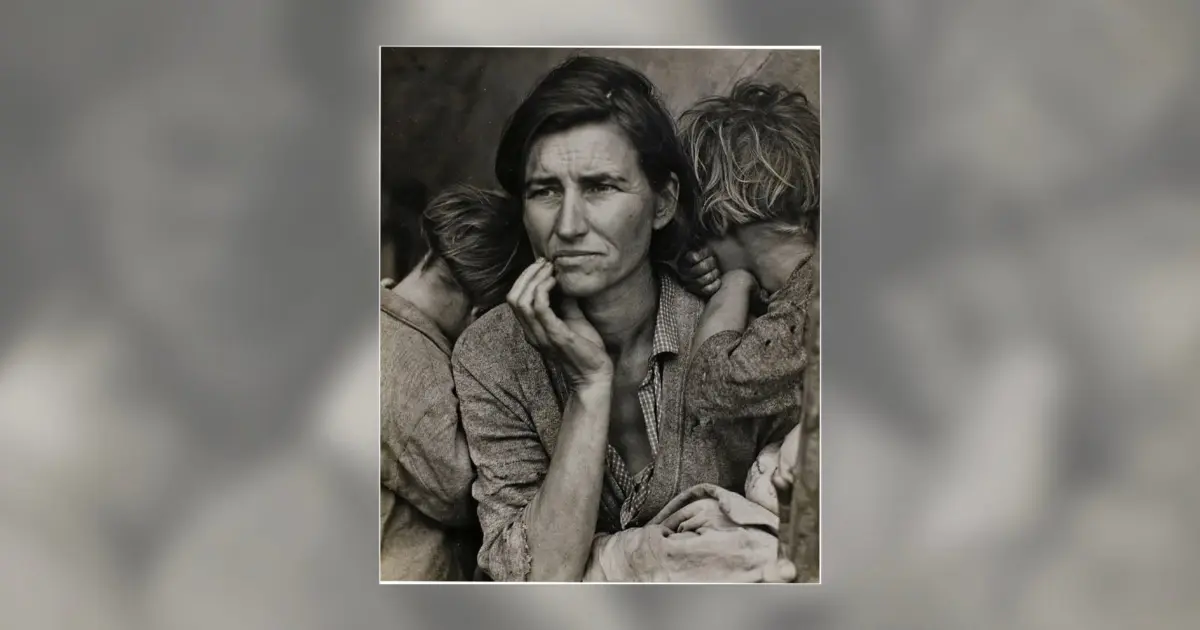
The Sotheby’s prints and photographs auction for October has officially commenced, drawing significant attention from the international art community as two particular lots emerge as the centerpieces of the sale. While the auction features a diverse array of works from various eras and movements, an "exceptionally early" print of Dorothea Lange’s Migrant Mother and a rare, large-format work by Hiroshi Sugimoto have captured the spotlight, not only for their substantial valuations but for their unique places within the history of the photographic medium.
The online auction, which serves as a major event in the autumn art calendar, is anchored by what many historians consider to be one of the most important photographs ever captured on American soil. Dorothea Lange’s Migrant Mother is more than a mere historical record; it is a global icon of human resilience and suffering. Often cited alongside Steve McCurry’s Afghan Girl as one of the two most recognizable portraits in the history of photography, the image of Florence Owens Thompson has become the definitive visual shorthand for the Great Depression. However, the specific print currently offered by Sotheby’s carries a level of historical purity that is rarely seen on the open market.
Lange captured the image in March 1936 while she was working as a field photographer for the Resettlement Administration, a New Deal agency established to provide aid to struggling farmers and migrant workers. The agency would eventually be absorbed into the more famous Farm Security Administration (FSA), but this print dates back to that early, transitional period. According to Sotheby’s, the work was executed in 1936 and was likely printed between 1936 and 1937. This makes it an incredibly rare artifact from the immediate aftermath of the photograph’s creation. Appearing at auction for the first time, the print is expected to command a price between $100,000 and $150,000.
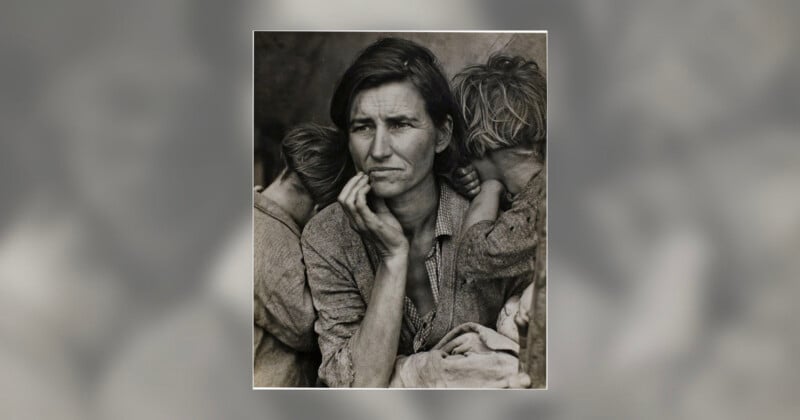
What distinguishes this particular print from later iterations is its raw, unedited state. In subsequent years, as the photograph achieved legendary status, Lange and her editors made various adjustments to the composition for publication and exhibition. Most notably, in later versions, a thumb belonging to Thompson—which was visible in the lower right corner of the original negative—was retouched out to create a cleaner, more focused composition. The Sotheby’s print, however, retains that thumb, serving as a "pre-edit" window into the moment the shutter was pressed. Furthermore, the print features the original credit stamp of the Resettlement Administration, a detail that anchors the physical object to the specific government mission that birthed it.
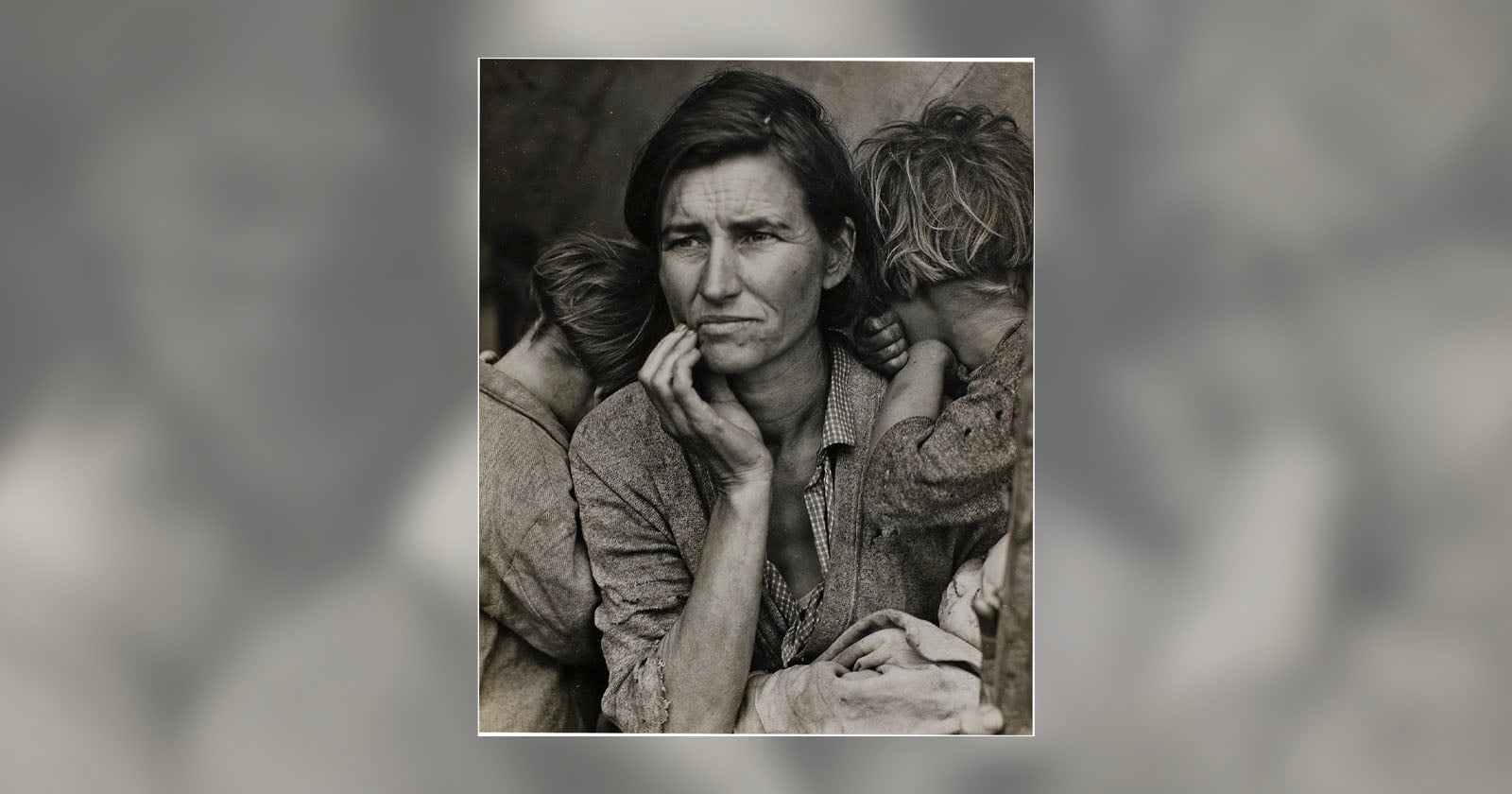
The story behind the photograph is as compelling as the image itself. Lange had spent nearly a month traveling through California, documenting the harrowing conditions of migrant laborers. She was on her way home to Berkeley in March 1936 when she passed a sign for a camp of pea pickers near Nipomo. Although she initially continued driving, a nagging instinct forced her to turn her car around and enter the camp. It was there that she encountered Florence Owens Thompson and her children, who were living in a lean-to tent after the pea crop had frozen, leaving them with no work and no food.
Using her 4×5-inch Graflex camera, Lange worked methodically, moving closer to her subject with each frame. She produced a sequence of six negatives, each one more intimate than the last. The final shot—the one now known as Migrant Mother—captured Thompson with a weathered face, her gaze fixed on a distant, uncertain future, while two of her children lean into her shoulders, their faces turned away as if seeking shelter from the world.
The impact of the image was instantaneous. Within days of Lange’s return, the photographs were published in the San Francisco News. While the most famous shot did not appear in the very first article on March 10, it was featured prominently the following day under the headline, "What Does the ‘New Deal’ Mean to This Mother and Her Child?" The publication sparked an immediate government response, leading to the delivery of 20,000 pounds of food to the starving workers at the Nipomo camp. While Lange could not have known the enduring legacy the photo would leave, it quickly transcended its journalistic origins to become a universal symbol of motherhood and survival.
While Lange’s work represents the pinnacle of 20th-century documentary photography, the second highlight of the Sotheby’s auction offers a starkly different, more conceptual approach to the medium. Hiroshi Sugimoto’s Radio City Music Hall, New York City is a masterwork of technical precision and philosophical depth. The piece is part of Sugimoto’s celebrated Theaters series, a project he began in the 1970s that explores the relationship between time, light, and the cinematic experience.
The concept behind the series is deceptively simple but technically demanding: Sugimoto would enter a movie theater with a large-format camera, open the shutter at the very beginning of a feature film, and close it only when the credits finished rolling. The resulting photograph is a single, long exposure that compresses an entire movie—thousands of individual frames and hours of narrative—into a single, glowing white rectangle.
In the case of Radio City Music Hall, the photograph captures one of the most famous Art Deco venues in the world. The vast, arched interior of the hall is rendered in exquisite detail, illuminated entirely by the reflected light of the movie screen. Because the exposure lasts for the duration of the film, any movement within the theater is blurred into invisibility. The audience, though present during the screening, disappears entirely from the final image, leaving behind a haunting, empty space that feels both hallowed and ghostly.
Sotheby’s notes that this particular print is especially significant due to its rarity and provenance. It is print number one of a strictly limited edition of just five. Its physical presence is also formidable, measuring approximately 47 by 58 3/4 inches, a scale that allows the viewer to feel as though they are standing within the theater itself. Like the Lange print, this work has never before been offered at auction. It is estimated to sell for between $200,000 and $300,000.
The Theaters series is often cited as a meditation on the nature of time. By capturing an entire film in one frame, Sugimoto creates a visual representation of "nothingness" that is actually a "totality." The white screen becomes a void that contains everything, while the surrounding architecture of Radio City Music Hall—the staggered rows of seating and the rhythmic patterns of the Art Deco walls—serves as a frame for this temporal compression. The light that fills the room is the "residual evidence" of the film’s existence, activating the perspective of the photograph and drawing the eye toward the luminous center.
The inclusion of these two works in the same auction provides a fascinating contrast in the history of photography. On one hand, Lange’s Migrant Mother represents the "decisive moment"—the ability of the camera to freeze a split second of human emotion and turn it into a historical monument. On the other hand, Sugimoto’s Radio City Music Hall represents the "accumulated moment," where the camera is used to stretch time beyond the limits of human perception.
Beyond these two headline lots, the Sotheby’s October Prints and Photographs auction includes a wide range of significant works that track the evolution of the medium. From early 20th-century modernist experiments to contemporary conceptual pieces, the sale reflects the enduring strength of the photography market. Collectors are increasingly drawn to prints that offer not just aesthetic beauty, but historical significance and technical rarity.
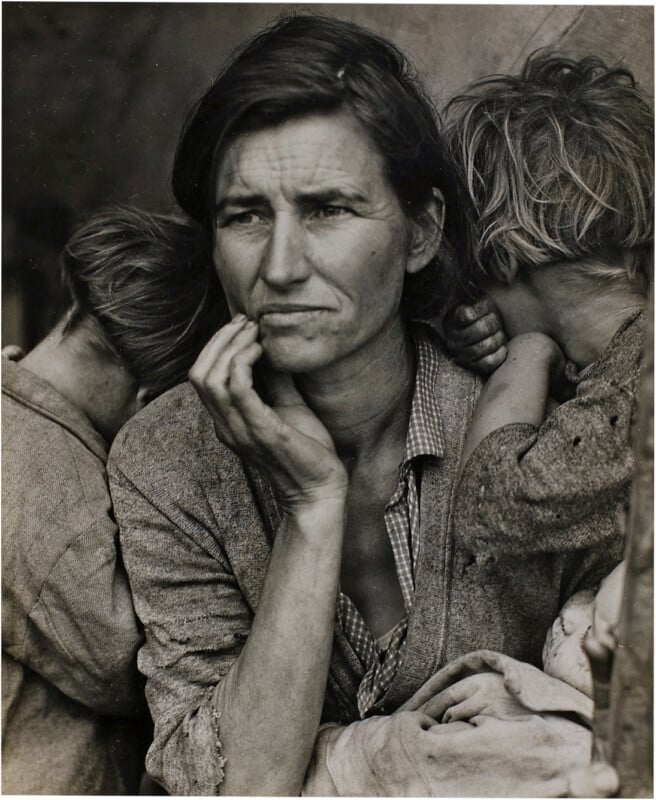
The shift toward online auctions has not dampened the enthusiasm for these physical objects. If anything, the ability for global collectors to view high-resolution scans and detailed provenance reports has expanded the reach of such sales. For a piece like the early Migrant Mother print, the digital format allows historians and collectors to zoom in on the very thumbprint that Lange would later decide to hide, offering a new appreciation for the raw reality of her work.
As the auction continues, the art world will be watching closely to see if these iconic images exceed their estimates. The sale of such rare prints serves as a reminder that while millions of photographs are taken every day in the digital age, a select few possess a power and a history that ensure their value will only grow with time. Whether it is the worried face of a mother in a California migrant camp or the glowing screen of a New York theater, these images continue to speak to the human condition in ways that few other mediums can achieve.