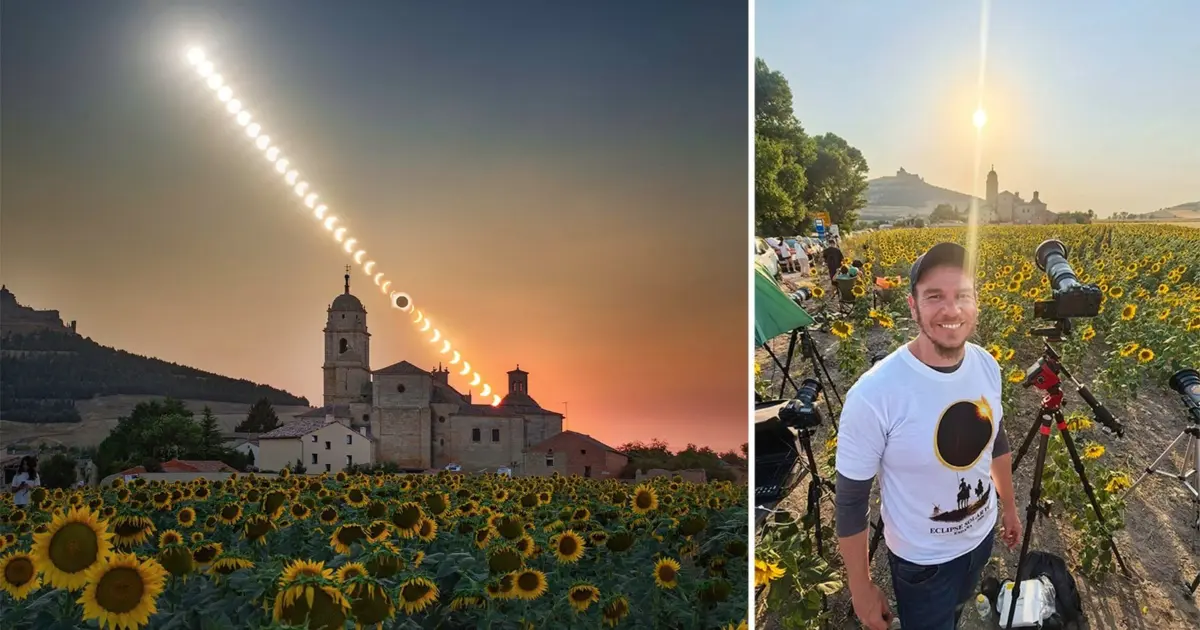
The celestial mechanics of a total solar eclipse are as precise as they are fleeting. For photographers, the event represents the ultimate high-stakes assignment: a rare alignment of the cosmos that offers only a few minutes of opportunity, preceded by months or even years of meticulous preparation. For Brazilian photographer Kiko Fairbairn, the total solar eclipse of August 12, 2026, over northern Spain was the culmination of more than a year of digital scouting, technical rehearsals, and anticipation.
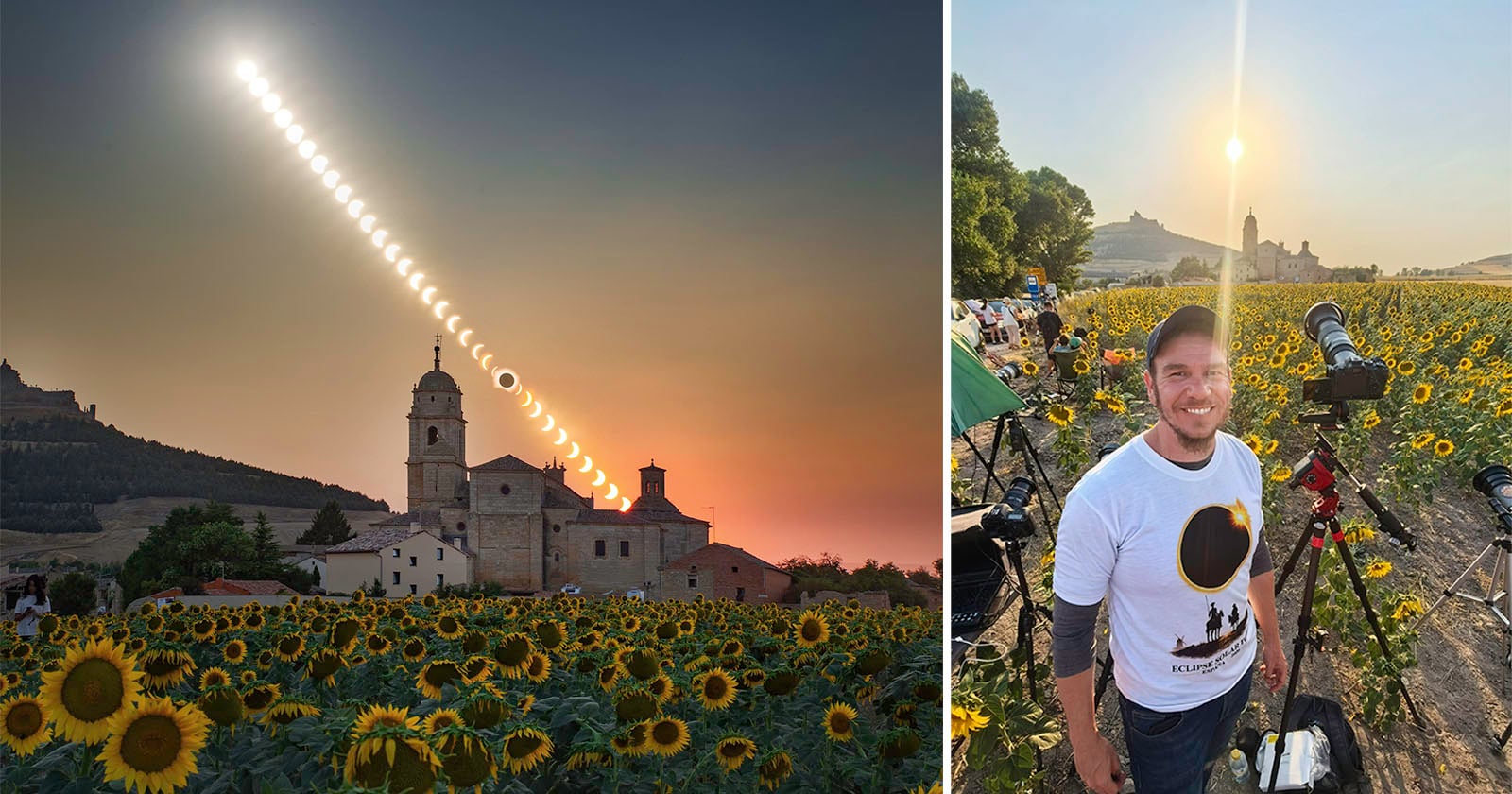
Fairbairn, an award-winning astrophotographer, knew that a successful image required more than just pointing a lens at the sky. It required a narrative. While thousands of people would capture the sun’s corona against a black sky, Fairbairn sought a composition that grounded the astronomical event in the ancient, sun-drenched landscape of the Iberian Peninsula. His journey to the Burgos region was a quest to find the perfect intersection of earthly history and celestial wonder.
The Search for the Perfect Foreground
The planning began thousands of miles away in Brazil, where Fairbairn spent over a year studying maps, weather patterns, and solar trajectories. However, as any seasoned landscape photographer knows, digital maps can only take you so far. The true work began upon his arrival in Spain.
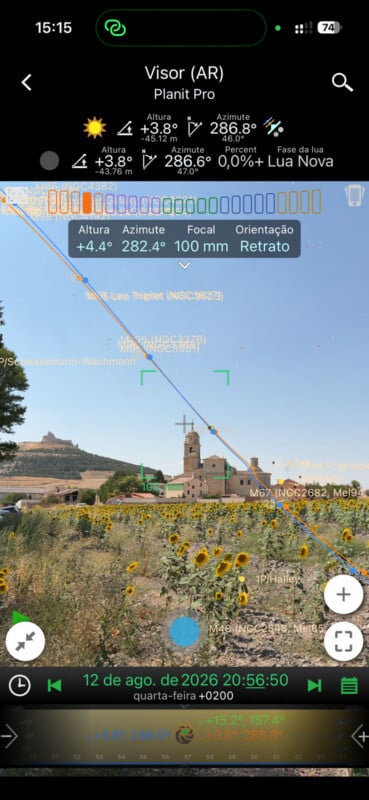
“Once I arrived near Burgos, the real photographic search began,” Fairbairn told PetaPixel. “I spent time scouting the landscape, using planning apps to fine-tune how the path of the eclipse would align with the terrain and the elements I was finding in the foreground.”
The breakthrough occurred near the town of Castrojeriz, a historic stop along the Camino de Santiago. There, Fairbairn discovered a vibrant field of sunflowers, their heads bowed toward the very star that was about to be obscured. Behind the field rose the stone architecture of a local church and the weathered ruins of a hilltop castle, providing a sense of scale and timelessness.
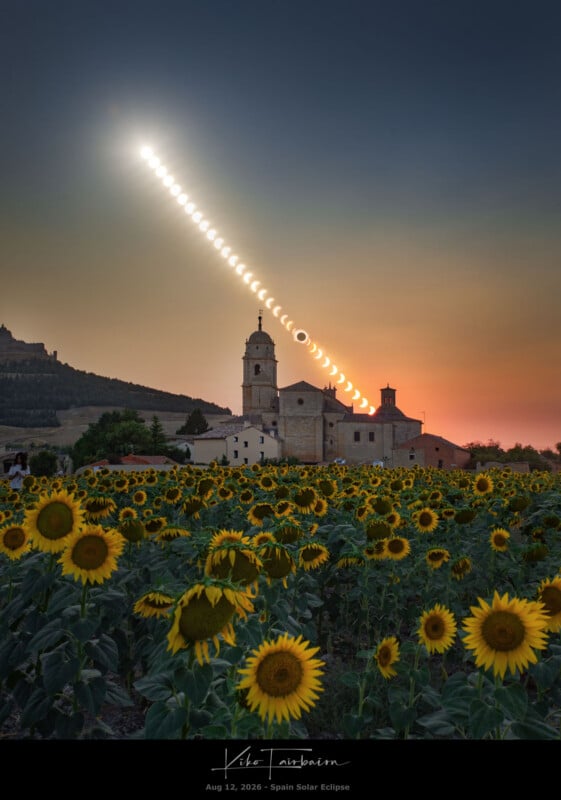
“The moment I saw that scene, something clicked,” Fairbairn recalled. “After months thinking about this eclipse, suddenly I could actually see the photograph in front of me. The landscape, the sunflowers, the old architecture and the path of totality all seemed to come together.”
The choice of sunflowers was not merely aesthetic; it was symbolic. These flowers, whose visual identity and biological rhythm are inextricably linked to the sun, provided a poetic counterpoint to the eclipse. However, Fairbairn was careful not to let the symbolism feel forced. The composition had to be photographically sound, requiring a layered approach that balanced the immediate foreground with the distant horizon.
A Multi-Camera Approach to a Fleeting Event
To ensure he captured every facet of the event, Fairbairn employed a sophisticated multi-camera strategy. This allowed him to document the scientific details of the eclipse while simultaneously focusing on the artistic storytelling of the landscape.
His primary solar rig was designed for high-resolution, close-up imagery. He used a Canon EOS R6 Mark III paired with a 150-600mm telephoto zoom lens. To gain even more reach, he added a 2x teleconverter and mounted the entire system on a specialized tracker. This setup, protected by a solar filter, allowed the camera to follow the sun’s movement across the sky with pinpoint accuracy.