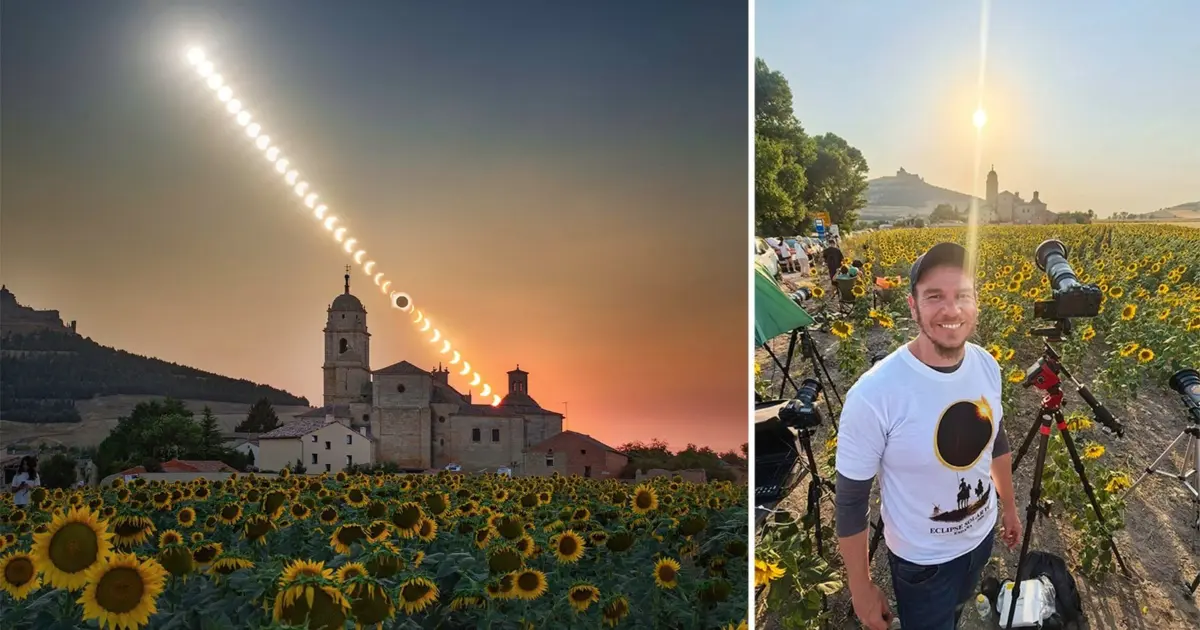
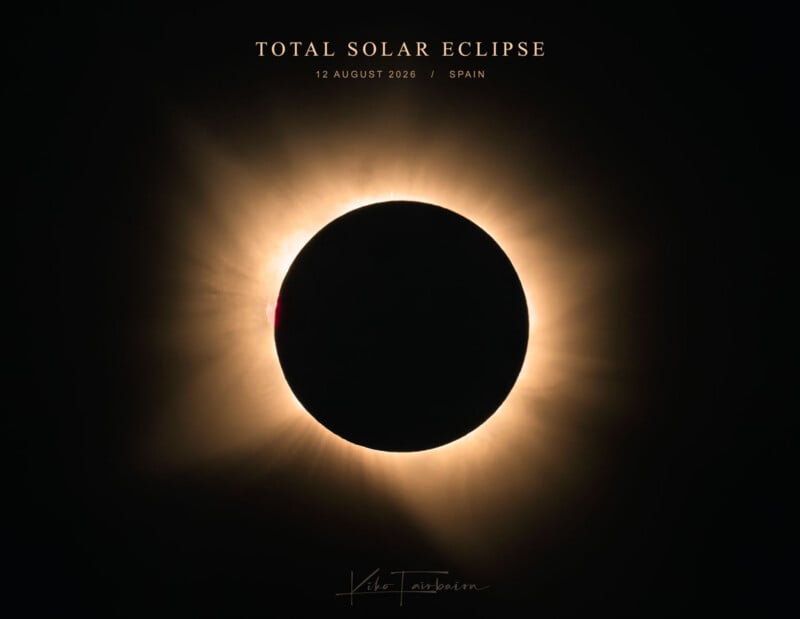
“Knowing that this camera was continuously recording the eclipse gave me the freedom to concentrate on something completely different with my second camera: the landscape and the storytelling,” Fairbairn explained.
For the landscape sequence, Fairbairn turned to a trusted companion: the Canon EOS 5D Mark III. Despite being an older model in the age of mirrorless dominance, the 5D Mark III remains a favorite for its reliability and color science. “It’s an old workhorse,” Fairbairn said, “but it was perfect for what I wanted to do here.”
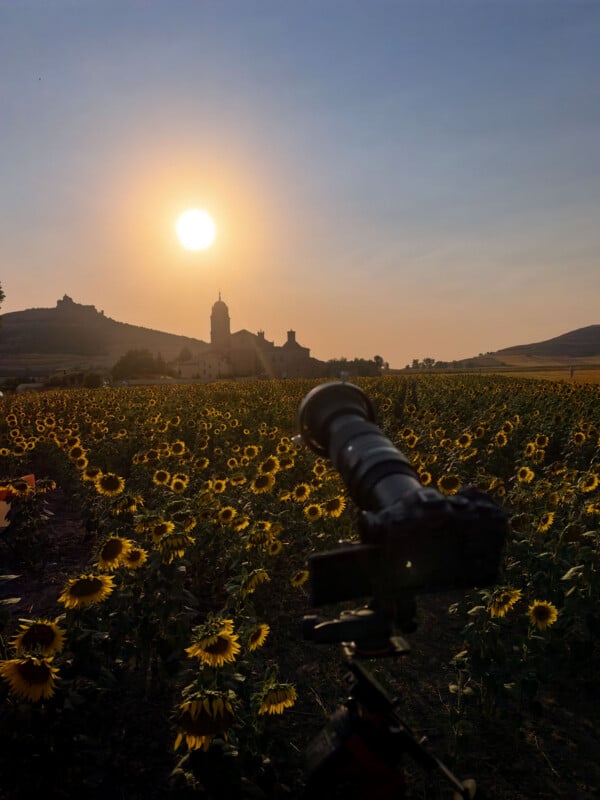
The technical challenge lay in choosing the right focal length to balance the various elements. While he initially experimented with a 16-35mm wide-angle lens, he found that it made the distant church and castle ruins appear too small and insignificant. He eventually settled on a 24-70mm lens, locking the focal length at 38mm. This "sweet spot" allowed the sunflowers to remain prominent in the foreground while maintaining the prominence of the architecture and the progression of the eclipse in the sky.
Technical Decisions in the Field
Capturing an eclipse requires a rigorous exposure strategy. As the moon moves across the sun, the ambient light drops precipitously, shifting from broad daylight to an eerie, twilight-like gloom in a matter of seconds. To manage this extreme dynamic range, Fairbairn utilized a method of aggressive bracketing.
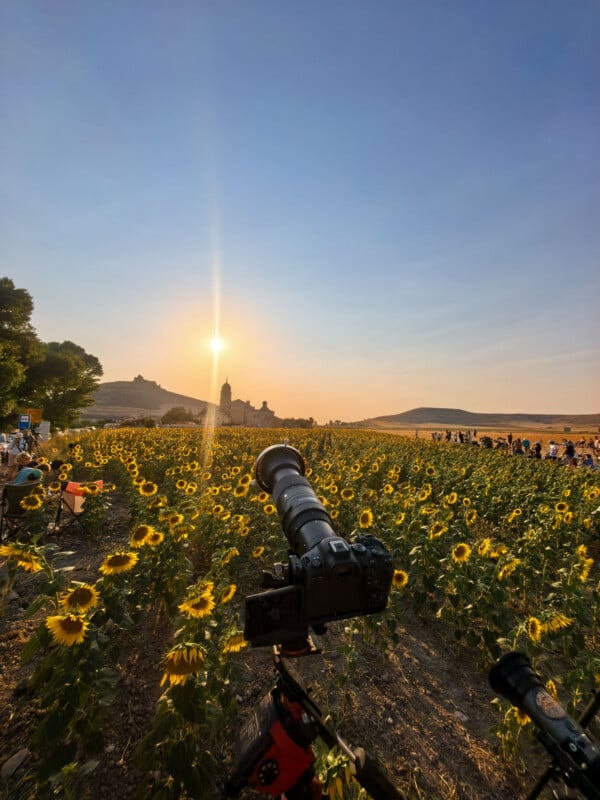
For every frame in his sequence, he captured three separate exposures: a base exposure, one two stops darker, and one two stops brighter. This safety margin ensured that he would have enough data in the RAW files to recover details in both the brilliant solar corona and the darkening sunflower field. During the event, he shot nearly 300 frames, using a Haida ND 3.0 filter to manage the intensity of the light.
To prevent any technical failures during the critical moments of totality, Fairbairn powered his landscape camera via a dummy battery connected to a high-capacity power bank. This ensured the system could run uninterrupted, allowing him to automate the capture process and step away from the viewfinder.
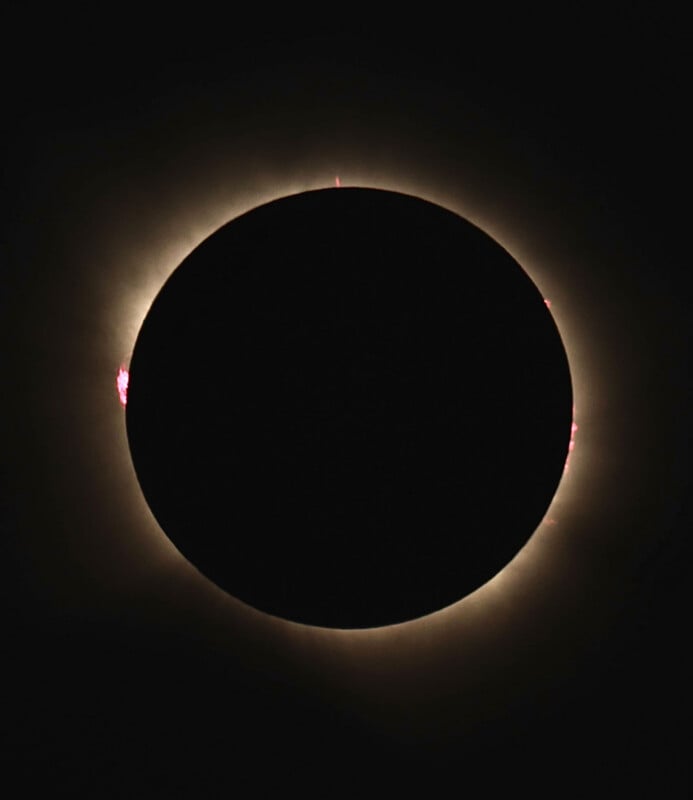
“I wanted the technical side to become almost invisible once everything was running,” he said. “I had spent so much time preparing the composition, exposure strategy and automation precisely so that, when totality finally arrived, I wouldn’t have to spend those extraordinary seconds looking at the back of a camera.”
The Precious Moments of Totality
At his location near Castrojeriz, Fairbairn had exactly 106 seconds of totality. In the world of astronomy, a minute and 46 seconds is a heartbeat; in the world of photography, it is a lifetime of pressure. Yet, Fairbairn’s primary goal was to ensure he didn’t miss the experience itself.
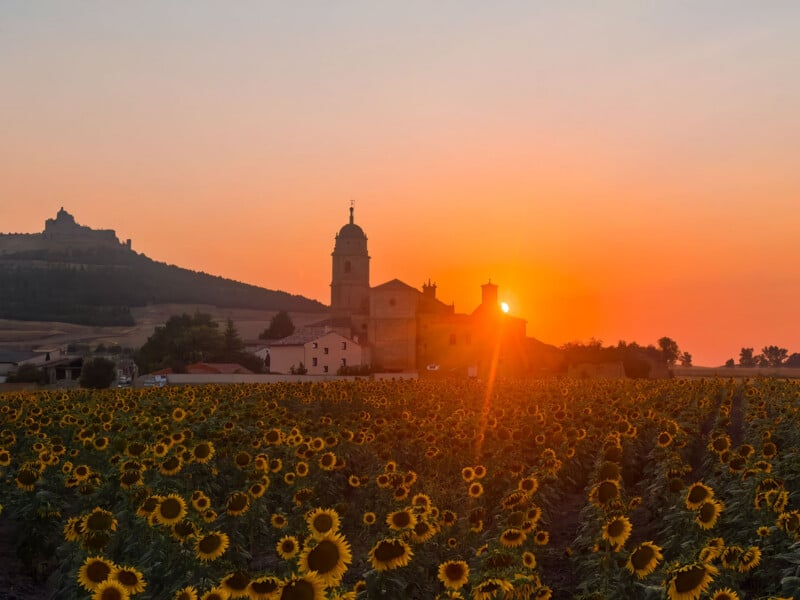
“One of the biggest mistakes we can make as photographers during an eclipse is becoming so focused on capturing it we forget to actually experience it,” Fairbairn noted.