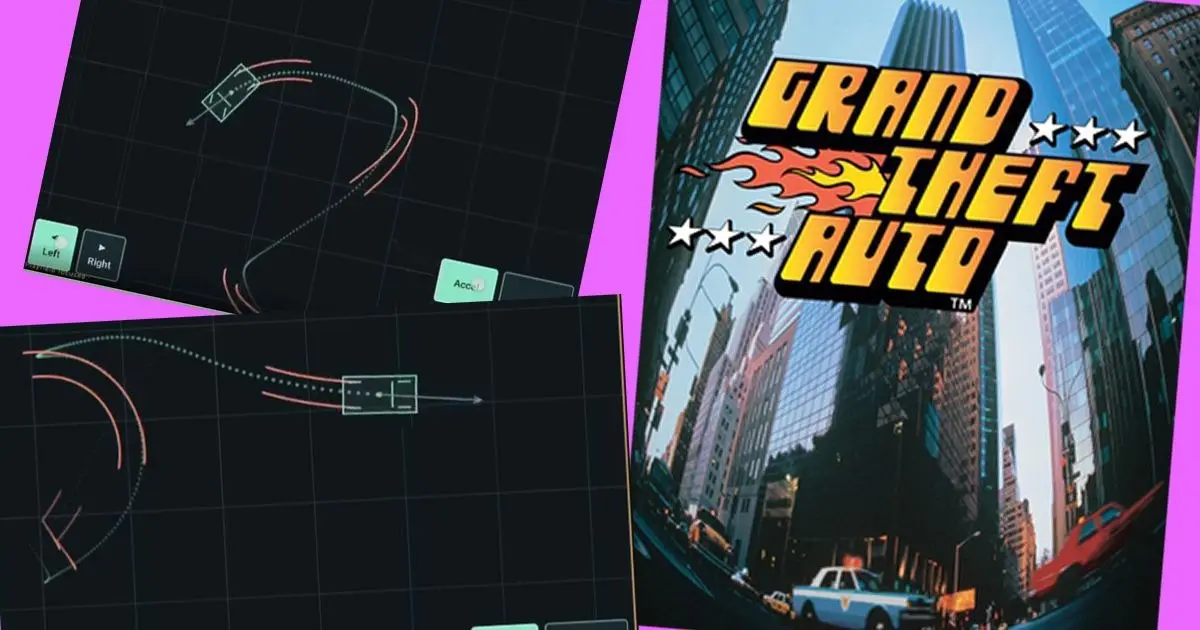
Patrick Kerr, a former programmer at DMA Design—the legendary Scottish studio that would eventually transition into the powerhouse known today as Rockstar North—has recently revisited his contributions to the original Grand Theft Auto. In a move that has delighted both game historians and aspiring developers, Kerr has recreated the original 2D physics simulation that served as the backbone for the game’s vehicle systems. This recreation is not merely a static gallery of code; it is a fully functional, interactive demo that can be played online, offering a direct window into the mechanics that defined a genre-defining masterpiece nearly three decades ago.
The original Grand Theft Auto, released in 1997, was nothing short of a cultural phenomenon and a technical marvel for its time. While modern audiences might view its top-down graphics as simplistic, the game was considered groundbreaking upon its debut. It introduced players to a level of emergent gameplay that was largely unheard of in the mid-90s. Unlike the linear, objective-based games of the era, Grand Theft Auto offered a living, breathing city populated by varied non-player characters (NPCs) and a chaotic ecosystem of traffic. It was a departure from traditional gaming norms because it gave players the freedom to simply exist within its world. One could ignore the mission markers entirely, choosing instead to spend hours driving through the city streets, observing the digital inhabitants, and testing the limits of the game’s physics.
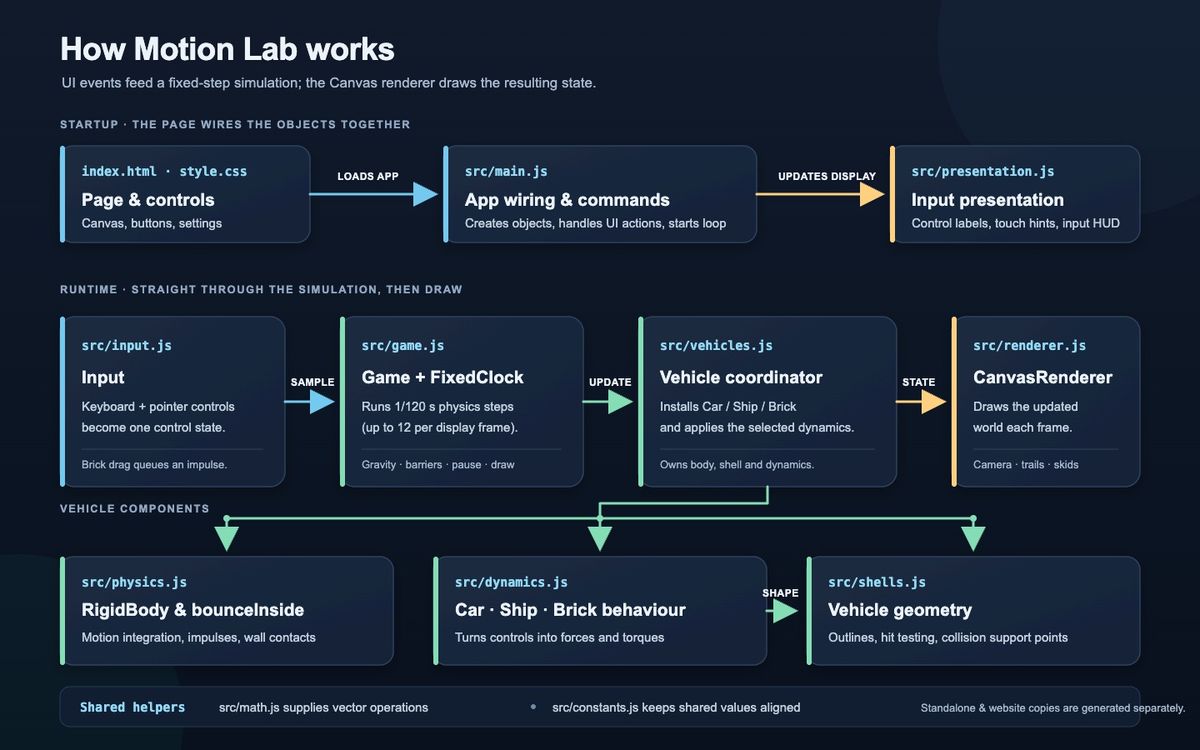
Kerr’s newly released simulation provides a fascinating look at how those early physics were conceived. According to Kerr, the simulation’s journey began as a rudimentary wireframe demo. At the time, he was working on an Atari ST, utilizing GFA BASIC to draft the initial logic for how a vehicle should move, turn, and collide within a 2D space. This early experimentation was eventually ported to the C programming language to be integrated into the final game. For the modern recreation, Kerr has transitioned the logic into JavaScript, pairing the original mathematical precision with a much sleeker, more modern visual presentation that makes the underlying physics easier to visualize.
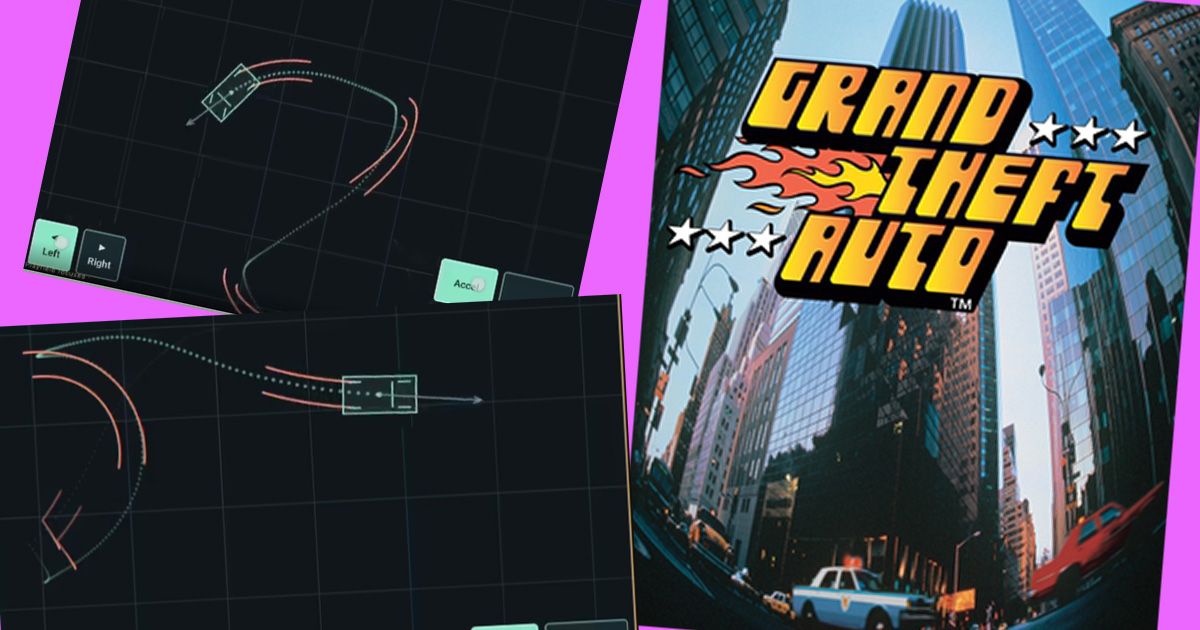
The interactive demo, hosted on Kerr’s "Motion Lab" platform, allows users to toggle between different physical states that illustrate the versatility of the original engine. The default mode, labeled "Car (1)," mimics the handling characteristics that millions of players first experienced on the PC and PlayStation 1. However, the simulation also includes "Ship (2)" and "Brick (3)" modes, which can be activated using numerical keys. These modes demonstrate how the programmers could alter variables like friction, mass, and momentum to create entirely different movement profiles using the same core logic.
Beyond simple movement, the demo allows for a deep dive into the environmental interactions that made Grand Theft Auto feel so volatile and exciting. By pressing the ‘B’ key, users can toggle side collision barriers, seeing firsthand how the engine calculates the impact and deflection of a vehicle hitting a wall. The ‘G’ key allows for the manipulation of vertical gravity within the Ship and Brick modes, a feature that highlights how the team accounted for different axes of movement even within a predominantly 2D framework.
One of the most recognizable features of the original Grand Theft Auto was its dynamic camera system, which zoomed in and out based on the vehicle’s speed to give the player a better view of the road ahead. Kerr has preserved this mechanic in his recreation. By pressing ‘X’, users can toggle the speed-based zoom, while ‘Z’ allows for the adjustment of the camera’s "dead zone"—the area in which the car can move before the camera begins to follow it. These subtle technical choices were instrumental in making the top-down perspective feel natural and playable, preventing the player from feeling disconnected from the action.
For the development community, Kerr’s website serves as more than just a trip down memory lane; it is an educational resource. In a detailed post accompanying the demo, Kerr explains the inner workings of the system, breaking down the complexities of 2D vehicle simulation. He discusses the challenges of balancing realism with playability—a hurdle that DMA Design navigated successfully to turn what was originally a dinosaur-themed racing game titled "Race’n’Chase" into the gritty, urban crime simulator that became Grand Theft Auto.
The transition from DMA Design to Rockstar North is a pivotal chapter in gaming history. Based in Dundee, Scotland, DMA Design was already famous for the puzzle-platformer Lemmings before they pivoted to the more controversial and ambitious world of GTA. The studio’s culture of innovation and their willingness to experiment with "unfocused" gameplay paved the way for the open-world genre. Patrick Kerr was a part of the team that laid these foundations, and his decision to share this simulation offers a rare bridge between the era of 16-bit experimentation and the multi-billion-dollar industry the franchise now leads.
The significance of this physics engine cannot be overstated. In the original 1997 release, the "feel" of the cars was what kept players engaged. Whether it was the way a sports car drifted around a corner in Liberty City or how a heavy truck struggled to gain momentum, the physics provided the tactile feedback necessary for immersion. By stripping away the sprites and the city textures, Kerr’s JavaScript recreation highlights the elegance of the math that governed those interactions. It reminds us that before there were 4K textures and ray-traced reflections, the heart of a great game lay in its simulation of reality.
This look back comes at a time when the industry is increasingly focused on game preservation. As technology moves forward at a breakneck pace, the original tools and methods used to create foundational titles are often lost to time or trapped on obsolete hardware. Recreations like Kerr’s ensure that the logic of the past remains accessible to a new generation of programmers who may never have touched an Atari ST or written a line of GFA BASIC.
As the world waits for the next leap forward with GTA VI, Patrick Kerr’s Motion Lab serves as a grounding reminder of where the journey began. It underscores the fact that the DNA of the series—the freedom of movement, the unpredictability of the world, and the core satisfaction of the driving mechanics—has remained constant for 29 years. The fidelity has changed, moving from wireframes to GFA BASIC and eventually to the sophisticated RAGE engine of today, but the fundamental desire to simulate a world where the player can simply "drive around and look at things" remains at the core of the experience.

For those interested in exploring the technical roots of the series, the demo is currently available for public testing. It stands as a testament to the longevity of well-crafted code and the enduring impact of a small team in Dundee who decided to build a city and see what happened when they let the players loose inside it. While we look toward the future of the franchise and the technical milestones it will undoubtedly set, the work of Patrick Kerr ensures that the ingenious simplicity of its origins will not be forgotten.