“There’s a rock in the sink!”
That was the primary takeaway last winter when the East Coast contingent of the team behind the Eater Today newsletter gathered for brunch at Gem Home. Located in lower Manhattan, Gem Home is the stylish, Scandi-inflected brainchild of chef Flynn McGarry, a space that blurs the lines between a high-end kitchen boutique and a refined dining room. While the rest of the table sat in anticipation of plates of Danish breakfast, staff writer Francky Knapp had slipped away to the restroom. She returned not just refreshed, but genuinely startled, eager to report on an unexpected geological find in the middle of a commercial plumbing fixture.
Naturally, the curiosity was infectious. Upon inspection, the sink was indeed home to a substantial slab of stone. It occupied nearly the entire industrial-style basin, leaving just enough room for water to drain around its perimeter. At the center, where the faucet’s stream met the stone, a patch of rust-colored mineral deposits had bloomed—a vivid, oxidized reminder of the constant contact between the domestic and the primeval. At the time, the sight seemed like a singular quirk, a "weird" design choice that was easy to dismiss as a one-off eccentricity in a city known for its aesthetic whims.
However, as the months passed, it became clear that the rock in the sink was not an isolated incident. Instead, it was an early signal of a burgeoning, heavy-duty design trend taking root across the city’s most talked-about hospitality spaces. From the minimalist coffee shops of Greenpoint to ambitious international pizza imports, New York’s interior designers are increasingly looking to the quarry for inspiration.
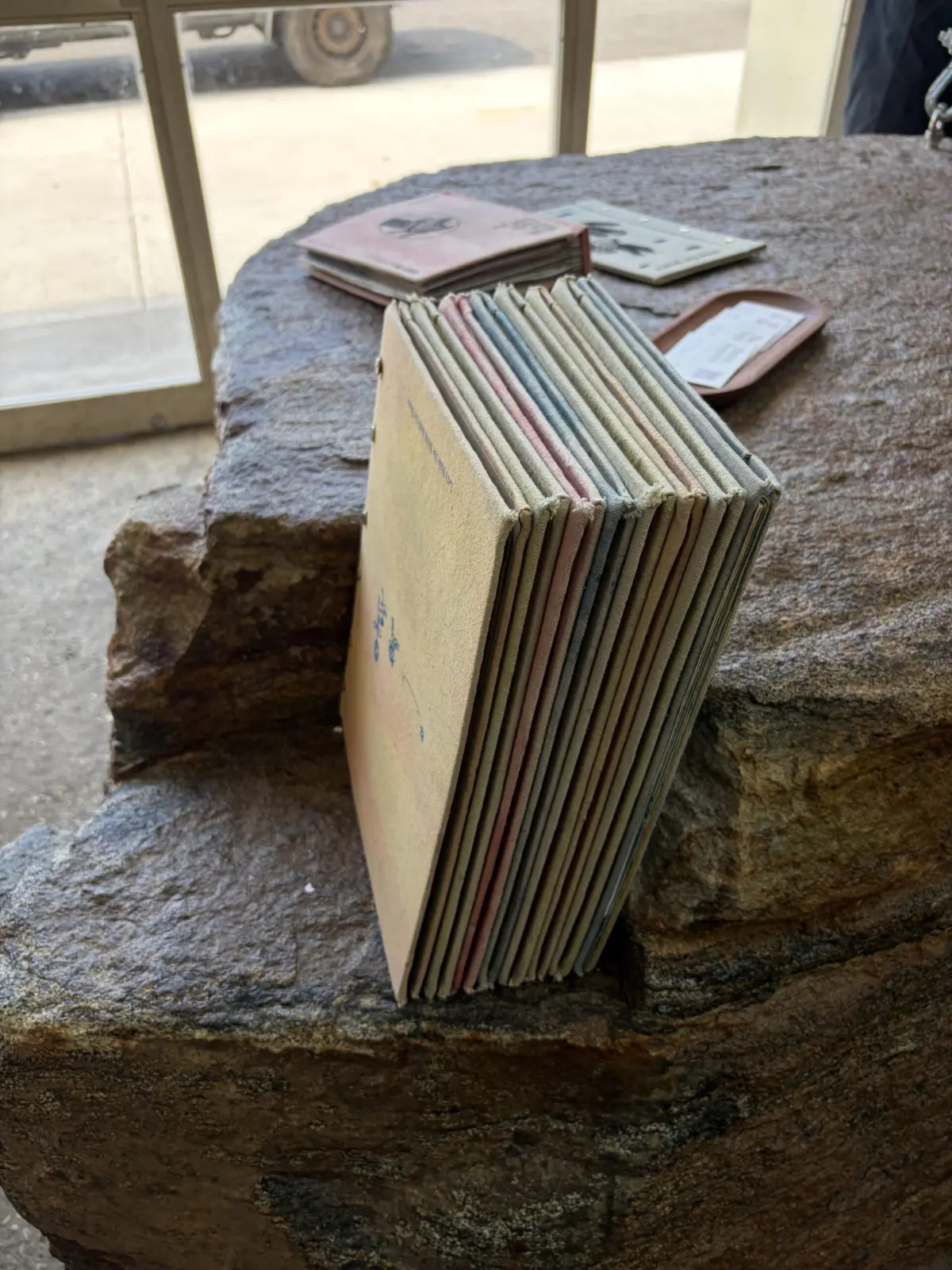
The second encounter occurred at Rhythm Zero, a coffee shop in Greenpoint, Brooklyn, that operates with a visual language more akin to a contemporary art gallery than a neighborhood caffeine hub. The space is curated with a precision that demands attention; it is the kind of room where every object feels intentional. Near the counter, a large hunk of stone sat positioned in front of a floor-to-ceiling mirror, serving as a silent, immovable sentry to the morning rush.

The geological theme continued into the Rhythm Zero bathroom. There, a second stone had been installed, positioned with baffling precision between the sink and the toilet. It sat as though it were meant to be a natural absorption point for water dripping from hands making the short journey to the hand dryer. At this point, the coincidence began to feel like a movement. Two establishments, both lauded for their forward-thinking aesthetics, had decided that the best way to elevate a room was to move a literal piece of the earth into it.
The trend reached its logical, maximalist extreme this summer with the opening of Pizza 4P’s in Brooklyn. An ambitious import from Vietnam, Pizza 4P’s is known globally for its intricate designs and a philosophy that prioritizes a connection to nature. For their New York flagship—housed in a high-ceilinged, industrial space—the team did not settle for mere decorative accents. Instead, they orchestrated the transport of six massive, literal boulders from a stone wholesaler in New Jersey.