“There’s a rock in the sink!”
That was the primary takeaway last winter when the East Coast contingent of the team behind the Eater Today newsletter gathered for brunch at Gem Home. Located in lower Manhattan, Gem Home is the stylish, Scandi-inflected brainchild of chef Flynn McGarry, a space that blurs the lines between a high-end kitchen boutique and a refined dining room. While the rest of the table sat in anticipation of plates of Danish breakfast, staff writer Francky Knapp had slipped away to the restroom. She returned not just refreshed, but genuinely startled, eager to report on an unexpected geological find in the middle of a commercial plumbing fixture.
Naturally, the curiosity was infectious. Upon inspection, the sink was indeed home to a substantial slab of stone. It occupied nearly the entire industrial-style basin, leaving just enough room for water to drain around its perimeter. At the center, where the faucet’s stream met the stone, a patch of rust-colored mineral deposits had bloomed—a vivid, oxidized reminder of the constant contact between the domestic and the primeval. At the time, the sight seemed like a singular quirk, a "weird" design choice that was easy to dismiss as a one-off eccentricity in a city known for its aesthetic whims.
However, as the months passed, it became clear that the rock in the sink was not an isolated incident. Instead, it was an early signal of a burgeoning, heavy-duty design trend taking root across the city’s most talked-about hospitality spaces. From the minimalist coffee shops of Greenpoint to ambitious international pizza imports, New York’s interior designers are increasingly looking to the quarry for inspiration.
The second encounter occurred at Rhythm Zero, a coffee shop in Greenpoint, Brooklyn, that operates with a visual language more akin to a contemporary art gallery than a neighborhood caffeine hub. The space is curated with a precision that demands attention; it is the kind of room where every object feels intentional. Near the counter, a large hunk of stone sat positioned in front of a floor-to-ceiling mirror, serving as a silent, immovable sentry to the morning rush.

The geological theme continued into the Rhythm Zero bathroom. There, a second stone had been installed, positioned with baffling precision between the sink and the toilet. It sat as though it were meant to be a natural absorption point for water dripping from hands making the short journey to the hand dryer. At this point, the coincidence began to feel like a movement. Two establishments, both lauded for their forward-thinking aesthetics, had decided that the best way to elevate a room was to move a literal piece of the earth into it.
The trend reached its logical, maximalist extreme this summer with the opening of Pizza 4P’s in Brooklyn. An ambitious import from Vietnam, Pizza 4P’s is known globally for its intricate designs and a philosophy that prioritizes a connection to nature. For their New York flagship—housed in a high-ceilinged, industrial space—the team did not settle for mere decorative accents. Instead, they orchestrated the transport of six massive, literal boulders from a stone wholesaler in New Jersey.
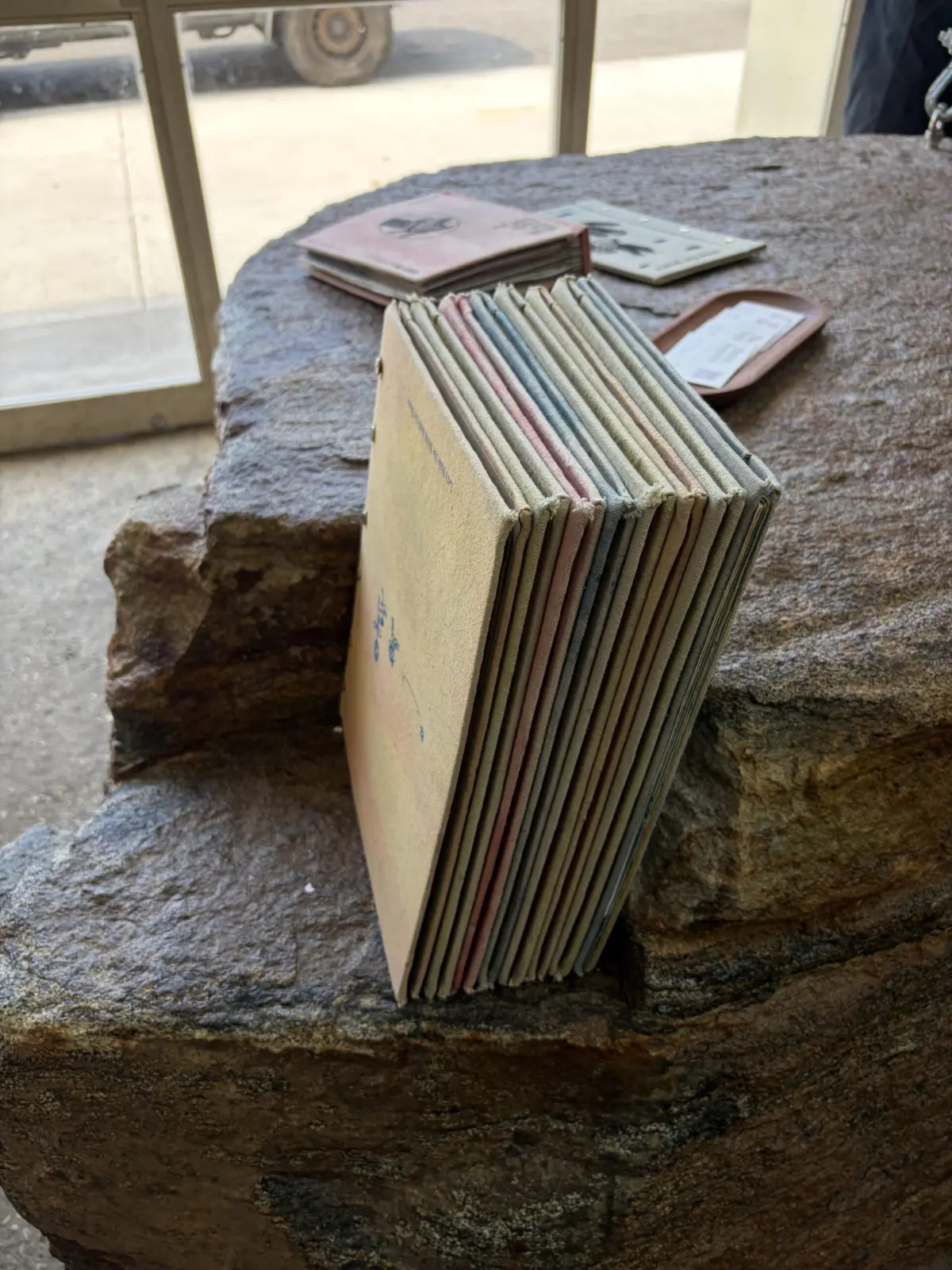
At Pizza 4P’s, the stones are not just decorations; they are the primary organizers of the environment. Upon entering, guests are greeted by a host stand that is, in fact, a large, table-like boulder. The stone was chosen specifically for its natural dimensions; it sits at a perfect waist height and features a convenient, natural notch in one corner that seems almost custom-carved to hold a stack of menus. To the side, an adjacent stone—shorter and flatter—serves as a bench for diners waiting for their tables.
Moving deeper into the restaurant, the scale of the operation becomes even more apparent. Four additional boulders erupt from the floor, their presence so commanding that they dictated the very layout of the dining room. Rather than a standard grid of tables, the floor plan follows a snaking path necessitated by the rocks’ placement.
Kazuya Kubota, the global branding director for Pizza 4P’s, explained the process during a tour of the space. The design was not a matter of fitting stones into a room, but rather fitting a room around the stones. “After we found the stones, we changed the position,” Kubota said, referring to the architectural plans. None of the boulders were cut or shaped by human hands to fit the restaurant; they were selected for their existing forms, and the construction team worked to accommodate them.
The integration is both aesthetic and functional. Some of the stones feature thick metal support wires sprouting from their surfaces, which are used to anchor and weigh down the wooden frames along the walls. These frames, in turn, hold a lush array of hanging plants. The largest stone in the collection resides toward the center of the dining room. Weighing in at approximately two tons, it is comparable in weight to the restaurant’s massive pizza oven. A dining table butts up directly against its side, offering patrons the chance to eat their meal in the literal shadow of a monolith.

According to Kubota, these stones serve a vital narrative purpose. In a space that is otherwise defined by Brooklyn’s characteristic industrial urbanism, the boulders and plants provide a "semblance of nature." They act as a bridge between the concrete reality of the city and the pastoral settings of the local farms listed on the restaurant’s menu.
This desire to bring the outdoors in is a shared thread among these establishments. Ivana Somorai, the owner of Rhythm Zero, noted that her use of natural materials was heavily inspired by Japanese design principles, which often emphasize the beauty of raw, unrefined elements. For Somorai, the rocks were intended to provide a “natural, unexpected element” within the shop’s interiors.
Interestingly, the permanence of these stones is often a matter of physics as much as philosophy. When Somorai recently redesigned the interior of the Greenpoint location to include more seating and a large couch, the rocks remained in place largely because they were simply too heavy to move easily. “I knew they would not be leaving the space for a while,” Somorai said.
Over time, the stones at Rhythm Zero have transitioned from design "moments" to functional parts of the community. The rock near the mirror, originally intended as a visual focal point, has become a favorite sitting area for regulars. What began as a surprising aesthetic choice has been absorbed into the daily life of the cafe, proving that even the most avant-garde design can find a practical purpose through human interaction.
As for the rock in the bathroom—a feature that both Rhythm Zero and Gem Home share—the motivation appears to be rooted in the power of surprise. Somorai explained that she wanted to play with the expectations of her customers. In a dark, minimalist bathroom, the sudden appearance of a large boulder prompts a moment of genuine wonder. “I wanted them to be like, ‘Why is there a rock here?’” she wrote.
While Flynn McGarry was unavailable for a direct interview regarding the geological choices at Gem Home, his representative confirmed that the "rock in the sink" is a recurring signature for the chef’s projects. The now-closed Gem Wine and a third project, Cove, both featured similar stone installations in their restrooms. It suggests a cohesive brand identity that values the tactile and the elemental, even in the most utilitarian corners of a business.

At Pizza 4P’s, the boulders are part of a broader, international philosophy. While the chain has dozens of locations across several countries, no two are alike. Each space is custom-designed to reflect a specific theme relevant to its location. In Indonesia, the design focuses on biodiversity; in the United States, the guiding concept is “what the earth told me.”
Kubota explained that the team approaches stones with the same reverence they show for their ingredients. The goal is to identify something beautiful in the natural world and then perform the necessary work to showcase it without over-processing it. In the context of a restaurant, this means building a host stand out of a New Jersey boulder rather than a piece of milled plywood.
However, the lifespan of a decorative rock in the city is not always eternal. During a recent visit to the Greenpoint Rhythm Zero, the rock that once sat outside the bathroom was gone. It was a casualty of a recent renovation, but its story did not end in a landfill. Instead, the rocks were moved to nearby Transmitter Park. Somorai described the move as a return to form, noting that the park is “where they belong, I guess.”
The departure of the stones from Rhythm Zero marks the end of one chapter, but the trend shows no signs of slowing down elsewhere. As New York’s dining scene continues to move away from the sleek, polished surfaces of the past decade, the arrival of the boulder represents a move toward something more grounded, permanent, and unapologetically heavy. Whether it’s a two-ton monolith in a dining room or a rust-stained slab in a sink, the message is clear: in the middle of the urban jungle, there is still a profound desire to touch the earth.