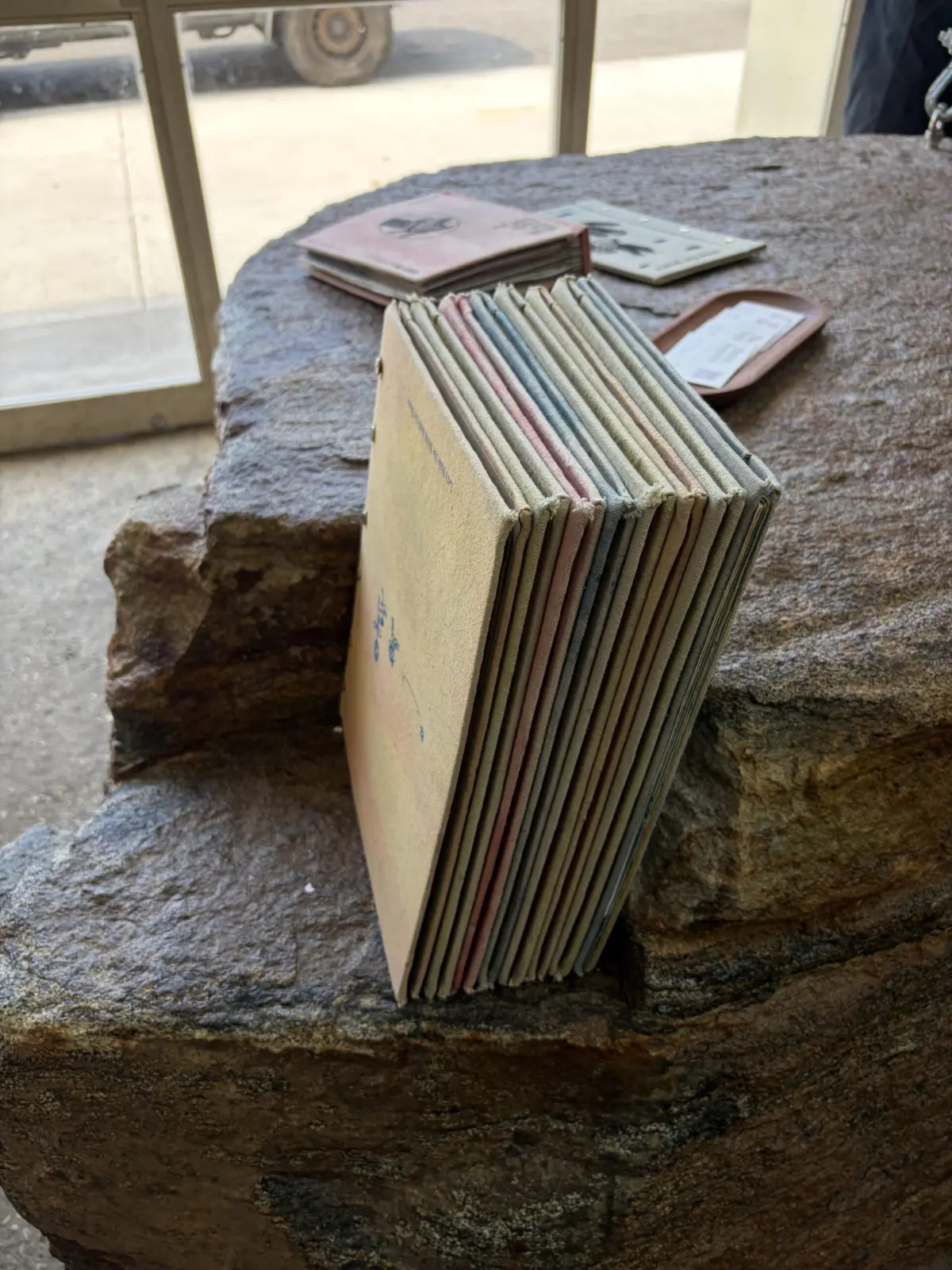
At Pizza 4P’s, the stones are not just decorations; they are the primary organizers of the environment. Upon entering, guests are greeted by a host stand that is, in fact, a large, table-like boulder. The stone was chosen specifically for its natural dimensions; it sits at a perfect waist height and features a convenient, natural notch in one corner that seems almost custom-carved to hold a stack of menus. To the side, an adjacent stone—shorter and flatter—serves as a bench for diners waiting for their tables.
Moving deeper into the restaurant, the scale of the operation becomes even more apparent. Four additional boulders erupt from the floor, their presence so commanding that they dictated the very layout of the dining room. Rather than a standard grid of tables, the floor plan follows a snaking path necessitated by the rocks’ placement.
Kazuya Kubota, the global branding director for Pizza 4P’s, explained the process during a tour of the space. The design was not a matter of fitting stones into a room, but rather fitting a room around the stones. “After we found the stones, we changed the position,” Kubota said, referring to the architectural plans. None of the boulders were cut or shaped by human hands to fit the restaurant; they were selected for their existing forms, and the construction team worked to accommodate them.
The integration is both aesthetic and functional. Some of the stones feature thick metal support wires sprouting from their surfaces, which are used to anchor and weigh down the wooden frames along the walls. These frames, in turn, hold a lush array of hanging plants. The largest stone in the collection resides toward the center of the dining room. Weighing in at approximately two tons, it is comparable in weight to the restaurant’s massive pizza oven. A dining table butts up directly against its side, offering patrons the chance to eat their meal in the literal shadow of a monolith.

According to Kubota, these stones serve a vital narrative purpose. In a space that is otherwise defined by Brooklyn’s characteristic industrial urbanism, the boulders and plants provide a "semblance of nature." They act as a bridge between the concrete reality of the city and the pastoral settings of the local farms listed on the restaurant’s menu.
This desire to bring the outdoors in is a shared thread among these establishments. Ivana Somorai, the owner of Rhythm Zero, noted that her use of natural materials was heavily inspired by Japanese design principles, which often emphasize the beauty of raw, unrefined elements. For Somorai, the rocks were intended to provide a “natural, unexpected element” within the shop’s interiors.
Interestingly, the permanence of these stones is often a matter of physics as much as philosophy. When Somorai recently redesigned the interior of the Greenpoint location to include more seating and a large couch, the rocks remained in place largely because they were simply too heavy to move easily. “I knew they would not be leaving the space for a while,” Somorai said.