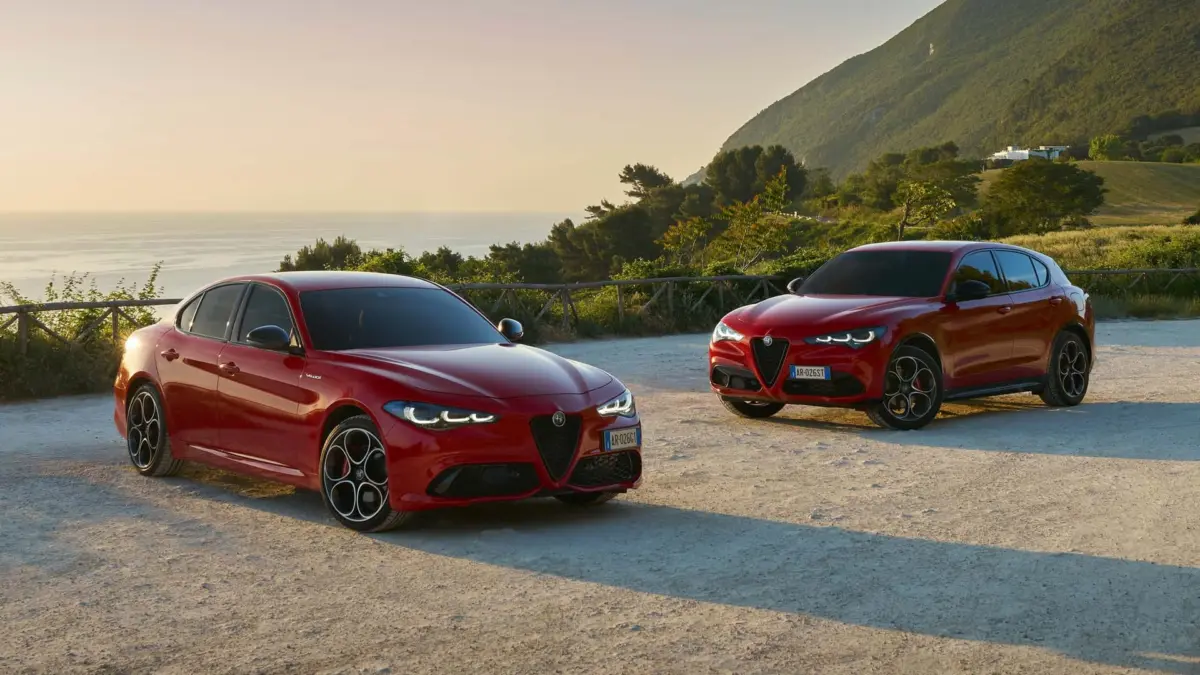
In an industry where a seven-year life cycle is often considered the absolute limit for a vehicle’s relevance, Alfa Romeo is taking a decidedly different path with its flagship sedan and SUV. In a move that highlights both the enduring appeal of Italian design and the complexities of the modern automotive market, the Italian marque has announced a series of updates for the Giulia and the Stelvio, ensuring these two stalwarts remain in showrooms through the 2027 model year.
This extension comes at an ironic juncture for Stellantis, Alfa Romeo’s parent company. The Giulia and Stelvio are currently among the most exciting and driver-focused vehicles in the massive Stellantis portfolio, yet they are also among the oldest. The Giulia sedan made its global debut in 2015, with the Stelvio SUV following closely behind in 2016. By the time the 2027 models reach the end of their production run, both vehicles will have been on the market for over a decade—a rarity in a segment typically defined by rapid-fire technological turnover.
Rather than ushering these aging models toward a quiet retirement, Alfa Romeo is doubling down on their proven foundations. The latest updates are designed to keep the duo compliant with evolving international regulations while maintaining the mechanical soul that has earned them a dedicated following among enthusiasts.
Regulatory Compliance and the "Electronic Babysitter"
One of the most significant changes for the 2027 model year is the integration of an interior camera system designed for driver monitoring. This addition is not merely a stylistic choice or a luxury convenience; it is a direct response to stringent new European Union safety regulations. The EU now requires driver-monitoring technology in all new cars to help mitigate the risks associated with distraction and fatigue.
The system, discreetly built into the A-pillar, utilizes advanced sensors to monitor the driver’s eye movements and head position. If the technology detects signs of drowsiness or determines that the driver’s attention has drifted from the road for an unsafe period, it issues a series of escalating warnings. This Advanced Driver Distraction Warning (ADDW) system is now a mandatory fixture for all vehicles sold in Europe, regardless of price point. It represents a broader trend in the European market where "electronic babysitters" are becoming a standard requirement, appearing in everything from the budget-friendly Dacia Sandero to the ultra-luxury Rolls-Royce Phantom.
While some purists may lament the intrusion of more monitoring technology in a brand defined by the "visceral" driving experience, Alfa Romeo has integrated the hardware with as much subtlety as possible, ensuring the driver-centric focus of the cockpit remains largely undisturbed.
Retaining the Combustion Heart: Gas and Diesel Lineups
Perhaps the most welcoming news for Alfa Romeo traditionalists is the confirmation that the Giulia and Stelvio will retain their existing internal combustion engine lineups. As many competitors pivot exclusively to hybrid or electric powertrains, Alfa Romeo is sticking with the "multi-energy" recipe that has defined the Giorgio platform since its inception.
For the European market, the 2.2-liter turbodiesel engine remains a cornerstone of the range. It continues to be offered in two states of tune: a 160-horsepower version paired with rear-wheel drive and a more robust 210-horsepower variant featuring the Q4 all-wheel-drive system. Both diesel options utilize an eight-speed automatic transmission, which has been praised throughout the cars’ lifespans for its sharp shifts and intuitive mapping.