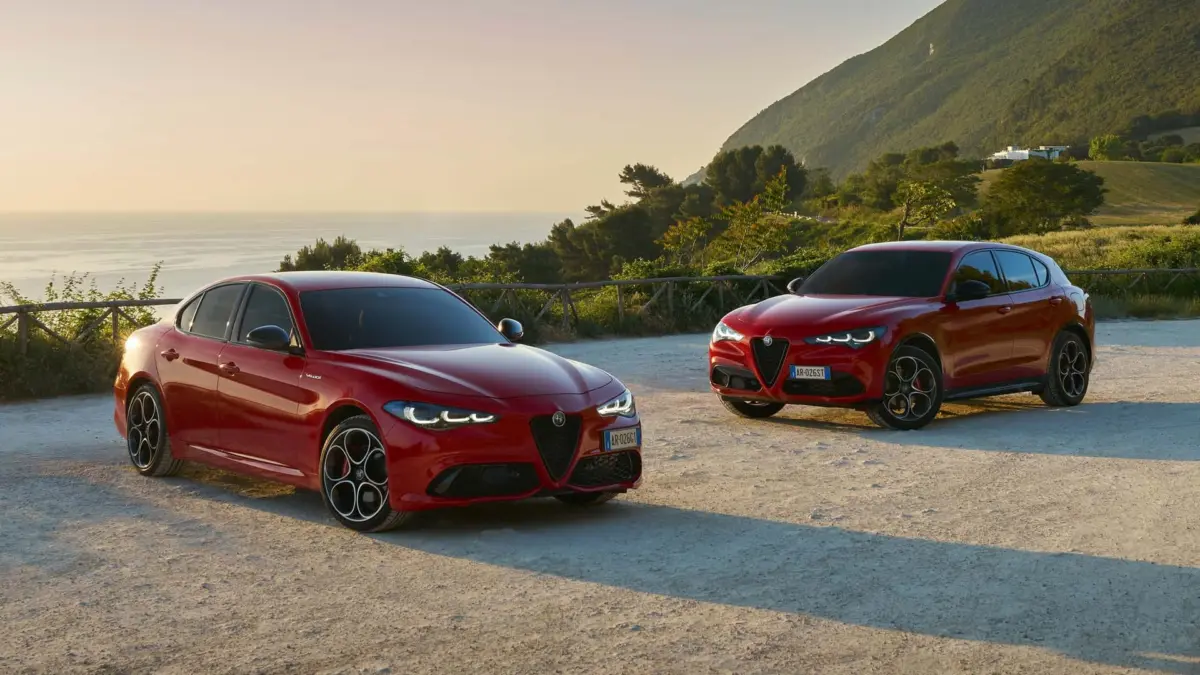
In an industry where a seven-year life cycle is often considered the absolute limit for a vehicle’s relevance, Alfa Romeo is taking a decidedly different path with its flagship sedan and SUV. In a move that highlights both the enduring appeal of Italian design and the complexities of the modern automotive market, the Italian marque has announced a series of updates for the Giulia and the Stelvio, ensuring these two stalwarts remain in showrooms through the 2027 model year.
This extension comes at an ironic juncture for Stellantis, Alfa Romeo’s parent company. The Giulia and Stelvio are currently among the most exciting and driver-focused vehicles in the massive Stellantis portfolio, yet they are also among the oldest. The Giulia sedan made its global debut in 2015, with the Stelvio SUV following closely behind in 2016. By the time the 2027 models reach the end of their production run, both vehicles will have been on the market for over a decade—a rarity in a segment typically defined by rapid-fire technological turnover.
Rather than ushering these aging models toward a quiet retirement, Alfa Romeo is doubling down on their proven foundations. The latest updates are designed to keep the duo compliant with evolving international regulations while maintaining the mechanical soul that has earned them a dedicated following among enthusiasts.
Regulatory Compliance and the "Electronic Babysitter"
One of the most significant changes for the 2027 model year is the integration of an interior camera system designed for driver monitoring. This addition is not merely a stylistic choice or a luxury convenience; it is a direct response to stringent new European Union safety regulations. The EU now requires driver-monitoring technology in all new cars to help mitigate the risks associated with distraction and fatigue.
The system, discreetly built into the A-pillar, utilizes advanced sensors to monitor the driver’s eye movements and head position. If the technology detects signs of drowsiness or determines that the driver’s attention has drifted from the road for an unsafe period, it issues a series of escalating warnings. This Advanced Driver Distraction Warning (ADDW) system is now a mandatory fixture for all vehicles sold in Europe, regardless of price point. It represents a broader trend in the European market where "electronic babysitters" are becoming a standard requirement, appearing in everything from the budget-friendly Dacia Sandero to the ultra-luxury Rolls-Royce Phantom.
While some purists may lament the intrusion of more monitoring technology in a brand defined by the "visceral" driving experience, Alfa Romeo has integrated the hardware with as much subtlety as possible, ensuring the driver-centric focus of the cockpit remains largely undisturbed.
Retaining the Combustion Heart: Gas and Diesel Lineups
Perhaps the most welcoming news for Alfa Romeo traditionalists is the confirmation that the Giulia and Stelvio will retain their existing internal combustion engine lineups. As many competitors pivot exclusively to hybrid or electric powertrains, Alfa Romeo is sticking with the "multi-energy" recipe that has defined the Giorgio platform since its inception.
For the European market, the 2.2-liter turbodiesel engine remains a cornerstone of the range. It continues to be offered in two states of tune: a 160-horsepower version paired with rear-wheel drive and a more robust 210-horsepower variant featuring the Q4 all-wheel-drive system. Both diesel options utilize an eight-speed automatic transmission, which has been praised throughout the cars’ lifespans for its sharp shifts and intuitive mapping.
In the United Kingdom and several other international markets, the 2.0-liter turbocharged gasoline engine remains a staple. Producing 280 horsepower, this engine has long been considered the "sweet spot" of the lineup, providing a balance of daily usability and the spirited performance expected of the badge.
At the top of the hierarchy, the legendary Quadrifoglio models continue to serve as the brand’s performance halos. Both the Giulia and Stelvio Quadrifoglio remain powered by the 2.9-liter twin-turbo V6, an engine with DNA famously shared with Ferrari. Delivering a formidable 520 horsepower, the powerplant allows the Giulia to maintain its status as one of the fastest rear-wheel-drive sedans on the market. The Stelvio Quadrifoglio, meanwhile, utilizes the Q4 all-wheel-drive system to manage its massive power output. For the 2027 update, the Stelvio Quadrifoglio also sees a minor hardware upgrade, with 21-inch wheels now becoming standard equipment, replacing the previous 20-inch setup and providing a more aggressive stance.
Aesthetic Refinements and New Trim Structures
The 2027 lineup has been restructured to simplify the purchasing process while introducing fresh aesthetic elements. The range will now be centered around three primary trims: Sprint, Veloce, and the new Edizione Luna Rossa.
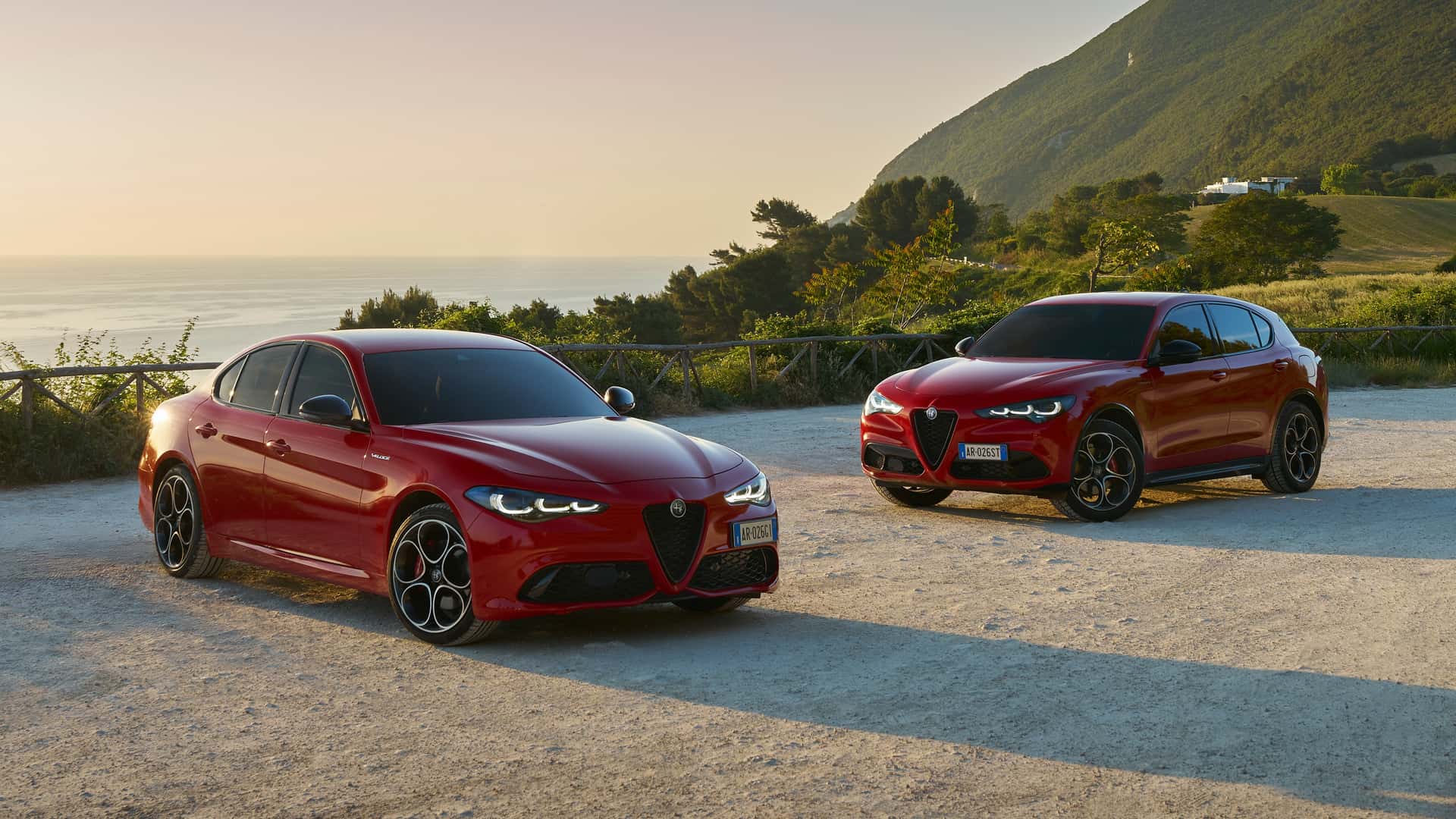
The Edizione Luna Rossa is a nod to Alfa Romeo’s partnership with the Prada-backed sailing team competing in the America’s Cup. This special edition brings unique styling cues that emphasize the brand’s connection to Italian excellence in engineering and competitive sport. Across the entire range, including the Quadrifoglio models, Alfa Romeo is introducing new black-and-white emblems at the front and rear, replacing the traditional multi-colored crest for a more contemporary, minimalist look. Additionally, a new exterior paint color, Anodized Blue, has been added to the palette, offering a modern metallic finish that accentuates the cars’ sculptural lines.
To further enhance the ownership experience for its most performance-oriented customers, Alfa Romeo is including a one-day driving course at the Alfa Romeo Driving Academy with the purchase of any Quadrifoglio model. This program is designed to help owners safely explore the high limits of their vehicles under professional instruction. While standard for the Quadrifoglio, the course is also being offered as an optional add-on for customers configuring lower-trim models, reflecting the brand’s desire to foster a deeper connection between the driver and the machine.
A Strategic Pivot: The Wait for Next-Generation Models
The decision to extend the life of the current Giulia and Stelvio is a strategic move that follows a significant shift in Alfa Romeo’s long-term product roadmap. Originally, the brand had signaled an aggressive, near-total pivot to electric vehicles. However, earlier this year, Alfa Romeo leadership acknowledged that the market’s transition to electrification is not progressing at a uniform pace globally.
In a statement released earlier this year, the brand clarified its current position on the eventual successors to the Giulia and Stelvio:
"Alfa Romeo is studying solutions to continue competing in the D-segment with new interpretations of the current range made up of the Giulia and Stelvio, staying true to its performance-oriented DNA while adapting to the evolution of the market. The brand will leverage flexible platforms to progressively introduce multi-energy solutions, including hybrid and electric powertrains. More details will be communicated at a later stage."
This shift to "multi-energy" platforms suggests that the next generation of these vehicles—likely built on the STLA Large platform—will not be restricted to battery-electric powertrains. Instead, they will be designed to accommodate internal combustion engines and hybrid setups alongside full EV versions. This flexibility is seen as crucial for a brand that sells cars in diverse global markets where charging infrastructure and consumer demand for EVs vary significantly.
However, this pivot requires time. Industry analysts suggest that all-new replacements for the Giulia and Stelvio are unlikely to break cover before 2028 at the earliest. By keeping the current models fresh with safety updates and new trim levels, Alfa Romeo is ensuring it remains competitive in the premium D-segment without rushing a product to market before the technology or the consumer base is ready.
The Value of a Timeless Design
While some may view the 2027 update as "reheating the same soup," there is a strong argument that Alfa Romeo’s current "soup" remains among the best in the business. The Giorgio platform, which underpins both cars, is still widely regarded as a benchmark for steering precision and chassis balance. In an era where many new cars feel increasingly heavy and disconnected, the Giulia and Stelvio offer a tactile, mechanical engagement that has become increasingly rare.
Furthermore, the design of both vehicles has aged remarkably well. The Giulia’s proportions and the Stelvio’s athletic silhouette continue to look contemporary even a decade after their introduction. Inside, the cars benefit from a design philosophy that predates the industry’s obsession with massive, tablet-style touchscreens. The 2027 models retain a screen neatly integrated into the dashboard and, perhaps more importantly, a wealth of physical controls for climate and audio functions.
Ironically, as other manufacturers face criticism for removing physical buttons and are now pledging to return to more ergonomic interior layouts, Alfa Romeo finds itself in an advantageous position. By not having fully redesigned these cars during the height of the "screen-only" trend, the Giulia and Stelvio have maintained an interior layout that many drivers now find preferable.
As the automotive world navigates a complex transition between the era of combustion and the future of electrification, Alfa Romeo’s decision to refine its existing icons provides a bridge for the brand. The 2027 Giulia and Stelvio represent a final, polished iteration of a platform that redefined what an Italian sport sedan and SUV could be, buying the brand the necessary time to ensure their eventual successors live up to the same high standard.