In the high-stakes world of residential homebuilding, there is rarely a convenient moment to pause and recalibrate. The industry operates on a relentless cycle of land acquisition, development, construction, and sales. For most executives, the idea of suspending operations to overhaul a company’s fundamental structure is a luxury they cannot afford. There is no "pit stop" in homebuilding; the engine must be rebuilt while the car is still hurtling down the track at a hundred miles per hour.
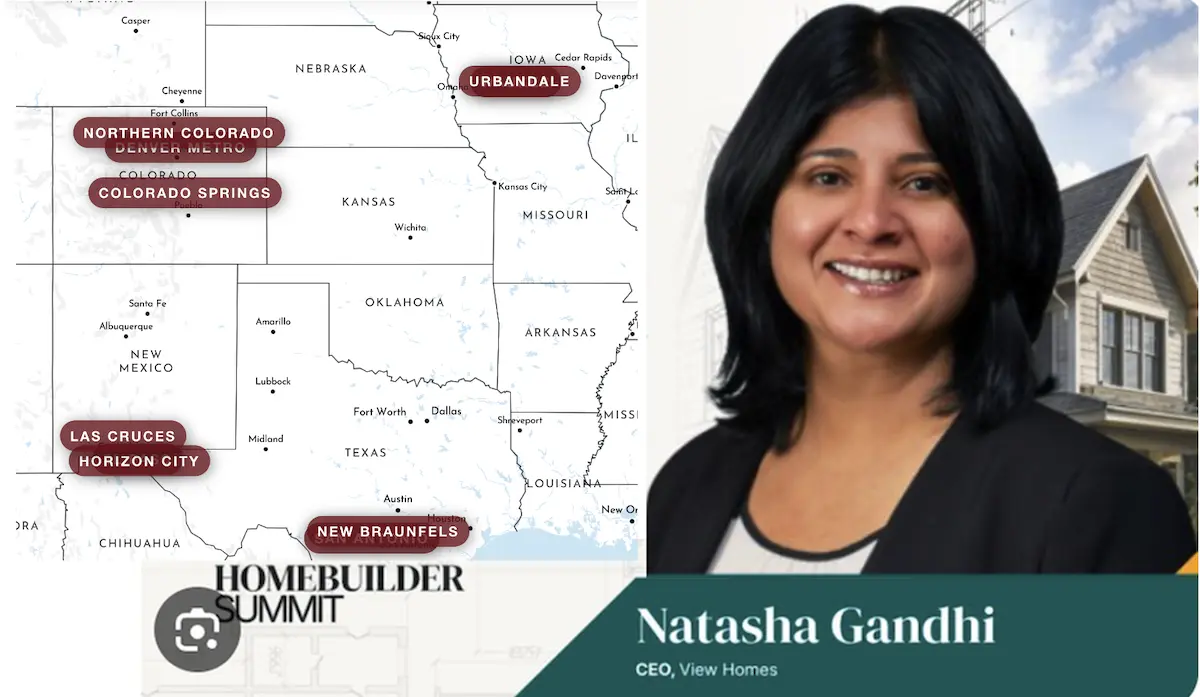
When Natasha Gandhi took the helm as CEO of View Homes in March, she stepped into an organization that was successful but at a crossroads. Six months into her tenure, she is leading a comprehensive transformation of the company’s leadership, technology, and operating philosophy. While many in the industry are focused on simply weathering the current storm of high mortgage rates and cooling demand, Gandhi has reached a conclusion that some might find counterintuitive: the current soft market is not a hindrance to her mission, but rather the perfect environment for it.
Gandhi’s perspective is a central theme in the ongoing "Built for This" series, which examines how homebuilding leaders are refining their businesses in a climate that offers little in the way of external economic tailwinds. As Gandhi prepares to join other industry titans like Signature Homes chairman Dwight Sandlin and National HomeCorp executive chairman Wade Jurney on the CEO Power Panel at the upcoming HousingWire Homebuilder Summit in Dallas, her strategy offers a blueprint for how to use a downturn as a launching pad for long-term scalability.
From Family Enterprise to Scalable Builder
View Homes is not a distressed asset or a conventional turnaround story. With a 35-year history and a track record that once placed it among the nation’s top 35 largest builders, the company possesses a sturdy foundation. However, its recent history has been defined by a significant shift in ownership. In October, Hunt Companies acquired full ownership of the builder, signaling an ambition to transform View Homes from a successful private enterprise into a larger, more disciplined regional powerhouse.
Gandhi was recruited following a nationwide search to lead this new chapter. Her resume—which includes leadership stints at industry giants like Pulte Homes, Del Webb, Century Communities, and Richmond American Homes—prepared her for the complexities of institutional-grade homebuilding. What she found upon her arrival, however, was an organization that still functioned as a loose confederation of entrepreneurial franchises, a vestige of its origins as a family-owned business.
"The company has been very successful over the 35 years," Gandhi noted. "There’s definitely a good foundation and bones to the organization. It’s just not set up to go to the next level."
To move to that next level, Gandhi has initiated a process she describes as "stabilization." This involves more than just a change in letterhead; it is a fundamental re-engineering of the company’s "guts." Her playbook focuses on two primary pillars: accountability and consistency. Under the previous model, different divisions often operated with their own distinct processes, resulting in inadequate reporting and questionable data integrity. Gandhi quickly realized that without standardized operating practices and a modern technology stack, the company could not support the scale that she and the Hunt Companies team envisioned.
Using the Weak Market as a Strategic Window
The decision to overhaul the company now, while the broader housing market struggles with affordability constraints and sluggish sales, is a deliberate choice. Gandhi argues that trying to implement these changes during a "booming" market would be far more damaging to the bottom line.