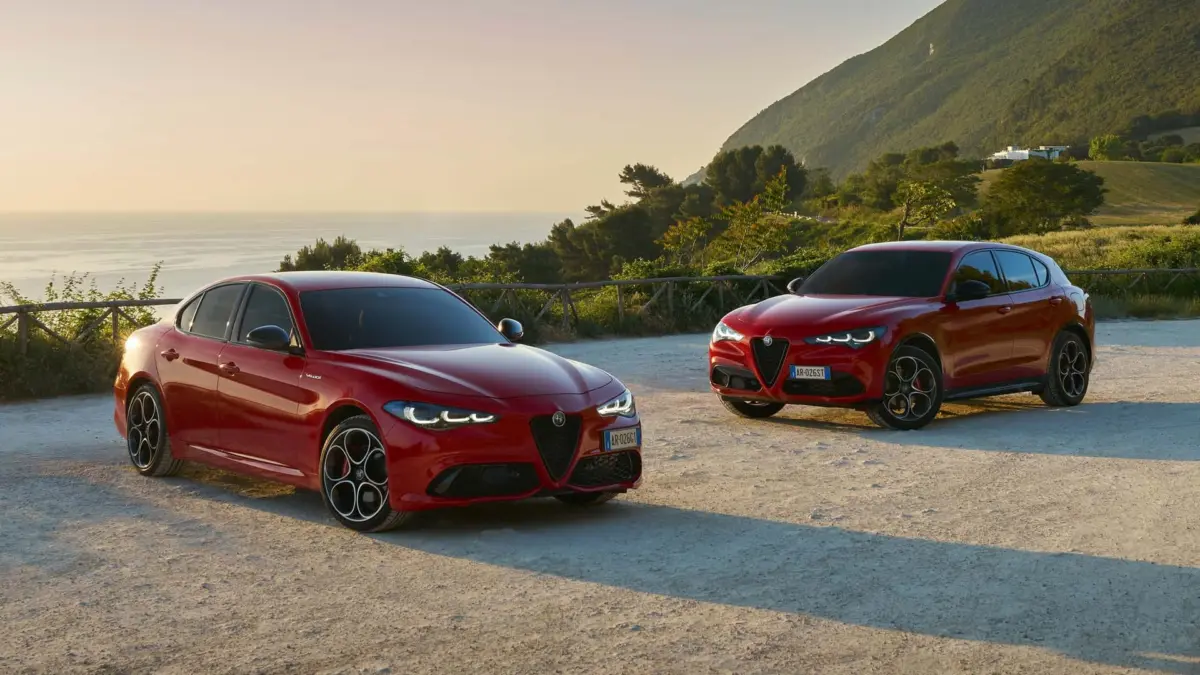
"Alfa Romeo is studying solutions to continue competing in the D-segment with new interpretations of the current range made up of the Giulia and Stelvio, staying true to its performance-oriented DNA while adapting to the evolution of the market. The brand will leverage flexible platforms to progressively introduce multi-energy solutions, including hybrid and electric powertrains. More details will be communicated at a later stage."
This shift to "multi-energy" platforms suggests that the next generation of these vehicles—likely built on the STLA Large platform—will not be restricted to battery-electric powertrains. Instead, they will be designed to accommodate internal combustion engines and hybrid setups alongside full EV versions. This flexibility is seen as crucial for a brand that sells cars in diverse global markets where charging infrastructure and consumer demand for EVs vary significantly.
However, this pivot requires time. Industry analysts suggest that all-new replacements for the Giulia and Stelvio are unlikely to break cover before 2028 at the earliest. By keeping the current models fresh with safety updates and new trim levels, Alfa Romeo is ensuring it remains competitive in the premium D-segment without rushing a product to market before the technology or the consumer base is ready.
The Value of a Timeless Design
While some may view the 2027 update as "reheating the same soup," there is a strong argument that Alfa Romeo’s current "soup" remains among the best in the business. The Giorgio platform, which underpins both cars, is still widely regarded as a benchmark for steering precision and chassis balance. In an era where many new cars feel increasingly heavy and disconnected, the Giulia and Stelvio offer a tactile, mechanical engagement that has become increasingly rare.
Furthermore, the design of both vehicles has aged remarkably well. The Giulia’s proportions and the Stelvio’s athletic silhouette continue to look contemporary even a decade after their introduction. Inside, the cars benefit from a design philosophy that predates the industry’s obsession with massive, tablet-style touchscreens. The 2027 models retain a screen neatly integrated into the dashboard and, perhaps more importantly, a wealth of physical controls for climate and audio functions.
Ironically, as other manufacturers face criticism for removing physical buttons and are now pledging to return to more ergonomic interior layouts, Alfa Romeo finds itself in an advantageous position. By not having fully redesigned these cars during the height of the "screen-only" trend, the Giulia and Stelvio have maintained an interior layout that many drivers now find preferable.
As the automotive world navigates a complex transition between the era of combustion and the future of electrification, Alfa Romeo’s decision to refine its existing icons provides a bridge for the brand. The 2027 Giulia and Stelvio represent a final, polished iteration of a platform that redefined what an Italian sport sedan and SUV could be, buying the brand the necessary time to ensure their eventual successors live up to the same high standard.