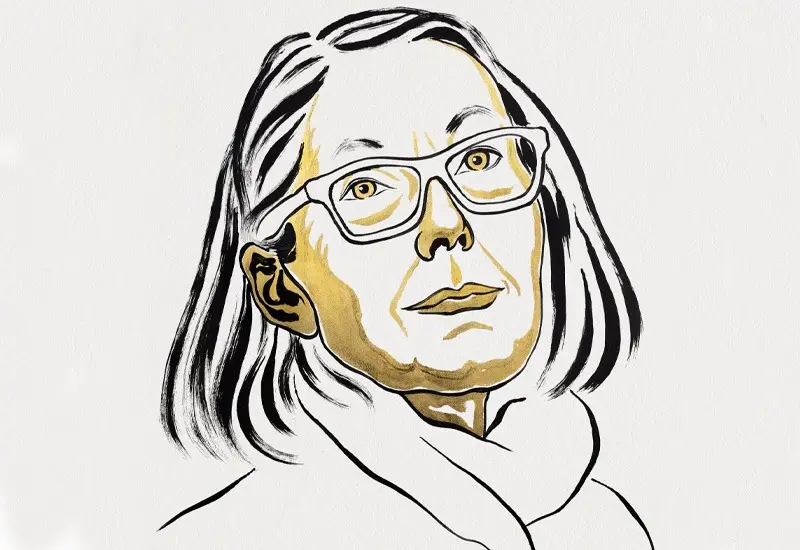
The news reached Carson in a setting that many of her readers would find characteristically atmospheric. When the Academy’s permanent secretary placed the traditional call to notify the laureate, Carson was in Iceland. When asked what she was doing at the moment the world’s most prestigious literary honor was bestowed upon her, she replied simply that she was "listening to the wind." The response, at once grounded and ethereal, underscores the temperament of a writer who has spent her career navigating the spaces between the physical world and the echoes of the past.
Born in Toronto in 1950, Carson has long maintained a public persona defined by a blend of academic rigor and creative mystery. For decades, her biographical notes have famously and succinctly stated that she "teaches ancient Greek for a living," a nod to her career as a classicist that informs every facet of her creative output. This foundation in the languages and literatures of antiquity—Homer, Sappho, Euripides, and Stesichorus—serves as the bedrock upon which she builds her experimental structures. Rather than merely translating the classics, Carson engages in a living conversation with them, treating the ancient world not as a relic, but as a vibrant, ongoing presence.
The Swedish Academy’s decision highlights Carson’s ability to dismantle the boundaries between genres. Throughout her career, she has consistently defied the traditional categories of poetry, essay, novel, and drama. Her work is often described as "form-bending," a term that barely captures the physical and intellectual variety of her publications. Perhaps the most striking example of this is "Nox," published in 2010. Rather than a standard bound volume, "Nox" is presented as a sturdy box containing a single, continuous accordion-folded sheet. This physical object serves as an epitaph for her estranged brother, Michael, who died in Copenhagen in 2005. The work combines photographs, letters, sketches, and a word-by-word breakdown of Catullus’s Poem 101, a Roman elegy for a brother. By turning a book into a sculptural object, Carson forced readers to engage with the tactile reality of grief and the fragmented nature of memory.
Carson’s breakthrough into wider public consciousness came with the 1998 publication of "Autobiography of Red." Nominally a "novel in verse," the book is a reimagining of the myth of Geryon, a red winged monster who was slain by Herakles in classical mythology. In Carson’s hands, Geryon becomes a sensitive, red-skinned young boy coming of age in the modern world, navigating a difficult romance with a charismatic youth named Herakles and finding solace in photography. The work was praised not only for its lyrical beauty but for its unexpected humor and its ability to make the mythological feel urgently contemporary. It remains one of her most accessible and beloved works, serving as a gateway for readers into her more challenging later experiments.