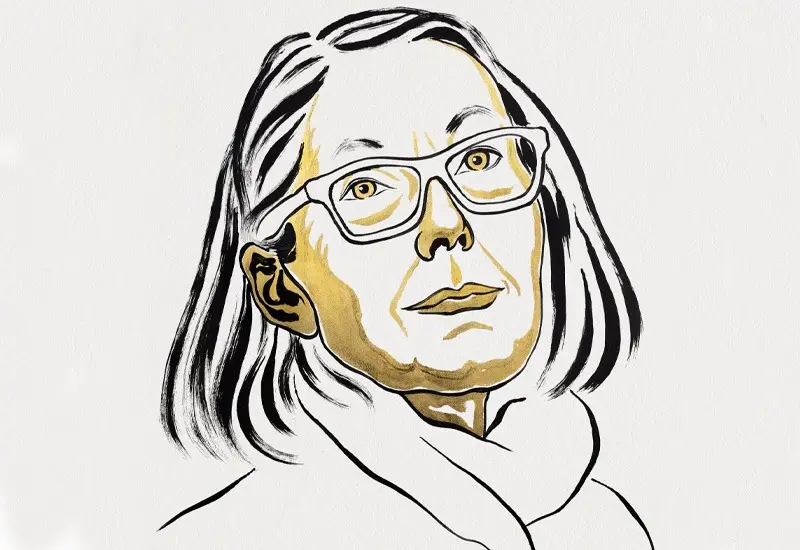
The Academy’s recognition of Carson is also a recognition of her unique brand of irony and playfulness. Despite the heavy weight of her classical influences and the often-tragic themes of her work, Carson’s writing is frequently shot through with a dry, sharp wit. She has a penchant for the unexpected, whether it is inserting a "fictional essay" into a poem or describing a red monster’s mother as a woman who "liked to smoke and look at the kitchen clock." This playfulness is what prevents her work from ever feeling academic in a dry or inaccessible sense; instead, it feels like an invitation to join her in a sophisticated game of intellectual and emotional discovery.
As a Canadian author, Carson joins the ranks of Alice Munro as a Nobel laureate from her home country, further cementing Canada’s significant contribution to global literature. Her win is likely to spark a renewed interest in the "classical tradition" the Academy mentioned, as readers look to understand the foundations upon which she has built her revolutionary contemporary forms.
Throughout the afternoon following the announcement, tributes began to pour in from the literary community. Peers and critics alike noted that Carson’s win feels like a validation of the "difficult" and the "experimental" at a time when the literary market often favors more conventional narratives. By awarding the prize to a writer who listens to the wind and translates the silence of Sappho, the Swedish Academy has signaled a deep appreciation for the enduring power of the avant-garde.
Carson has spent her life teaching Greek and writing books that refuse to stay within their margins. Today, that lifelong dedication to the "bittersweet" nature of language and the "playful dialogue" with the past has earned her the highest honor in the world of letters. As she remains in Iceland, perhaps still listening to the wind, the rest of the world is once again turning to the pages of "Autobiography of Red," "Nox," and "Wrong Norma" to rediscover the "new forms" she has so masterfully created. The 2026 Nobel Prize in Literature does not just honor a career; it honors a unique way of seeing the world—one where the ancient and the modern are in constant, beautiful, and restless motion.