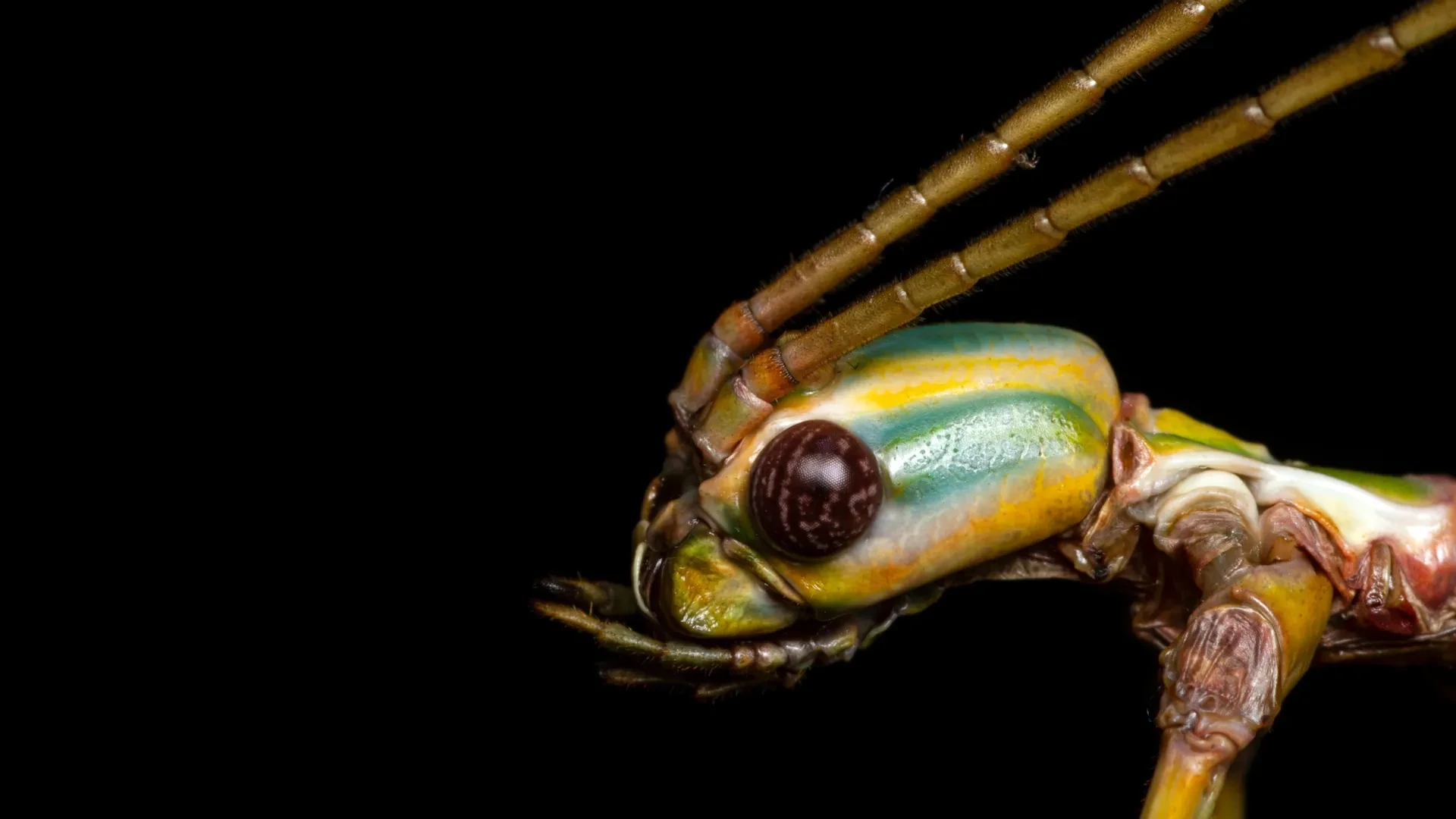
In the vast, rugged landscapes of Australia, where the wilderness often feels like one of the final frontiers of biological discovery, scientists have made a startling realization: some of the country’s most significant secrets have been hiding in plain sight. A team of researchers from the University of Sydney has recently identified two previously unrecognized species of large stick insects, proving that even in some of Australia’s most frequently visited and closely studied environments, the catalog of life remains incomplete.
The discovery, led by the University of Sydney’s Aola Richards Sydney Insect Hub, suggests that our understanding of Australian biodiversity is still in its formative stages. By reexamining members of the stick insect genus Anchiale, the research team has not only identified two entirely new species but has also restored a third species that had been lost to scientific obscurity for decades. This taxonomic breakthrough has expanded a group of insects previously thought to consist of only two species into a complex family of five distinct lineages.
These insects, which are often the size of a human hand or larger, are found across a massive geographical range. Their habitat stretches from the humid coastal regions of northern New South Wales, winds along the lush coastline of Queensland, and extends deep into the tropical reaches of northern Australia. Despite their size and their presence in areas populated by hikers, photographers, and amateur naturalists, the true diversity of these "phasmids" has remained obscured by their remarkable ability to blend into their surroundings—and by a lack of detailed genetic analysis until now.
Hidden Diversity Among Familiar Insects
The realization that these stick insects were not what they seemed came as a surprise to the scientific community, particularly given the sheer volume of data already available. In the modern era of "citizen science," the public plays a massive role in biological documentation. Platforms like iNaturalist and the Atlas of Living Australia have accumulated more than 1,000 independent observations of these insects. They have been photographed in backyards, national parks, and agricultural corridors, and they have been the subject of formal scientific study for over a century.
However, the University of Sydney team found that visual observation alone was insufficient to distinguish between these closely related species. Lead author Dr. Braxton Jones, a Postdoctoral Research Associate in the Molecular Ecology, Evolution and Phylogenomics Laboratory at the University of Sydney, noted that the discovery highlights the limitations of traditional observation in the face of "cryptic" diversity—where different species look nearly identical to the naked eye.
"Taxonomy is often a bit like detective work," Dr. Jones explained. "Even among some of Australia’s most photographed and frequently reported insects, we’re still finding species that have escaped scientific recognition. It shows that having a photo of an insect isn’t the same as truly understanding its genetic identity or its place in the ecosystem."
The researchers argue that much of Australia’s insect diversity remains undocumented, a sobering thought considering the rapid pace of environmental change and habitat loss. The study serves as a reminder that biodiversity is not just found in the untouched corners of the Outback, but also in the familiar green belts and coastal forests where humans and wildlife frequently intersect.
The work of Dr. Jones and his colleagues involved a painstaking process of cross-referencing modern data with historical records. They utilized a "total evidence" approach, combining high-tech DNA analysis with the physical examination of museum specimens, some of which had been collected nearly a century ago. By comparing the genetic markers of living insects with the physical characteristics of preserved ones, they were able to redraw the family tree of the Anchiale genus.