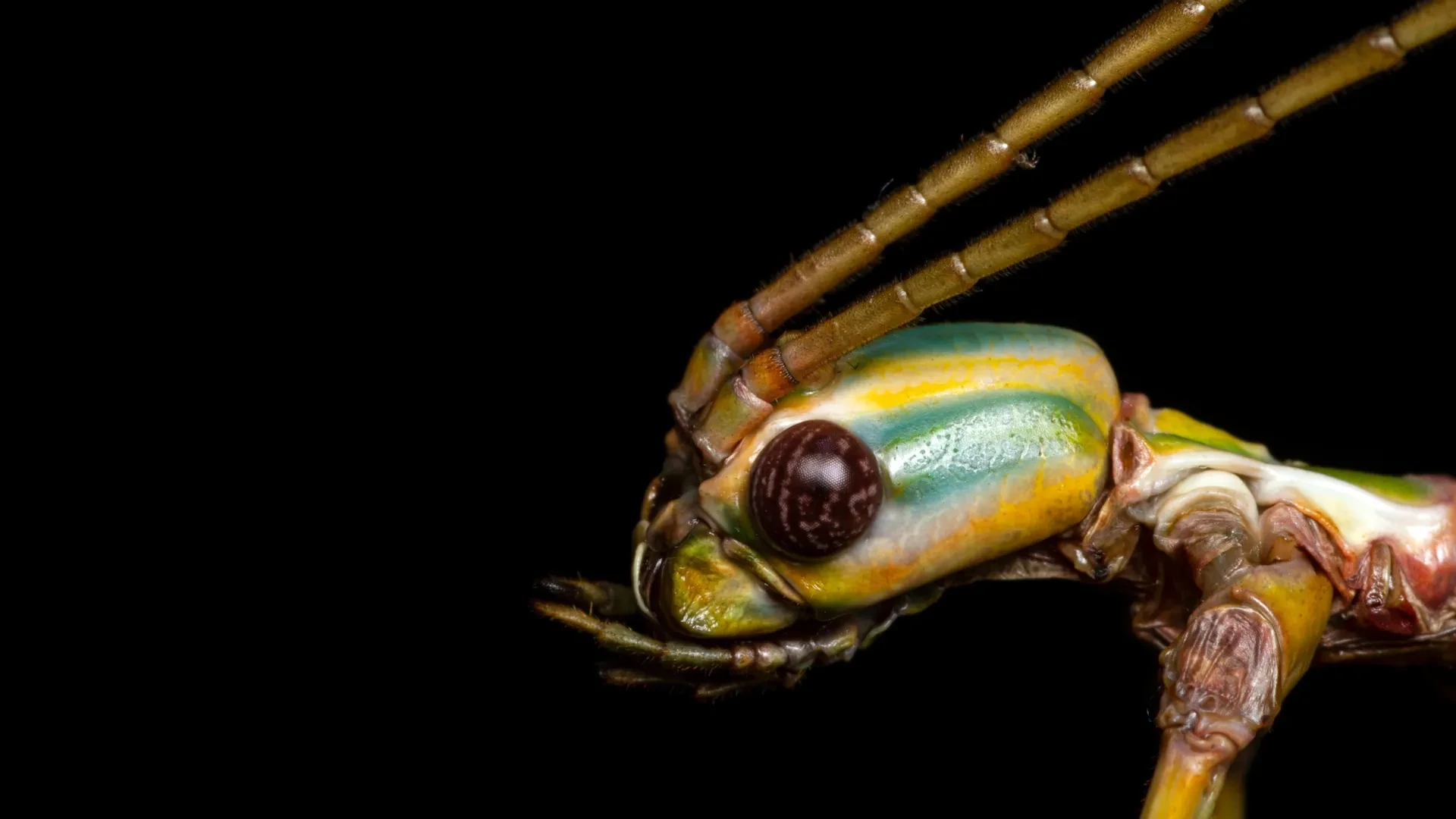
In the vast, rugged landscapes of Australia, where the wilderness often feels like one of the final frontiers of biological discovery, scientists have made a startling realization: some of the country’s most significant secrets have been hiding in plain sight. A team of researchers from the University of Sydney has recently identified two previously unrecognized species of large stick insects, proving that even in some of Australia’s most frequently visited and closely studied environments, the catalog of life remains incomplete.
The discovery, led by the University of Sydney’s Aola Richards Sydney Insect Hub, suggests that our understanding of Australian biodiversity is still in its formative stages. By reexamining members of the stick insect genus Anchiale, the research team has not only identified two entirely new species but has also restored a third species that had been lost to scientific obscurity for decades. This taxonomic breakthrough has expanded a group of insects previously thought to consist of only two species into a complex family of five distinct lineages.
These insects, which are often the size of a human hand or larger, are found across a massive geographical range. Their habitat stretches from the humid coastal regions of northern New South Wales, winds along the lush coastline of Queensland, and extends deep into the tropical reaches of northern Australia. Despite their size and their presence in areas populated by hikers, photographers, and amateur naturalists, the true diversity of these "phasmids" has remained obscured by their remarkable ability to blend into their surroundings—and by a lack of detailed genetic analysis until now.
Hidden Diversity Among Familiar Insects
The realization that these stick insects were not what they seemed came as a surprise to the scientific community, particularly given the sheer volume of data already available. In the modern era of "citizen science," the public plays a massive role in biological documentation. Platforms like iNaturalist and the Atlas of Living Australia have accumulated more than 1,000 independent observations of these insects. They have been photographed in backyards, national parks, and agricultural corridors, and they have been the subject of formal scientific study for over a century.
However, the University of Sydney team found that visual observation alone was insufficient to distinguish between these closely related species. Lead author Dr. Braxton Jones, a Postdoctoral Research Associate in the Molecular Ecology, Evolution and Phylogenomics Laboratory at the University of Sydney, noted that the discovery highlights the limitations of traditional observation in the face of "cryptic" diversity—where different species look nearly identical to the naked eye.
"Taxonomy is often a bit like detective work," Dr. Jones explained. "Even among some of Australia’s most photographed and frequently reported insects, we’re still finding species that have escaped scientific recognition. It shows that having a photo of an insect isn’t the same as truly understanding its genetic identity or its place in the ecosystem."
The researchers argue that much of Australia’s insect diversity remains undocumented, a sobering thought considering the rapid pace of environmental change and habitat loss. The study serves as a reminder that biodiversity is not just found in the untouched corners of the Outback, but also in the familiar green belts and coastal forests where humans and wildlife frequently intersect.
The work of Dr. Jones and his colleagues involved a painstaking process of cross-referencing modern data with historical records. They utilized a "total evidence" approach, combining high-tech DNA analysis with the physical examination of museum specimens, some of which had been collected nearly a century ago. By comparing the genetic markers of living insects with the physical characteristics of preserved ones, they were able to redraw the family tree of the Anchiale genus.
Fun Facts About Stick Insects
Stick insects, or phasmids, are among the most fascinating orders in the insect world. They are masters of mimicry, evolving bodies that perfectly replicate the texture, color, and shape of twigs, leaves, and bark. This evolutionary strategy allows them to remain virtually invisible to predators like birds and lizards.
Beyond their camouflage, stick insects are known for their unusual reproductive strategies. Many species are capable of parthenogenesis, a form of asexual reproduction where females can produce offspring without mating with a male. Furthermore, their eggs are often designed to look like seeds, sometimes featuring a fatty attachment called an elaiosome that encourages ants to carry them underground, effectively protecting the eggs from fire and predators until they are ready to hatch.
A Stick Insect Misidentified for Decades
One of the most significant outcomes of the study involved a large, charismatic stick insect that had long been a favorite of both professional entomologists and amateur insect enthusiasts. For decades, this particular insect was thought to belong to a known species, categorized under a broad taxonomic umbrella.
However, when the University of Sydney researchers combined their DNA findings with field surveys and studies of insects raised in controlled laboratory settings, the evidence pointed toward a major error in the historical record. The insect that people had been photographing and studying for years was, in fact, a distinct species that had been misidentified for the better part of the 20th century.
As a result of this research, the insect has been formally recognized and its name restored as Anchiale robusta. This process of "resurrecting" a species name is a critical part of taxonomy; it ensures that the scientific record accurately reflects the biological reality of the natural world. Without the correct name and classification, conservation efforts and ecological studies can be fundamentally flawed, as researchers might inadvertently apply data from one species to an entirely different one.
The findings, which have been published in the prestigious journal Austral Entomology, also introduced the world to Anchiale mabiensis. This new species was discovered in a very specific and high-stakes environment: the Mabi rainforest of the Atherton Tablelands in Queensland.
The Mabi rainforest is a critically endangered ecosystem, with only small, fragmented patches of the original forest remaining. The discovery of Anchiale mabiensis within this habitat adds a new layer of urgency to conservation efforts in the region. Perhaps the most striking feature of this new species is its reproductive biology. The researchers found that Anchiale mabiensis produces eggs with a highly unusual, distinctive lidlike structure. This specific morphological feature has never before been documented in any other stick insect species or their closest evolutionary relatives, marking it as a significant find for evolutionary biologists.
Discovery Could Help Forestry and Agriculture
While the discovery of new species is a triumph for pure science, the revised classification of these insects also carries significant practical weight for Australia’s primary industries. The study’s implications reach far beyond the laboratory and into the fields of forestry and agriculture.
Historically, certain species of large stick insects in Australia have been known to reach "plague-like" population levels. When these populations explode, the insects can cause devastating defoliation, stripping the leaves from entire stands of trees. This has previously caused concern for land managers and the forestry industry, as mass defoliation can stunt tree growth or even lead to widespread tree death.
The University of Sydney study revealed that the insects responsible for these occasional outbreaks actually represent more than one species. By distinguishing between these species, scientists can now begin to investigate whether one species is more prone to population surges than others, or if they respond differently to various environmental triggers like temperature and rainfall.
"Distinguishing between those species could help researchers and land managers better understand and manage future impacts on forestry and agriculture," the study suggests. If land managers know exactly which species they are dealing with, they can develop more targeted and effective management strategies, potentially saving millions of dollars in timber assets and protecting agricultural borders.
Furthermore, the study hints that the work is far from over. The researchers identified a potential third new species from the remote Cape York Peninsula. While the genetic and physical data suggests it is a unique, undescribed species, the team is currently awaiting additional specimens to confirm its identity with the rigor required for a formal description. This "candidate species" serves as a tantalizing hint of the further secrets the Australian tropics may hold.
The research was a collaborative effort supported by several major institutions. Funding was provided by the Australian Biological Resources Study (ABRS) through the National Taxonomy Research Grant of the Commonwealth Department of Climate Change, Energy, the Environment and Water. Additional support came from a CSIRO postgraduate scholarship, highlighting the importance of government and institutional backing in maintaining Australia’s scientific edge in biodiversity research.
As Dr. Jones concluded, the clock is ticking for many of these undocumented species. The discovery of Anchiale mabiensis in a critically endangered rainforest underscores the precariousness of Australia’s wildlife.
"These findings demonstrate the importance of protecting threatened ecosystems and documenting Australia’s extraordinary biodiversity before we lose species without us having even discovered them," Dr. Jones said. His words serve as a call to action for both the scientific community and the public to continue the "detective work" of exploring and protecting the natural world, ensuring that the country’s unique evolutionary heritage is preserved for generations to come.