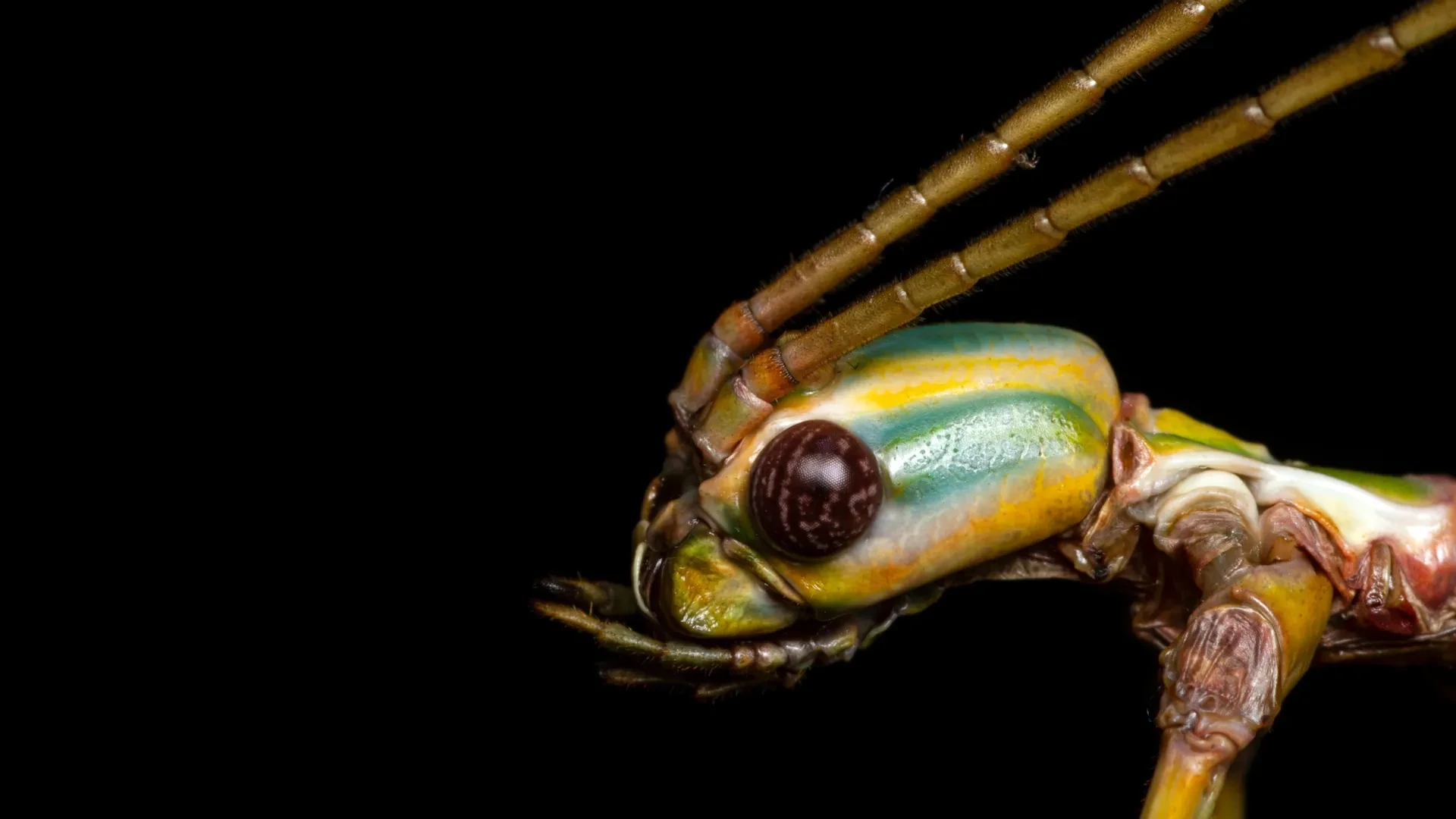
Fun Facts About Stick Insects
Stick insects, or phasmids, are among the most fascinating orders in the insect world. They are masters of mimicry, evolving bodies that perfectly replicate the texture, color, and shape of twigs, leaves, and bark. This evolutionary strategy allows them to remain virtually invisible to predators like birds and lizards.
Beyond their camouflage, stick insects are known for their unusual reproductive strategies. Many species are capable of parthenogenesis, a form of asexual reproduction where females can produce offspring without mating with a male. Furthermore, their eggs are often designed to look like seeds, sometimes featuring a fatty attachment called an elaiosome that encourages ants to carry them underground, effectively protecting the eggs from fire and predators until they are ready to hatch.
A Stick Insect Misidentified for Decades
One of the most significant outcomes of the study involved a large, charismatic stick insect that had long been a favorite of both professional entomologists and amateur insect enthusiasts. For decades, this particular insect was thought to belong to a known species, categorized under a broad taxonomic umbrella.
However, when the University of Sydney researchers combined their DNA findings with field surveys and studies of insects raised in controlled laboratory settings, the evidence pointed toward a major error in the historical record. The insect that people had been photographing and studying for years was, in fact, a distinct species that had been misidentified for the better part of the 20th century.
As a result of this research, the insect has been formally recognized and its name restored as Anchiale robusta. This process of "resurrecting" a species name is a critical part of taxonomy; it ensures that the scientific record accurately reflects the biological reality of the natural world. Without the correct name and classification, conservation efforts and ecological studies can be fundamentally flawed, as researchers might inadvertently apply data from one species to an entirely different one.
The findings, which have been published in the prestigious journal Austral Entomology, also introduced the world to Anchiale mabiensis. This new species was discovered in a very specific and high-stakes environment: the Mabi rainforest of the Atherton Tablelands in Queensland.
The Mabi rainforest is a critically endangered ecosystem, with only small, fragmented patches of the original forest remaining. The discovery of Anchiale mabiensis within this habitat adds a new layer of urgency to conservation efforts in the region. Perhaps the most striking feature of this new species is its reproductive biology. The researchers found that Anchiale mabiensis produces eggs with a highly unusual, distinctive lidlike structure. This specific morphological feature has never before been documented in any other stick insect species or their closest evolutionary relatives, marking it as a significant find for evolutionary biologists.