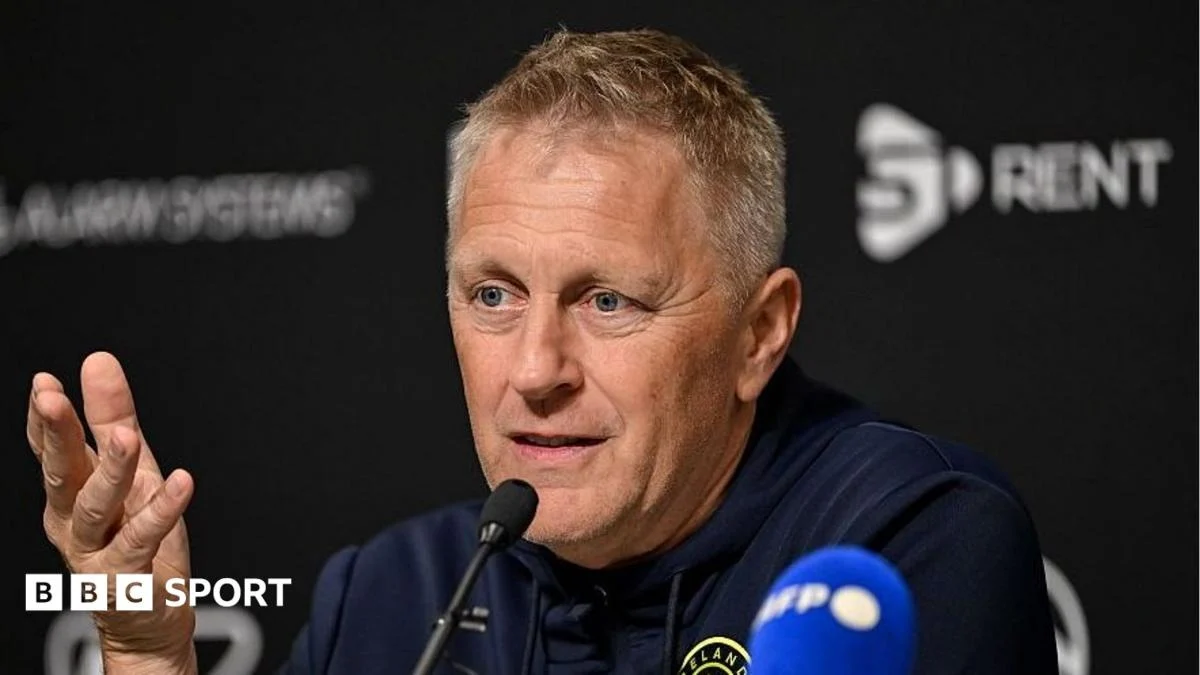
The manager’s exhaustion was written across his face as he reflected on a fortnight that saw his side navigate four matches in just fourteen days, including two highly contentious fixtures against Israel played on neutral ground. With only one of those games taking place on Irish soil, the squad covered approximately 5,000 miles in travel, moving between Dublin, Hungary, and Serbia. However, it was the psychological and moral weight of the window, rather than the physical mileage, that seemed to have left the deepest mark on the camp.
Hallgrimsson did not mince words when assessing the period, stating he was "delighted" that the ordeal had finally come to an end. His sentiments were underscored by a wish that no other national team would ever have to endure the specific set of circumstances his players and staff had faced over the last two weeks. The "trying" nature of the window was a confluence of sporting ambition and the harsh intrusion of global geopolitics into the sanctuary of the dressing room.
The scrutiny began long before the first whistle blew. The Republic of Ireland’s decision to fulfill their fixtures against Israel—first in a 3-0 victory in Debrecen, Hungary, and then in Sunday’s draw in Serbia—drew significant fire from activists at home. The pressure group Irish Sport for Palestine, through their ‘Stop The Game’ campaign, had vociferously called for a boycott of the matches in protest of the ongoing Israel-Gaza war. This campaign created a backdrop of intense public debate in Ireland, placing the Football Association of Ireland (FAI) and the players themselves in the crosshairs of a complex moral argument.
This external pressure manifested internally in a way rarely seen in international football. Prior to the victory in Hungary, the squad was forced to confront the ethical implications of the fixtures head-on. The situation reached a boiling point when goalkeeper Gavin Bazunu made the personal decision to withdraw from the Israel games. Bazunu, a significant figure in the Irish setup, felt that "it would be wrong to participate" given the current global climate. His absence was not due to injury but to a deeply held conviction, a move that sent ripples through the team and the wider sporting community.
The day of Bazunu’s withdrawal was described by many as chaotic. In an extraordinary move, a vote was held among the remaining players to determine whether they should proceed with the scheduled games against Israel. This moment of democratic deliberation within a sports team highlighted the sheer gravity of the situation; these were no longer just football matches, but a series of decisions that weighed heavily on the conscience of young athletes. Ultimately, the team decided to fulfill the fixtures, but the process of reaching that conclusion clearly took an emotional toll.
On the pitch, the results were mixed, leaving the Republic of Ireland with five points from a possible twelve across the window. While the 3-0 win in Debrecen provided a momentary sporting high, the surrounding atmosphere remained sombre. The final match on Sunday, played behind closed doors in the quiet surroundings of Backa Topola, felt like a subdued end to a tumultuous period. The lack of fans and the sterile environment of a neutral venue only served to amplify the sense of isolation and the "toll" Hallgrimsson repeatedly referenced.
The tension of the window was not limited to the players’ internal debates. It spilled over into the media room in dramatic fashion. On the eve of the Sunday draw, a news conference featuring Hallgrimsson was abruptly cut short following a confrontation with an Israeli reporter. The journalist made accusations that some Irish players had directed racist comments toward their opponents during the previous week’s victory. These claims were "strenuously denied" by the FAI, who characterized the allegations as baseless.
In a counter-move that highlighted the fractured nature of the encounter, the FAI revealed they had launched their own investigation into racist abuse directed toward Irish players. The association alleged that several of their squad members had been targeted by Israel fans during the match in Debrecen. The exchange of accusations underscored the volatility of the two-week period, where every action and word was magnified by the lens of an international conflict.
Amidst these broad team-wide struggles, the personal story of midfielder Finn Azaz emerged as a poignant example of the individual pressures at play. Azaz, who had put in an impressive performance during Thursday’s 2-2 draw at home to Austria, found himself in a particularly delicate position. The 26-year-old has family links to Israel on his mother’s side, a fact that added a layer of personal complexity to the team’s collective actions.
During both games against Israel, the Irish squad chose to wear black armbands and bow their heads during the playing of the Israeli national anthem as a form of silent protest. For Azaz, participating in these gestures while having direct family ties to the country created a profound internal conflict. Hallgrimsson, recognizing the sensitivity of the situation, ultimately decided to leave the midfielder out of the final match.
"I didn’t feel he was ready for the game," Hallgrimsson explained, noting that while Azaz had picked up a minor knock against Austria, the primary concern was his mental well-being. "It has been tough on him mentally. It is probably the most difficult situation for him of all of us. He deserves a lot of credit for being in the squad and showed desire to be a part of this team."
The manager elaborated on the specific difficulties Azaz faced, acknowledging that the team’s chosen forms of protest—the armbands and the refusal to look at the flag during the anthem—tested him more than anyone else in the camp. "I felt it was better to leave him out today than play him," the manager concluded, prioritizing the human element over the tactical requirements of the game.
Despite the strain, Hallgrimsson remains optimistic about Azaz’s future with the national team. When questioned about whether the Southampton midfielder would continue his international career following such a harrowing experience, the manager was firm in his support. He noted that "nothing points to him quitting" and emphasized that Azaz’s presence in the squad throughout the window was proof of his commitment to the green jersey. The manager expressed a clear desire to see the midfielder involved as the team looks ahead to the Euro 2028 finals, citing his proven quality and worth on the pitch.
As the Republic of Ireland squad prepares to return to their respective clubs, the dust will begin to settle on a window that will likely be remembered more for its off-field challenges than its on-field results. Hallgrimsson’s "tired expression" as he concluded his media duties served as a final image of a manager who has had to lead his team through a political and emotional minefield.
The five points gained from the four matches leave the team with work to do in a sporting sense, but the lessons learned over the past two weeks may prove more significant in the long run. Hallgrimsson admitted he has "learnt a lot," perhaps gaining a deeper understanding of the unique pressures that come with the Irish job and the intense social consciousness of his players.
The window has highlighted the increasingly blurred lines between sport and global politics, forcing a national team to act as a microcosm of a much larger debate. For now, the manager and his players will welcome the return to the relative simplicity of domestic football, hoping that the next time they convene, the focus can remain firmly on the game itself. The "trying" two weeks are over, but the conversations they sparked regarding the role of athletes in political discourse and the duty of care toward players in impossible situations are likely to continue long after the team has left Serbian soil.