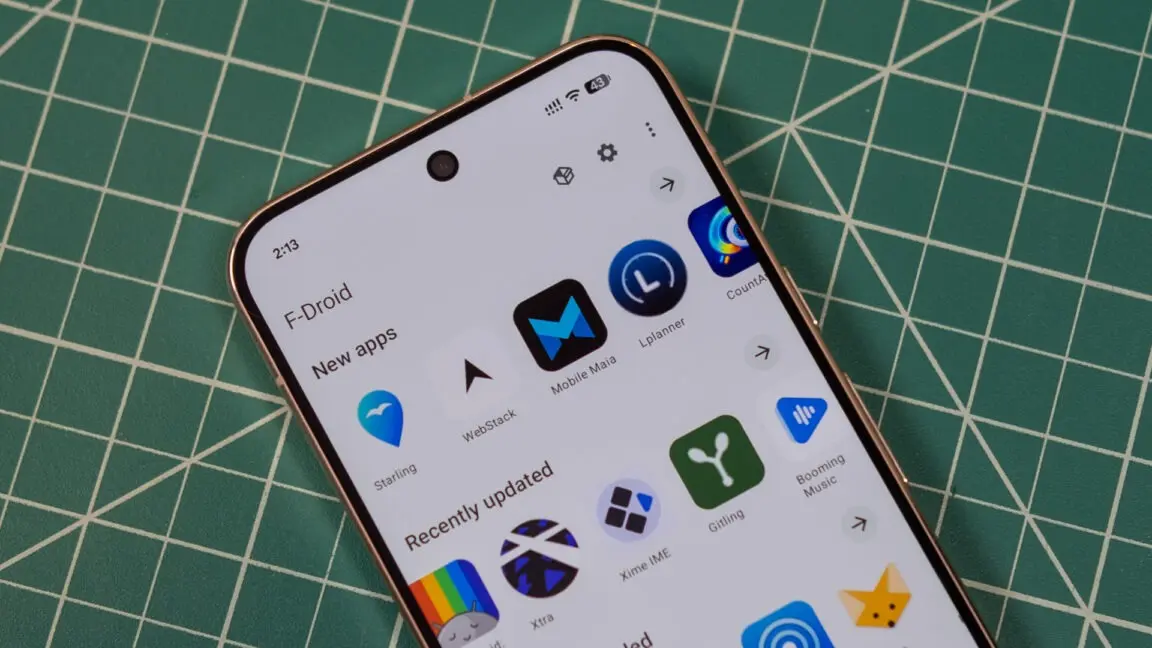
Virtually every Android smartphone and tablet shipping to consumers today comes with the Google Play Store preloaded as its primary gateway for software downloads. However, the open nature of the Android ecosystem has long permitted alternative avenues for acquiring mobile applications. Among these alternatives, F-Droid has stood out for over a decade as the premier community-driven marketplace dedicated exclusively to free and open-source software. Now, following a multiyear development initiative, the team behind the open-source platform has officially announced the rollout of F-Droid 2.0, marking the application store’s first major client update in ten years.
The arrival of F-Droid 2.0 represents a comprehensive overhaul of an application that had remained largely unchanged in its core design architecture for a decade. During the ten years leading up to this release, the broader Android operating system underwent dramatic visual and functional evolutions, leaving F-Droid’s legacy interface feeling increasingly dated compared to modern software standards. To bridge this generational gap, the project’s development team rebuilt the client from scratch using Kotlin Compose, which has become the industry standard for modern Android software development.
The transition to Kotlin Compose brings immediate performance and visual benefits to the user experience. The entire interface is substantially more responsive to touch inputs, delivering fluid navigation throughout the store’s various views. Additionally, the updated client now includes optional native support for Android’s Material theming system, allowing the application’s visual presentation, color palettes, and interface elements to adapt seamlessly to system-level customization settings across modern Android devices. Beyond visual styling, the user interface has been thoroughly decluttered and restructured. The layout reorganizes essential navigation, placing the store’s most vital functions within immediate reach while relocating secondary options and administrative controls into clean overflow menus.
This structural redesign arrives at a critical juncture in the growth of the repository. When F-Droid first launched, its overall catalog was relatively modest, containing only a small collection of basic utilities and independent software projects. Over the past decade, however, the ecosystem has expanded significantly, and the platform now hosts thousands of free and open-source applications built by developers around the globe. Managing such a vast catalog under a decade-old interface presented increasingly obvious usability challenges, making a complete architectural refresh necessary to help users discover and manage software effectively.