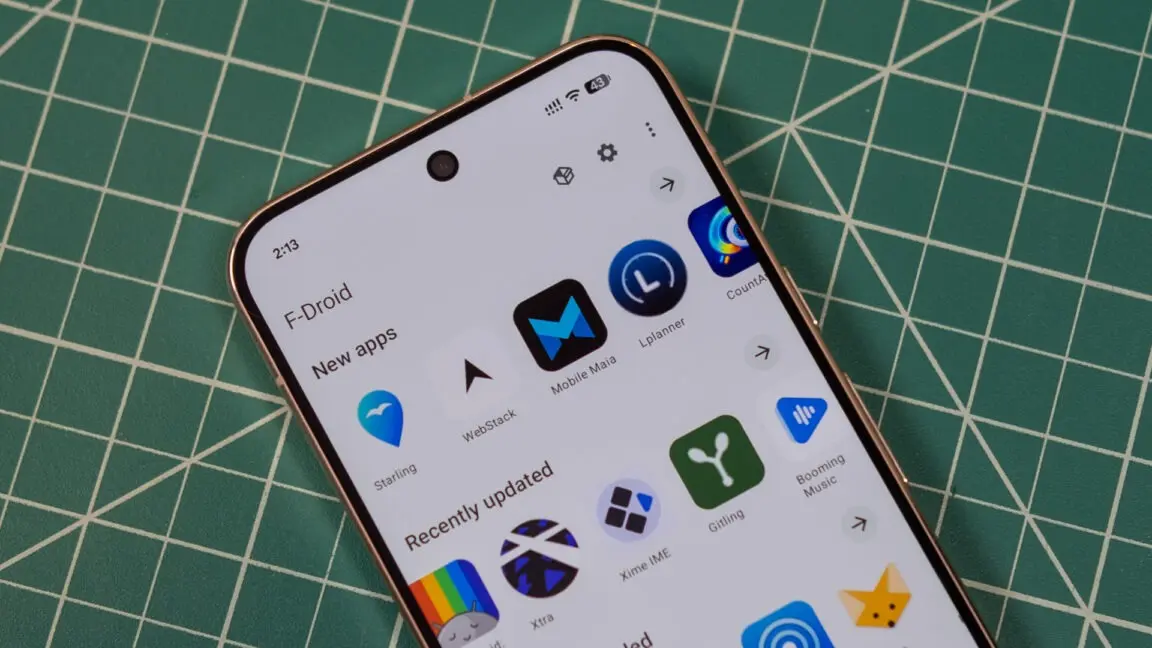
In legacy versions of F-Droid, navigating these operating system restrictions required a disjointed and potentially alarming installation sequence. Users had to manually download an Android Package (APK) file through the client, open the downloaded package file, and then navigate through a series of prominent system pop-up warnings warning of the potential dangers of installing software from unknown sources before finally approving the installation. This manual sequence often discouraged non-technical users from utilizing alternative app repositories.
F-Droid 2.0 streamlines this installation workflow by integrating support for Google’s native pre-approval API. By leveraging this system API, F-Droid alters the timing of system permission checks, eliminating the need for standalone APK file management and intimidating security banners. Under the new process, users verify their explicit intention to install an application before the package download actually begins. Once that intent is confirmed, the installation proceeds seamlessly with minimal input required.
In practice, this new integration reduces the entire installation process down to a straightforward two-tap interaction. A user simply taps the "Install" button inside the F-Droid client interface, and then taps "Install" a second time on a standardized system pop-up prompt to confirm the action. While this flow still requires one additional tap compared to the single-click installation experience provided by the Google Play Store, it represents a major usability improvement over the legacy sideloading process, removing significant friction for users who rely on open-source software.
The release of F-Droid 2.0 marks the successful conclusion of a long-term development effort aimed at modernizing alternative Android app distribution. By combining a contemporary Kotlin Compose interface, privacy-focused application discovery, description-based search capabilities, and a simplified installation pipeline utilizing native system APIs, the community-driven platform has updated its client to align with modern mobile operating system standards while preserving its core commitment to open-source software distribution.