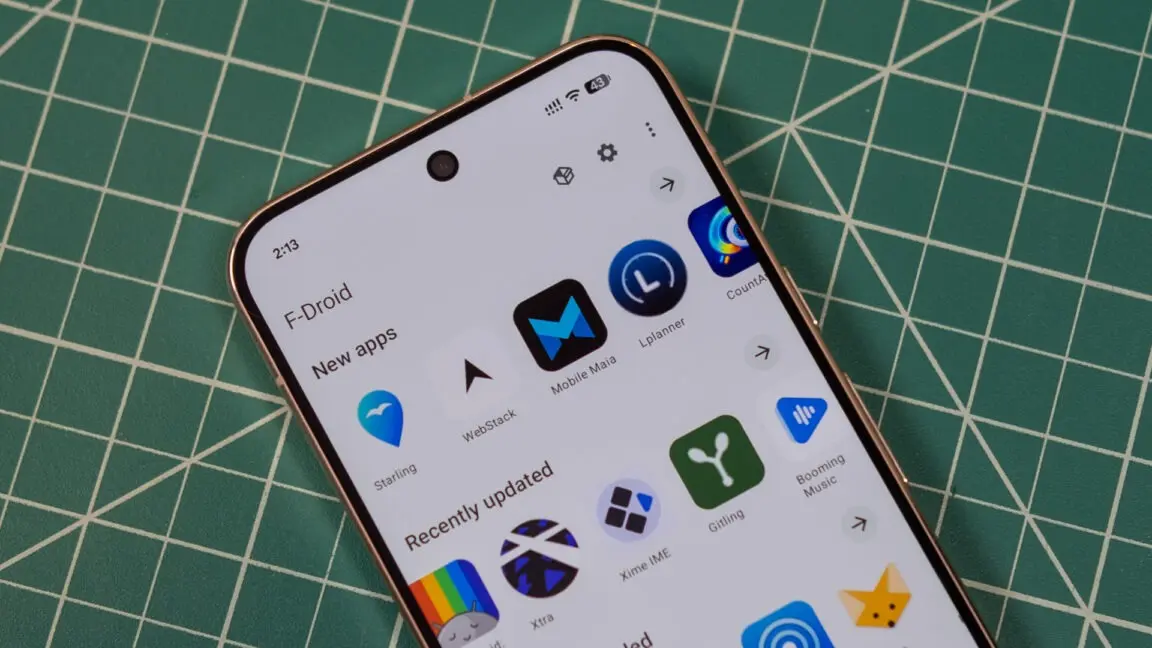
Unlike commercial software marketplaces—most notably the Google Play Store—F-Droid maintains a fundamentally different approach to user data and software distribution. Standard commercial storefronts rely heavily on user telemetry, actively tracking taps, search queries, installation histories, and usage patterns across individual devices. These commercial platforms utilize that data to serve targeted advertising, generate algorithmic recommendations, and influence user discovery. F-Droid operates on a privacy-respecting model that completely eschews these practices. The platform does not track user interactions, monitor app installations, or log activity to push sponsored content or personalized recommendations. Its primary focus is providing a direct, transparent channel to locate and install open-source software without background surveillance.
To assist users in navigating its expanding library without relying on invasive tracking algorithms, F-Droid 2.0 introduces a refined categorization and search architecture. The main client screen features a dedicated Discover page that highlights broad, high-level app categories, offering an intuitive starting point for casual browsing. For users seeking specialized software, the client’s Search tab now organizes applications into a wide array of specific technical niches. These granular categories make it much easier to browse focused software classes, including specialized tools like network firewalls, encrypted password managers, and virtual private network (VPN) utilities.
Alongside refined app categorization, F-Droid 2.0 incorporates a fundamental upgrade to its underlying search engine logic. In previous iterations of the client, searching for software relied primarily on matching query terms against exact application names. This limited approach often made it difficult for users to find relevant tools unless they already knew the specific name of the application they were looking for. With the release of F-Droid 2.0, the search functionality has been upgraded to scan full application descriptions rather than restricting queries solely to app titles. As a result, users searching for broad functional terms or specific features can now discover relevant open-source applications much more efficiently.
Beyond visual upgrades and improved discovery mechanisms, F-Droid 2.0 introduces significant operational changes to how applications are installed onto user devices. Installing software from sources outside the preinstalled Google Play Store—a process commonly referred to as sideloading—has historically involved multi-step technical friction. Operating system developers like Google have consistently placed hurdles in the path of sideloaded applications, citing platform security risks and malware mitigation as the primary justifications for restricting external software sources. These ongoing security policies form the backdrop for Google’s broader efforts to tighten software distribution rules across the ecosystem, including its upcoming developer verification system designed to enforce stricter identities and origins for software running on Android.