For roughly a decade, mainstream neuroscience operated under a prevailing consensus regarding how psychedelic compounds affect the human brain: they induce structural chaos. According to this standard model, the established, predictable patterns of neural communication—the distinct brain networks that quietly orchestrate sight, attention, memory, and our anchored sense of self—gradually loosen their boundaries and begin communicating indiscriminately. Electroencephalography (EEG) readings under the influence of these substances consistently display heightened noise and elevated complexity, pointing toward a state of systemic entropy.
Neuroscientists long described this phenomenon through transport metaphors. "Think of the networks of the brain as highways," explains Devon Stoliker, a neuroscientist at Monash University. "Under psychedelics, these highways break down into many different directions."
However, a landmark study published in Nature by Stoliker and his research team challenges this paradigm of unbridled randomness. Designing a specialized experiment known as PsiConnect, the researchers sought to determine whether the altered brain states produced by psychedelics are truly chaotic or whether deeper organizational frameworks have simply eluded traditional imaging techniques. By administering psilocybin to 62 individuals who had never taken a psychedelic before and examining their brain activity through advanced artificial intelligence, the team discovered that beneath the surface noise lies a remarkably structured, context-sensitive order.
An uninterrupted trip
To Stoliker, the long-held explanation that psychedelics simply throw the brain into chaotic disarray has always lacked explanatory power when matched against human subjective experience. "It never really explained why an individual would have a meaningful experience, why they might have insight, why they might experience clarity, and why these might translate into positive psychological changes," Stoliker notes.
To bridge the gap between neuroimaging data and the profound personal insights frequently reported by users, the Monash University team established the PsiConnect protocol. The study recruited 62 psychedelic-naive volunteers who underwent a rigorous, controlled four-part experimental sequence on two separate occasions: once in a completely sober state and once after receiving a 19-milligram dose of psilocybin, the naturally occurring psychoactive compound found in certain species of fungi.
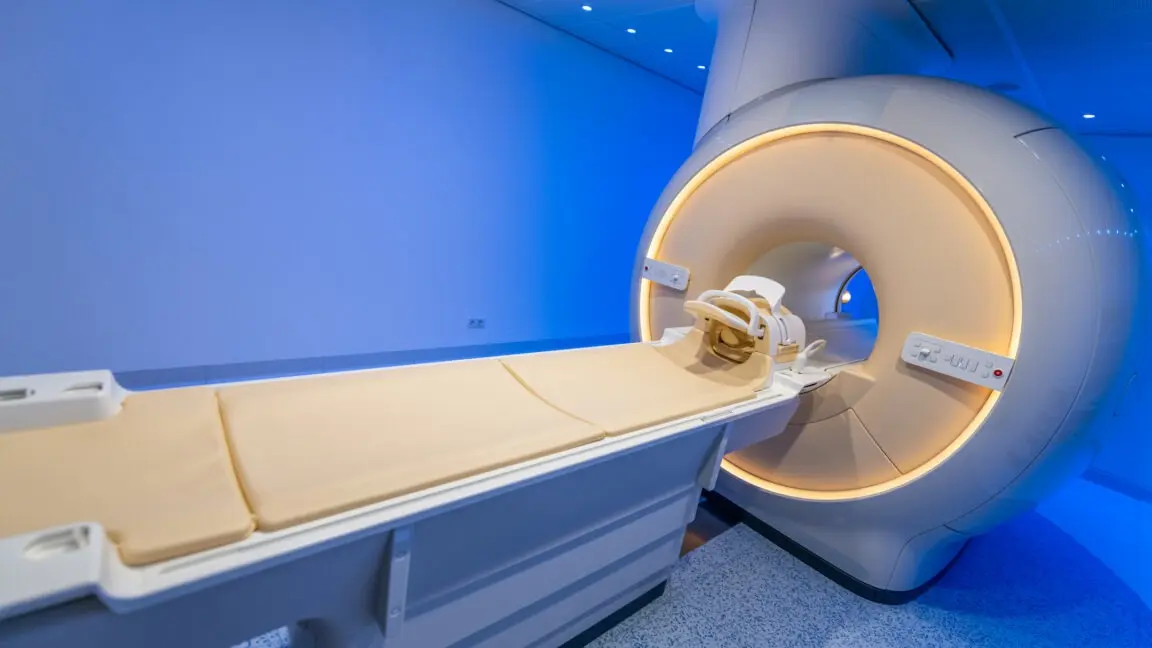
During both the sober and drug-assisted sessions, participants were placed in four distinct environmental settings or contexts. They spent eight minutes lying quietly at rest, listened to a guided meditation, experienced an 11-minute curated music playlist, and watched a six-minute video displaying clouds moving across an open sky. Each volunteer navigated this sequence twice while being monitored—first inside a functional Magnetic Resonance Imaging (fMRI) scanner approximately 80 minutes after dosing, and later via an electroencephalogram (EEG) setup roughly 150 minutes post-dose.
Notably, the trial conspicuously omitted the standardized cognitive tests, memory challenges, and reaction-time drills that researchers traditionally employ during brain imaging studies. This deliberate choice was central to the methodology.
"We wanted ecological validity," Stoliker explains. "We wanted to know what the brain was like when somebody was having an authentic, uninterrupted psychedelic experience. If somebody took a psychedelic in a therapeutic setting, you wouldn’t have them completing tasks."
Stoliker emphasizes that introducing cognitive tasks mid-trip often pulls subjects out of their altered state—a phenomenon researchers refer to as "grounding." By demanding task performance, investigators risk altering the state they intend to examine. "Once you introduce these sorts of tasks, you’re actually interrupting the very phenomena you are seeking to measure," Stoliker says.
The decision to protect the subjective experience yielded striking psychological results. Following the sessions, half of the study’s participants ranked their time in the scanner among the most meaningful experiences of their entire lives, with 24 individuals placing it within their personal top five most significant life events. With these impactful experiences documented, Stoliker and his team set out to analyze the vast volume of neuroimaging data to understand what was occurring within the brain.
Blurred boundaries
To unravel the neural mechanics of the experience, the researchers first measured global functional connectivity—a metric indicating how much influence any given region of the cerebral cortex exerts over the rest of the brain. The team observed that when participants kept their eyes closed while under the influence of psilocybin, primary sensory regions lost their typical influence, whereas associative regions—which process higher-order cognitive functions and abstract thought—gained significant dominance.
"It seems like the brain’s ability to construct reality, or imagination, or our associations, our beliefs, our sense of self—these faculties had more dominance over sensory areas," Stoliker says, noting that this interpretation remains a strong hypothesis. "This could help explain why people have meaningful, complex imagery experiences, why they have mystical experiences with imagery that is personally relevant to them."