For roughly a decade, mainstream neuroscience operated under a prevailing consensus regarding how psychedelic compounds affect the human brain: they induce structural chaos. According to this standard model, the established, predictable patterns of neural communication—the distinct brain networks that quietly orchestrate sight, attention, memory, and our anchored sense of self—gradually loosen their boundaries and begin communicating indiscriminately. Electroencephalography (EEG) readings under the influence of these substances consistently display heightened noise and elevated complexity, pointing toward a state of systemic entropy.
Neuroscientists long described this phenomenon through transport metaphors. "Think of the networks of the brain as highways," explains Devon Stoliker, a neuroscientist at Monash University. "Under psychedelics, these highways break down into many different directions."
However, a landmark study published in Nature by Stoliker and his research team challenges this paradigm of unbridled randomness. Designing a specialized experiment known as PsiConnect, the researchers sought to determine whether the altered brain states produced by psychedelics are truly chaotic or whether deeper organizational frameworks have simply eluded traditional imaging techniques. By administering psilocybin to 62 individuals who had never taken a psychedelic before and examining their brain activity through advanced artificial intelligence, the team discovered that beneath the surface noise lies a remarkably structured, context-sensitive order.
An uninterrupted trip
To Stoliker, the long-held explanation that psychedelics simply throw the brain into chaotic disarray has always lacked explanatory power when matched against human subjective experience. "It never really explained why an individual would have a meaningful experience, why they might have insight, why they might experience clarity, and why these might translate into positive psychological changes," Stoliker notes.
To bridge the gap between neuroimaging data and the profound personal insights frequently reported by users, the Monash University team established the PsiConnect protocol. The study recruited 62 psychedelic-naive volunteers who underwent a rigorous, controlled four-part experimental sequence on two separate occasions: once in a completely sober state and once after receiving a 19-milligram dose of psilocybin, the naturally occurring psychoactive compound found in certain species of fungi.
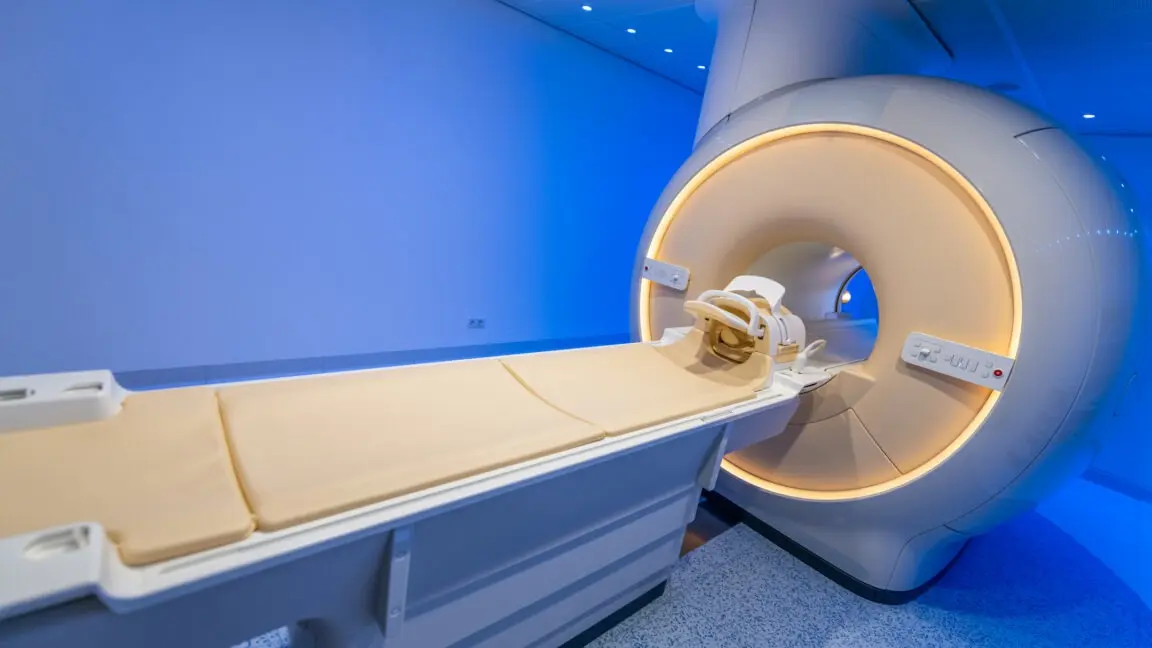
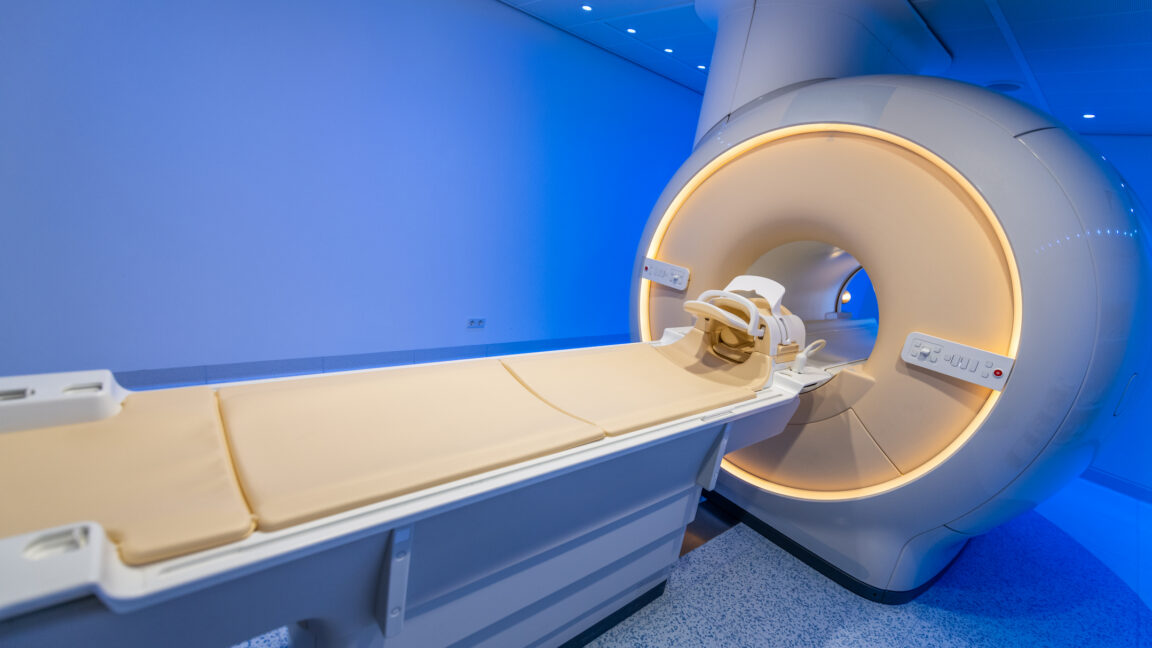
During both the sober and drug-assisted sessions, participants were placed in four distinct environmental settings or contexts. They spent eight minutes lying quietly at rest, listened to a guided meditation, experienced an 11-minute curated music playlist, and watched a six-minute video displaying clouds moving across an open sky. Each volunteer navigated this sequence twice while being monitored—first inside a functional Magnetic Resonance Imaging (fMRI) scanner approximately 80 minutes after dosing, and later via an electroencephalogram (EEG) setup roughly 150 minutes post-dose.
Notably, the trial conspicuously omitted the standardized cognitive tests, memory challenges, and reaction-time drills that researchers traditionally employ during brain imaging studies. This deliberate choice was central to the methodology.
"We wanted ecological validity," Stoliker explains. "We wanted to know what the brain was like when somebody was having an authentic, uninterrupted psychedelic experience. If somebody took a psychedelic in a therapeutic setting, you wouldn’t have them completing tasks."
Stoliker emphasizes that introducing cognitive tasks mid-trip often pulls subjects out of their altered state—a phenomenon researchers refer to as "grounding." By demanding task performance, investigators risk altering the state they intend to examine. "Once you introduce these sorts of tasks, you’re actually interrupting the very phenomena you are seeking to measure," Stoliker says.
The decision to protect the subjective experience yielded striking psychological results. Following the sessions, half of the study’s participants ranked their time in the scanner among the most meaningful experiences of their entire lives, with 24 individuals placing it within their personal top five most significant life events. With these impactful experiences documented, Stoliker and his team set out to analyze the vast volume of neuroimaging data to understand what was occurring within the brain.
Blurred boundaries
To unravel the neural mechanics of the experience, the researchers first measured global functional connectivity—a metric indicating how much influence any given region of the cerebral cortex exerts over the rest of the brain. The team observed that when participants kept their eyes closed while under the influence of psilocybin, primary sensory regions lost their typical influence, whereas associative regions—which process higher-order cognitive functions and abstract thought—gained significant dominance.
"It seems like the brain’s ability to construct reality, or imagination, or our associations, our beliefs, our sense of self—these faculties had more dominance over sensory areas," Stoliker says, noting that this interpretation remains a strong hypothesis. "This could help explain why people have meaningful, complex imagery experiences, why they have mystical experiences with imagery that is personally relevant to them."
Simultaneously, the team recorded a marked shift in network architecture. Connections within individual brain networks weakened, while connections between separate networks grew demonstrably stronger. The overall modularity of the brain—a parameter reflecting how neatly groups of neurons remain segregated into specialized, dedicated teams—dropped significantly across all four environmental settings of the experiment.
Furthermore, the study highlighted a striking collapse in the brain’s baseline sensory distinctions. Under sober conditions, brain activity in a person with closed eyes looks fundamentally different from brain activity when watching a movie. Under psilocybin, however, that distinct functional boundary largely vanished. Within the visual network, the connectivity gap between having eyes open and eyes closed shrank by 85 percent. Independent data from the subsequent EEG sessions confirmed this finding: alpha-band activity, which normally functions as a neural filter or gatekeeper restricting visual input when eyes are closed, was reduced by nearly half.
"When somebody takes a psychedelic and they’re able to close their eyes and see complex imagery, there seems to be less boundary between the internal and external world than we ordinarily experience," Stoliker explains.
On the surface, these primary analytical sweeps seemed to confirm the prevailing academic narrative: psychedelics appeared to induce a chaotic state characterized by blurred network boundaries, decreased modularity, and scrambled sensory processing. Yet when the researchers changed their analytical approach, that apparent chaos transformed into a highly structured pattern.
Hidden order
The reason previous neuroimaging studies frequently concluded that psychedelics cause brain chaos stems from two standard data-averaging practices deeply embedded in neuroscientific research.
The first standard practice involves averaging brain data over time. An eight-minute fMRI brain scan produces several hundred sequential whole-brain images. To evaluate how two distinct brain regions interact, scientists traditionally compress all of those sequential snapshots into a single averaged numerical score. This aggregate score reflects the degree to which the two regions synchronized across the entire eight-minute period. While computationally convenient, this averaging method risks obscuring brief, transiently structured patterns that assemble, perform a function, and disassemble within short windows of time, washing them out into what appears to be random noise.
The second standard practice involves averaging data across subjects. After computing a single summary metric for each participant, conventional methods pool all participants together into a single group average. This rests on the assumption that individual variations represent statistically irrelevant noise that will safely cancel out across a large sample size. Because the PsiConnect study was specifically tailored to explore personal, individual experiences, Stoliker’s team sought an analytical method that preserved individual variations and temporal dynamics.
Instead of relying on conventional temporal and group averaging, the researchers fed the real-time, moment-by-moment neural activity of 332 distinct brain regions into CEBRA—an advanced machine-learning algorithm designed to compress high-dimensional neural data into its core underlying structure while strictly preserving the temporal sequence of events.
For every participant, CEBRA constructed a dynamic neural trajectory: a path tracing through a three-dimensional mathematical space, with every point representing a specific moment during the brain scan.
"When they’re not under psilocybin, the brain activity is less differentiated by context," Stoliker notes. "But under psilocybin, we see that the activity becomes organized across time and more clearly differentiated by context."
Under psilocybin, the machine-learning trajectories did not dissolve into a disordered cloud of data. Instead, they cleanly separated into four distinct, highly organized clusters, each corresponding precisely to one of the four experimental contexts: rest, guided meditation, music, and the visual cloud video. The neural patterns were so clearly structured that a machine-learning classifier could analyze a single isolated moment of brain activity and accurately identify which of the four contexts the participant was experiencing at that instant.
Significantly, the machine-learning classifier’s ability to distinguish these contexts was not uniform across all subjects; its accuracy scaled directly with how profound and meaningful the participants subjectively reported their experience to be.

One with the world
To determine which specific neural networks were driving this context-dependent organization, the research team performed a lesion-style computational analysis. They systematically swapped out individual brain networks’ psilocybin activity data, replacing it with the corresponding network data from their sober scans, and observed how severely the AI classifier’s performance degraded as a result.
This analysis revealed that two primary networks were responsible for the effect: the Default Mode Network (DMN) and the Visual Network. Each of these networks independently accounted for more than 20 percent of the classifier’s predictive accuracy.
"The default mode network is strongly associated with the sense of self: daydreaming, mind wandering, thinking about yourself. It’s often been called the narrative self," Stoliker explains. "On the other end of this gradient, more externally oriented, is the visual system."
Under the influence of psilocybin, the functional distinction between these two systems diminished significantly. The team suggests that this convergence explains why participants subjectively felt that the separation between themselves and the outside environment had dissolved—a psychological state Stoliker terms "embeddedness."
"Theoretically, we could suggest that psychedelics are temporarily altering the organization of brain networks that ordinarily help maintain this separation that we experience," he says. "It really challenges the idea of whether the internal world and external world are separate and highlights the idea that the brain may be responsible for constructing both."
Tuning the room
The day following their imaging sessions, participants evaluated their psychological state across several metrics, rating changes in their sense of connection to themselves, to others, and to nature, as well as shifts in feelings of peace, acceptance, and creativity, using a scale ranging from -100 to +100.
"For the vast majority of our participants, we found they had positive psychological changes the next day," Stoliker reports. Notably, the strength of these positive psychological shifts correlated directly with how accurately the AI classifier was able to distinguish between the four environmental contexts during their brain scans.
These findings carry significant implications for the future of psychedelic-assisted psychotherapy. If external context is not merely a passive backdrop for setting a comfortable mood, but actively shapes the structural organization of the brain during a trip, then environmental factors—such as the room layout, the selected music playlist, and the therapist’s precise verbal instructions—take on the role of active clinical variables. In theory, clinicians could deliberately tune these variables to maximize therapeutic benefits and target specific mental health outcomes.
However, the researchers emphasize that several crucial questions remain before these findings can be directly translated into clinical protocols.
Currently, the data shows that two individuals who report identical subjective "embeddedness" scores can still experience vastly different personal journeys. Furthermore, all volunteers in the PsiConnect trial were healthy individuals, whereas therapeutic applications ultimately target patients suffering from specific psychiatric and psychological disorders whose neural baselines may respond differently.
Finally, scientists have yet to determine precisely how environmental elements like music or visual stimuli should be tailored for specific therapeutic goals.
"That’s a future avenue where we need more research to determine exactly what conditions should be optimized, and for who. It’s quite possible we would want to take different approaches for each individual, or depending on what their diagnosis is," Stoliker says. "Still, finding this level of organization hidden underneath that disorder and chaos has some really good explanatory value."