For many seasoned travelers, there is a specific ritual that marks the conclusion of a journey: the final, sweeping gaze from a city’s highest point. Whether peering over the terracotta rooftops of Barcelona from the summit of Casa Milà or tracing the winding cobblestone streets of Copenhagen from the top of the Round Tower, looking down on a landscape provides a unique sense of closure. It is a way of orienting the self, of mapping one’s physical footsteps against a grander geography, and ultimately, of transforming a place that once felt foreign into something intimate and understood.
Yet, for those who live within the shadow of these landmarks, the ritual is often deferred. In New York City, a metropolis defined by its verticality, the Empire State Building stands as the ultimate sentinel. For a resident of five years—and a neighbor in New Jersey for a lifetime before that—the building has always been a constant in the peripheral vision, a North Star of the Manhattan skyline. However, despite a life spent marveling at its Art Deco silhouette from afar, the actual experience of ascending its heights often remains a "someday" plan. This past September, on a day where the late-summer sun cast a sharp, golden light across the city, that "someday" finally arrived at 350 Fifth Avenue.
Stepping into the world of the Empire State Building is an exercise in cinematic nostalgia and architectural wonder. While modern skyscrapers like the Edge or Summit One Vanderbilt offer high-tech thrills and glass-bottomed floors, the Empire State Building offers something different: a connection to the soul of 20th-century New York. It is the setting of Sleepless in Seattle and the playground of King Kong, a structure that manages to feel both like a museum and a living, breathing hub of global commerce.
The Architectural Legacy of an Icon
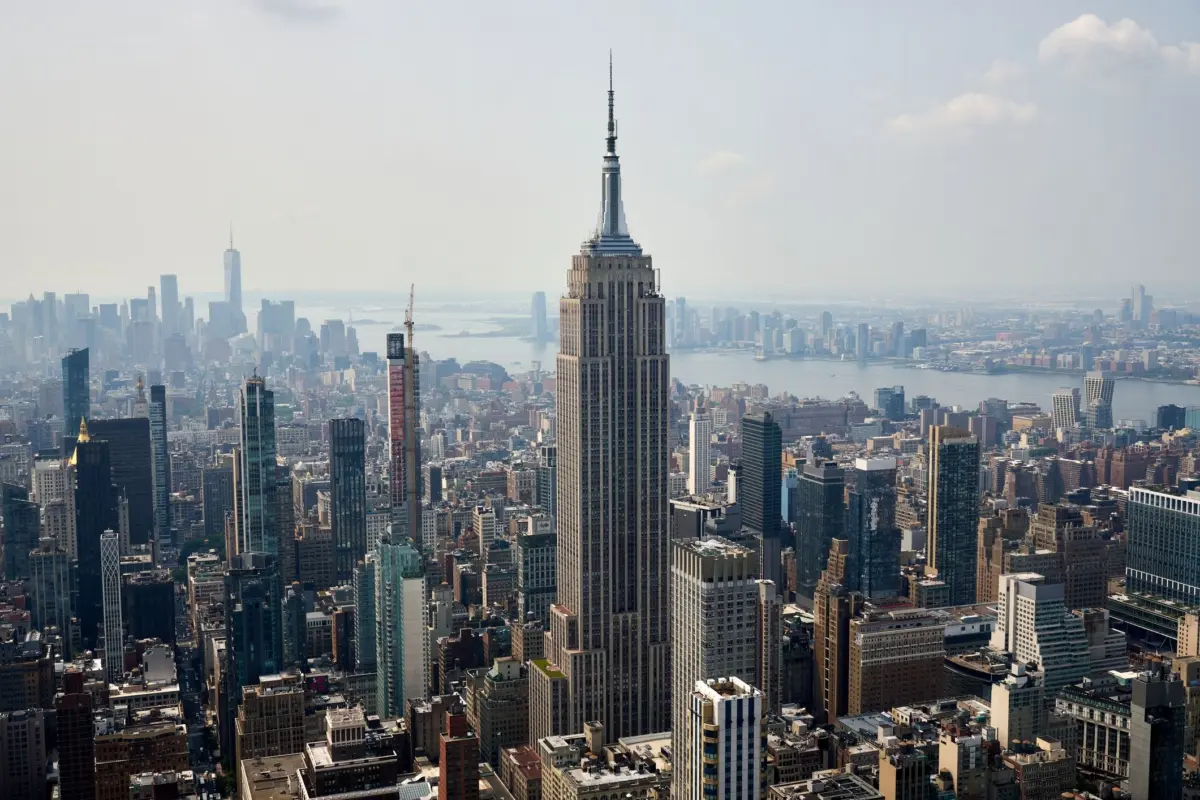
To understand the Empire State Building, one must first appreciate the staggering speed of its birth. Designed by the architectural firm Shreve, Lamb & Harmon, the building is a 102-story masterpiece of Art Deco design. Perhaps its most incredible feat was the pace of its construction; between 1930 and 1931, the tower rose at a rate of roughly 4.5 stories per week. In just 13 months, during the height of the Great Depression, the project was completed, standing 1,454 feet tall.
For nearly 40 years, it reigned as the tallest building in the world, a title it held until the North Tower of the World Trade Center surpassed it in 1970. While it has since been moved down the list of the world’s tallest structures—currently holding the position of the eighth tallest in New York City—its cultural stature remains unmatched. It is not merely a tourist destination; it is a massive office complex housing more than 150 tenants, including global giants like LinkedIn, Workday, and Expedia.
Every year, more than 2.5 million people pass through its doors. They come to see a building that has appeared in over 250 movies and television shows, and to witness a tower that serves as a literal beacon for the city. Since 1976, when the building first used floodlights of red, white, and blue to celebrate the U.S. Bicentennial, the spire has been lit in a rotating kaleidoscope of colors to mark holidays, seasonal shifts, and major global events. To keep this icon relevant in the 21st century, the building underwent a massive, four-year, $165 million renovation completed in 2019. This overhaul reimagined the visitor experience, creating state-of-the-art exhibition spaces on the 2nd and 80th floors and completely refreshing the 102nd-floor observatory.
Navigating the Visitor Experience
For those ready to experience this Art Deco giant, the journey begins at the dedicated visitor entrance located at 20 West 34th Street. This location is strategically placed in the heart of Midtown, making it easily accessible from nearly every major transit hub in the city, including Penn Station, Port Authority, and the PATH train. A dizzying array of subway lines—the 1/2/3, A/C/E, N/Q/R/W, B/D/F/M, 4/5/6, and 7—all deposit passengers within a short walk of the entrance.
In the post-pandemic era, the Empire State Building has moved to a timed-ticketing system, a change that has significantly streamlined the process. While it is possible to buy tickets on-site at the physical ticket office at 12 W 34th Street or via touchscreen kiosks, booking in advance is highly recommended. According to Dan Rogoski, the observatory’s senior vice president and general manager, advance booking is the best way to secure a preferred time slot, especially during high-demand periods like sunset or major holidays.