For many seasoned travelers, there is a specific ritual that marks the conclusion of a journey: the final, sweeping gaze from a city’s highest point. Whether peering over the terracotta rooftops of Barcelona from the summit of Casa Milà or tracing the winding cobblestone streets of Copenhagen from the top of the Round Tower, looking down on a landscape provides a unique sense of closure. It is a way of orienting the self, of mapping one’s physical footsteps against a grander geography, and ultimately, of transforming a place that once felt foreign into something intimate and understood.
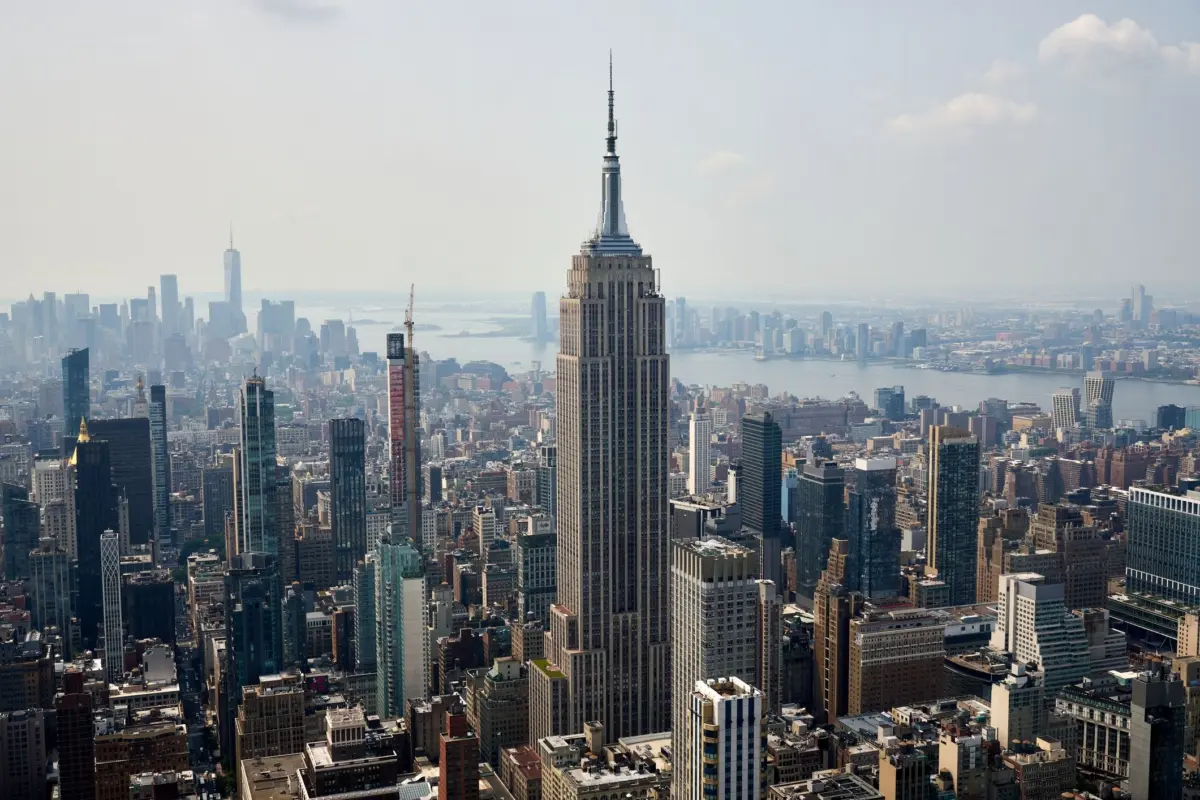
Yet, for those who live within the shadow of these landmarks, the ritual is often deferred. In New York City, a metropolis defined by its verticality, the Empire State Building stands as the ultimate sentinel. For a resident of five years—and a neighbor in New Jersey for a lifetime before that—the building has always been a constant in the peripheral vision, a North Star of the Manhattan skyline. However, despite a life spent marveling at its Art Deco silhouette from afar, the actual experience of ascending its heights often remains a "someday" plan. This past September, on a day where the late-summer sun cast a sharp, golden light across the city, that "someday" finally arrived at 350 Fifth Avenue.
Stepping into the world of the Empire State Building is an exercise in cinematic nostalgia and architectural wonder. While modern skyscrapers like the Edge or Summit One Vanderbilt offer high-tech thrills and glass-bottomed floors, the Empire State Building offers something different: a connection to the soul of 20th-century New York. It is the setting of Sleepless in Seattle and the playground of King Kong, a structure that manages to feel both like a museum and a living, breathing hub of global commerce.
The Architectural Legacy of an Icon
To understand the Empire State Building, one must first appreciate the staggering speed of its birth. Designed by the architectural firm Shreve, Lamb & Harmon, the building is a 102-story masterpiece of Art Deco design. Perhaps its most incredible feat was the pace of its construction; between 1930 and 1931, the tower rose at a rate of roughly 4.5 stories per week. In just 13 months, during the height of the Great Depression, the project was completed, standing 1,454 feet tall.
For nearly 40 years, it reigned as the tallest building in the world, a title it held until the North Tower of the World Trade Center surpassed it in 1970. While it has since been moved down the list of the world’s tallest structures—currently holding the position of the eighth tallest in New York City—its cultural stature remains unmatched. It is not merely a tourist destination; it is a massive office complex housing more than 150 tenants, including global giants like LinkedIn, Workday, and Expedia.
Every year, more than 2.5 million people pass through its doors. They come to see a building that has appeared in over 250 movies and television shows, and to witness a tower that serves as a literal beacon for the city. Since 1976, when the building first used floodlights of red, white, and blue to celebrate the U.S. Bicentennial, the spire has been lit in a rotating kaleidoscope of colors to mark holidays, seasonal shifts, and major global events. To keep this icon relevant in the 21st century, the building underwent a massive, four-year, $165 million renovation completed in 2019. This overhaul reimagined the visitor experience, creating state-of-the-art exhibition spaces on the 2nd and 80th floors and completely refreshing the 102nd-floor observatory.
Navigating the Visitor Experience
For those ready to experience this Art Deco giant, the journey begins at the dedicated visitor entrance located at 20 West 34th Street. This location is strategically placed in the heart of Midtown, making it easily accessible from nearly every major transit hub in the city, including Penn Station, Port Authority, and the PATH train. A dizzying array of subway lines—the 1/2/3, A/C/E, N/Q/R/W, B/D/F/M, 4/5/6, and 7—all deposit passengers within a short walk of the entrance.
In the post-pandemic era, the Empire State Building has moved to a timed-ticketing system, a change that has significantly streamlined the process. While it is possible to buy tickets on-site at the physical ticket office at 12 W 34th Street or via touchscreen kiosks, booking in advance is highly recommended. According to Dan Rogoski, the observatory’s senior vice president and general manager, advance booking is the best way to secure a preferred time slot, especially during high-demand periods like sunset or major holidays.
When selecting tickets, visitors generally face a choice between two primary experiences. The standard ticket, priced at approximately $46, grants access to the 86th-floor open-air observatory. For those seeking the ultimate view, an $81 ticket includes both the 86th floor and the newly renovated, glass-enclosed 102nd-floor observatory. Both tickets include access to the extensive museum exhibits. While the 102nd floor offers a more elevated, climate-controlled perspective that is particularly valuable on rainy days, the 86th floor remains the "classic" experience, offering the rare opportunity to step outside and feel the wind at 1,000 feet above the pavement.
For travelers planning an extensive New York itinerary, bundled options like the New York CityPass or the New York Pass by GoCity offer significant discounts. These passes are ideal for those who want to combine a trip to the Empire State Building with visits to the Statue of Liberty, the 9/11 Memorial, or the Metropolitan Museum of Art.
From the Ground Up: What to Expect
The ascent begins with a security screening similar to that of an airport, followed by a transition into the second-floor museum. These interactive exhibits are a highlight of the $165 million renovation, offering a deep dive into the building’s construction. Visitors can see recreations of the 1930s site, complete with the sounds of riveting and the stories of the laborers who built the "Cathedral of the Skies."

From there, elevators—staffed by employees in signature silver conductor hats—whisk guests to the 80th floor. This floor serves as a preview and an artistic hub. It features the stunning "NYC: Above and Beyond" mural by artist Stephen Wiltshire. In a legendary feat of talent, Wiltshire drew the entire Manhattan cityscape from memory in just five days following a single 45-minute helicopter ride. The level of detail in the mural is a testament to the city’s complex beauty.
The 86th floor is where the "360-degree magic" truly happens. This is the outdoor deck that has served as the backdrop for countless romantic movie scenes. Protected by iconic crisscrossed metal gates, visitors can walk the perimeter of the tower, looking out over the Hudson and East Rivers. On a clear day, the visibility extends to six states: New York, New Jersey, Pennsylvania, Connecticut, Massachusetts, and Delaware. In the winter, overhead heaters provide a reprieve from the biting winds, though the experience remains bracingly authentic.
For those who venture to the 102nd floor, the view is framed by floor-to-ceiling windows, offering a direct line of sight up to Central Park and the "Billionaires’ Row" skyscrapers that now dot the northern horizon. While there is no time limit once you reach the observatories, most visitors find that 60 to 120 minutes is sufficient to take in the exhibits and the panoramas.
The Best Times to Visit
Timing a visit to the Empire State Building can drastically change the experience. Like most of New York City, the landmark is best enjoyed during the shoulder seasons—spring and fall. In the spring, the view of Central Park is punctuated by the soft pink of cherry blossoms; in the fall, the city is framed by a canopy of amber and gold.
For those looking to avoid the heaviest crowds, the mid-afternoon window between 1:00 p.m. and 4:00 p.m. is often the quietest time of day. Conversely, sunrise and sunset are peak hours, drawing those who want to see the city transition from day to night. For the truly dedicated, the "Sunrise Experience" ticket allows a limited number of guests to enter the building before the general public. This early-morning access includes a Starbucks beverage and pastry, offering a serene environment to watch the sun climb over the Chrysler Building to the east.
For those who can’t decide between the golden light of day and the neon glow of the night, the "AM/PM" ticket allows for two visits in a single day. This is perhaps the most comprehensive way to see the city, witnessing the bustling movement of the afternoon and the quiet, sparkling expanse of the midnight metropolis.
Finishing the Journey
The exit from the observatory leads visitors through a well-curated gift shop—perfect for those looking for a plush King Kong or a miniature Art Deco model—and finally into the building’s original lobby. This lobby, located at 350 Fifth Avenue, is a designated historic landmark. Its gold-leaf murals and marble finishes are a stunning example of the era’s craftsmanship, though the space is generally reserved for the building’s office tenants during the day.
Before heading back into the rush of Midtown, there are several dining options within the building itself. The State Grill and Bar offers a sophisticated sit-down meal, while the Starbucks Reserve provides a more elevated coffee experience. For a quicker, more casual bite, the building also houses a location of the popular taco spot, Tacombi.
Preparation and Essentials
A trip to the top of New York requires a few practical considerations. Even on a mild day, the sun at such high altitudes can be intense. Protective gear like the Madewell Russell oval sunglasses or a reliable sunscreen stick, such as Supergoop’s Unseen Sunscreen, are recommended for those spending an extended period on the 86th-floor deck.
Furthermore, while smartphone cameras have become incredibly advanced, many visitors find that the Empire State Building inspires a more tactile approach to photography. Bringing a dedicated film camera, like the Kodak Ektar H35, or a fun digital alternative like the Kodak Charmera keychain camera, can add a layer of creativity to the experience, capturing the Art Deco details in a way that feels consistent with the building’s historic aesthetic.
Ultimately, visiting the Empire State Building is about more than just seeing the city; it is about standing within a piece of history that has come to define the American spirit of ambition. Whether you are a first-time tourist or a five-year resident, the view from the top remains a necessary perspective, a reminder of the scale and the enduring energy of New York City.