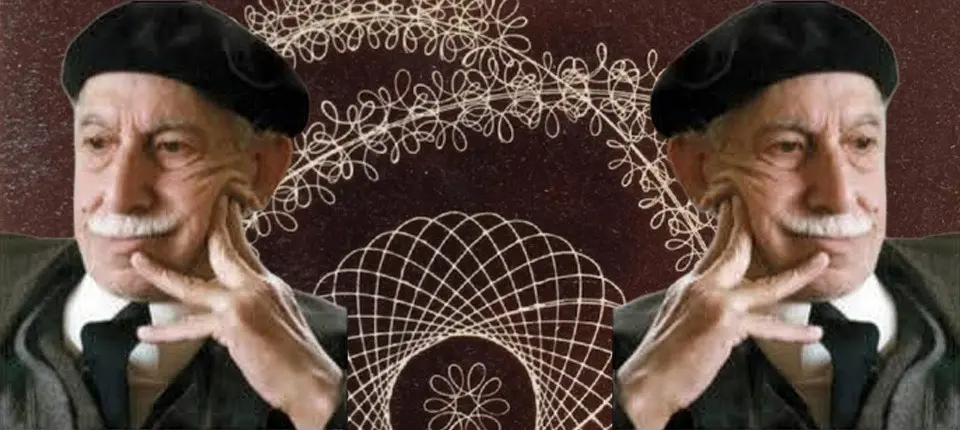
On October 9, 2026, the global literary community pauses to reflect on the legacy of one of the most influential figures in the history of Middle Eastern literature. As noted in the latest dispatches from the digital literary landscape, today marks the 128th anniversary of the birth of Tawfiq al-Hakim. Born in 1898, al-Hakim was not merely a writer; he was a foundational architect of modern Arabic drama and a novelist whose work bridged the gap between the traditional heritage of the East and the avant-garde movements of the West. His birth in Alexandria at the tail end of the 19th century set the stage for a career that would redefine the intellectual and cultural identity of Egypt and the broader Arab world for generations to come.
The commemoration of al-Hakim’s birth serves as a focal point for modern literary curation, highlighting how digital platforms continue to preserve and promote the works of masters who shaped the 20th-century canon. In an era where the "literary internet" often moves at the speed of social media trends, the spotlight on al-Hakim offers a necessary moment of historical grounding. It reminds readers and critics alike that the contemporary Arabic novel and the thriving scene of Egyptian theater owe a profound debt to the innovations al-Hakim introduced during a period of intense national and artistic transformation.
To understand the weight of al-Hakim’s contribution, one must look back at the Egypt of his youth. Raised in a family of means—his father was a judge and his mother came from an aristocratic Turkish background—al-Hakim was initially steered toward a career in law. However, the pull of the arts proved irresistible. After completing his legal studies in Cairo, he moved to Paris in the mid-1920s to pursue a doctorate. It was during this formative period in the French capital that al-Hakim’s true calling emerged. Rather than immersing himself in legal texts, he spent his days and nights in theaters, museums, and cafes, absorbing the works of European masters like Ibsen, Shaw, and Maeterlinck. This exposure to Western dramatic theory, combined with his deep-rooted knowledge of Arabic heritage, would eventually allow him to create a new, hybrid form of literature.
Upon his return to Egypt, al-Hakim faced the daunting task of establishing a serious dramatic tradition in a language that had historically favored poetry and prose over the stage. Before his intervention, Arabic theater was largely seen as a medium for light entertainment or folk performances. Al-Hakim changed this narrative with the publication of "The People of the Cave" (Ahl al-Kahf) in 1933. This play, based on the Quranic and Christian legend of the Seven Sleepers of Ephesus, was a landmark event. It was not just a script for performance; it was a philosophical exploration of time, faith, and human existence. Critics often cite this work as the birth of "intellectual theater" in the Arabic-speaking world, a genre that al-Hakim would continue to refine throughout his long career.