The arrival of the annual U.S. News & World Report Best Colleges rankings has become a predictable ritual in the world of higher education, marked by a seasonal deluge of press releases that flood the inboxes of education journalists. For many institutions, the release date is the culmination of a year’s worth of data collection, branding efforts, and strategic planning. This year was no different, as a wave of self-congratulatory announcements swept across the country, with nearly every institution finding a silver lining to highlight, regardless of their movement on the list.
The sheer volume of positive messaging creates a curious paradox. In a landscape where institutions are ranked against one another in a zero-sum game, the marketing materials would suggest that everyone is a winner. Even colleges that experienced significant drops in their overall standings found ways to celebrate specific metrics, touting their success in niche categories or alternative ranking systems. However, this time-honored strategy of "picking and choosing" selling points is facing renewed scrutiny. It comes at a precarious moment for the sector, as public trust in higher education continues to hover at record lows, fueled by concerns over rising tuition, political polarization, and the perceived return on investment for a four-year degree.
The Case of New College: A Study in Strategic Framing
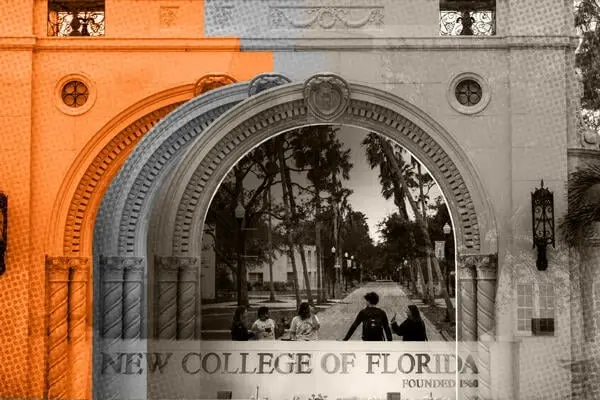
Perhaps the most striking example of the gap between a headline ranking and institutional messaging can be found at New College of Florida. The small liberal arts school in Sarasota has been at the center of a national firestorm since 2023, when Governor Ron DeSantis initiated a conservative overhaul of the institution, appointing a new board of trustees and a new president, Richard Corcoran.
The impact of this transition on the college’s standing in the U.S. News rankings has been stark. Before the takeover, New College was ranked 76th among national liberal arts colleges. In the most recent rankings released last week, the institution landed at 150th—a cumulative plunge of 74 spots in just two years. Even on a year-over-year basis, the college fell 15 spots from its 2024 position.
Despite this decline, the official communication from the college told a story of progress. In a news release titled “New College of Florida on the Rise Across Three National Rankings,” the administration chose not to mention its overall U.S. News rank or its downward trajectory compared to previous years. Instead, it focused on specific metrics where the college showed improvement, such as financial resources per student, the academic profile of the incoming class, and the ratio of full-time faculty.
President Richard Corcoran framed the results as a validation of the college’s new direction. “Last year I said we were determined to earn top rankings across multiple national publications,” Corcoran stated in the release. “These metrics prove the positive outcomes New College is creating. It also comes at a moment when families are asking a fair question about whether a degree is still worth the investment. Our answer is that the content of the four years matters.”
Corcoran emphasized that the college is building a model where students are more than just their transcripts, highlighting the importance of senior theses and the personal mentorship of full-time faculty. By pointing to three different ranking schemes where the college performed well, the administration sought to provide a counter-narrative to the U.S. News slide.