The arrival of the annual U.S. News & World Report Best Colleges rankings has become a predictable ritual in the world of higher education, marked by a seasonal deluge of press releases that flood the inboxes of education journalists. For many institutions, the release date is the culmination of a year’s worth of data collection, branding efforts, and strategic planning. This year was no different, as a wave of self-congratulatory announcements swept across the country, with nearly every institution finding a silver lining to highlight, regardless of their movement on the list.
The sheer volume of positive messaging creates a curious paradox. In a landscape where institutions are ranked against one another in a zero-sum game, the marketing materials would suggest that everyone is a winner. Even colleges that experienced significant drops in their overall standings found ways to celebrate specific metrics, touting their success in niche categories or alternative ranking systems. However, this time-honored strategy of "picking and choosing" selling points is facing renewed scrutiny. It comes at a precarious moment for the sector, as public trust in higher education continues to hover at record lows, fueled by concerns over rising tuition, political polarization, and the perceived return on investment for a four-year degree.
The Case of New College: A Study in Strategic Framing
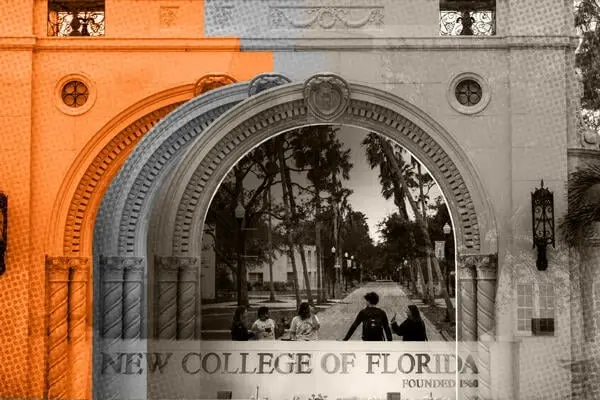
Perhaps the most striking example of the gap between a headline ranking and institutional messaging can be found at New College of Florida. The small liberal arts school in Sarasota has been at the center of a national firestorm since 2023, when Governor Ron DeSantis initiated a conservative overhaul of the institution, appointing a new board of trustees and a new president, Richard Corcoran.
The impact of this transition on the college’s standing in the U.S. News rankings has been stark. Before the takeover, New College was ranked 76th among national liberal arts colleges. In the most recent rankings released last week, the institution landed at 150th—a cumulative plunge of 74 spots in just two years. Even on a year-over-year basis, the college fell 15 spots from its 2024 position.
Despite this decline, the official communication from the college told a story of progress. In a news release titled “New College of Florida on the Rise Across Three National Rankings,” the administration chose not to mention its overall U.S. News rank or its downward trajectory compared to previous years. Instead, it focused on specific metrics where the college showed improvement, such as financial resources per student, the academic profile of the incoming class, and the ratio of full-time faculty.
President Richard Corcoran framed the results as a validation of the college’s new direction. “Last year I said we were determined to earn top rankings across multiple national publications,” Corcoran stated in the release. “These metrics prove the positive outcomes New College is creating. It also comes at a moment when families are asking a fair question about whether a degree is still worth the investment. Our answer is that the content of the four years matters.”
Corcoran emphasized that the college is building a model where students are more than just their transcripts, highlighting the importance of senior theses and the personal mentorship of full-time faculty. By pointing to three different ranking schemes where the college performed well, the administration sought to provide a counter-narrative to the U.S. News slide.
However, the selective nature of this reporting has drawn sharp criticism from those who oppose the college’s recent changes. William Rosenberg, president of the Novo Collegian Alliance—an alumni group formed to resist the conservative overhaul—accused the administration of "cherry-picking" data to mask a decline in institutional prestige. Rosenberg argued that the public deserves a transparent accounting of the college’s performance, especially given the high stakes of its recent transformation. “For the million-dollar compensation package Corcoran is receiving, Florida’s taxpayers are entitled to honesty, not window dressing,” Rosenberg said in a statement.
When asked to address the decline, college spokesperson James Miller defended the institution’s performance, suggesting that the U.S. News methodology is uniquely flawed because it incorporates a "subjective" peer-assessment score. This metric, which accounts for 20 percent of a school’s total rank, is based on surveys sent to presidents, provosts, and deans at peer institutions. Miller noted that many institutions in Florida and the Southeast saw their rankings dip this year, implying that external perceptions—rather than internal quality—were to blame. “By every objective measure, New College is getting stronger and better,” Miller wrote.
A Regional Trend in the Sunshine State and Beyond
The strategy of pivoting toward positive data points while ignoring a general decline is not unique to New College. Across the Sunshine State, the State University System of Florida released a statement trumpeting an “upward trajectory,” despite the fact that a majority of its 12 member institutions actually fell in the U.S. News rankings this year.
In a departure from last year’s communication strategy, which focused almost exclusively on U.S. News outcomes, the state system’s most recent release highlighted performance across a variety of national rankings. This shift suggests a calculated effort to diversify the metrics of success, moving away from a single, high-stakes list that may be influenced by political or reputational volatility. System officials did not respond to requests for further comment on why they chose to frame a year of general decline as one of upward movement.
The phenomenon extends well beyond Florida’s borders. In Texas, the University of Texas Rio Grande Valley (UTRGV) experienced a significant drop, falling 37 spots from 213 to 250 in the national universities category. Yet, a subsequent news release from the university made no mention of this double-digit slide. Instead, the administration focused on the university’s high marks in social mobility—a category that measures how well schools graduate students who receive federal Pell Grants—and the success of specific academic programs. Like many of its peers, UTRGV chose to highlight the areas where its mission most clearly aligns with positive data, leaving the broader decline for others to discover.
‘A Double-Edged Sword’
The disconnect between public PR and private institutional reality is a well-known dynamic among higher education consultants and administrators. While college presidents may privately loathe the rankings for their perceived reduction of complex educational environments into a single number, they rarely miss an opportunity to celebrate a win.
Teresa Valerio Parrot, principal of TVP Communications, works closely with college leaders on their communication strategies. She describes the rankings as a “double-edged sword” that serves two distinct, and often conflicting, masters: marketing and internal diagnostics.
“Sometimes they tell you what you want to hear, and other times they’re an interesting mirror of where you maybe need to spend more time or effort or potentially money,” Parrot said. This duality often creates tension on campus. Faculty members frequently view the rankings with skepticism or outright disdain, seeing them as a distraction from the core mission of teaching and research. Meanwhile, board members often fixate on them, viewing a move up the list as a badge of honor and a move down as a crisis that needs immediate fixing.
Parrot notes that the proliferation of different ranking products—from the Wall Street Journal and Forbes to Washington Monthly—has given administrators more tools for spin. If an institution doesn’t like its showing in U.S. News, it can almost certainly find a different ranking that emphasizes its specific strengths, whether that be return on investment, social mobility, or student satisfaction.
“You have so many different rankings that if you want to find a ranking that best reflects who you think your institution is and what you value, you are guaranteed to be able to find one,” Parrot said. While she believes it is reasonable for colleges to highlight outcomes that align with their mission, she warns that the practice becomes problematic when it crosses the line into misleading the public by suggesting a ranking proves something it does not.
The Staying Power of the Rankings Industrial Complex
Despite decades of criticism regarding their methodology and the ease with which they can be manipulated, rankings like those from U.S. News remain a dominant force in the higher education marketplace. Their survival is largely due to their utility for the "consumer"—the students and parents who are navigating an increasingly expensive and complex decision-making process.
Nicholas Bowman, a professor of higher education and student affairs at the University of Iowa, has studied the impact of these rankings extensively. He points out that U.S. News enjoys a significant "first-mover advantage," having launched its first list in 1983. This longevity has cemented its brand as the definitive authority for many families, particularly those looking at selective institutions.
“They matter to folks who are making meaningful decisions about where to go, as opposed to whether to go,” Bowman explained. His research indicates that while many students claim not to be influenced by rankings, the data suggests otherwise. This is especially true for international students, who often rely on rankings as a proxy for institutional quality when they cannot visit a campus in person. Domestically, the influence is most pronounced in the national liberal arts category, where brand prestige is often the primary differentiator between competing schools.
As long as these rankings continue to drive enrollment and donor interest, colleges will remain trapped in a cycle of participation and promotion. The selective framing of results is likely to remain a staple of institutional PR, serving as a defensive shield against bad news and a megaphone for good news. In an era where the value of a degree is under constant debate, institutions will continue to reach for any metric that suggests they are, in fact, on the rise.