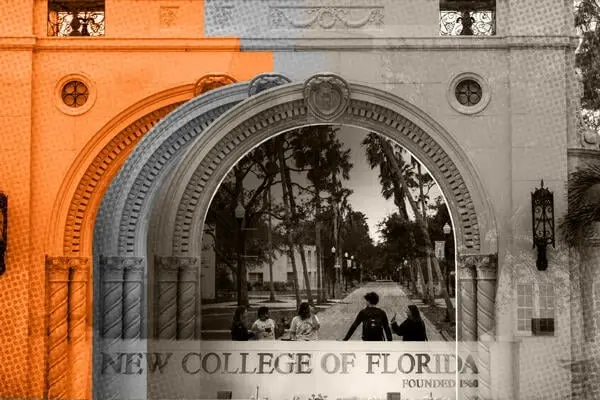
However, the selective nature of this reporting has drawn sharp criticism from those who oppose the college’s recent changes. William Rosenberg, president of the Novo Collegian Alliance—an alumni group formed to resist the conservative overhaul—accused the administration of "cherry-picking" data to mask a decline in institutional prestige. Rosenberg argued that the public deserves a transparent accounting of the college’s performance, especially given the high stakes of its recent transformation. “For the million-dollar compensation package Corcoran is receiving, Florida’s taxpayers are entitled to honesty, not window dressing,” Rosenberg said in a statement.
When asked to address the decline, college spokesperson James Miller defended the institution’s performance, suggesting that the U.S. News methodology is uniquely flawed because it incorporates a "subjective" peer-assessment score. This metric, which accounts for 20 percent of a school’s total rank, is based on surveys sent to presidents, provosts, and deans at peer institutions. Miller noted that many institutions in Florida and the Southeast saw their rankings dip this year, implying that external perceptions—rather than internal quality—were to blame. “By every objective measure, New College is getting stronger and better,” Miller wrote.
A Regional Trend in the Sunshine State and Beyond
The strategy of pivoting toward positive data points while ignoring a general decline is not unique to New College. Across the Sunshine State, the State University System of Florida released a statement trumpeting an “upward trajectory,” despite the fact that a majority of its 12 member institutions actually fell in the U.S. News rankings this year.
In a departure from last year’s communication strategy, which focused almost exclusively on U.S. News outcomes, the state system’s most recent release highlighted performance across a variety of national rankings. This shift suggests a calculated effort to diversify the metrics of success, moving away from a single, high-stakes list that may be influenced by political or reputational volatility. System officials did not respond to requests for further comment on why they chose to frame a year of general decline as one of upward movement.
The phenomenon extends well beyond Florida’s borders. In Texas, the University of Texas Rio Grande Valley (UTRGV) experienced a significant drop, falling 37 spots from 213 to 250 in the national universities category. Yet, a subsequent news release from the university made no mention of this double-digit slide. Instead, the administration focused on the university’s high marks in social mobility—a category that measures how well schools graduate students who receive federal Pell Grants—and the success of specific academic programs. Like many of its peers, UTRGV chose to highlight the areas where its mission most clearly aligns with positive data, leaving the broader decline for others to discover.
‘A Double-Edged Sword’
The disconnect between public PR and private institutional reality is a well-known dynamic among higher education consultants and administrators. While college presidents may privately loathe the rankings for their perceived reduction of complex educational environments into a single number, they rarely miss an opportunity to celebrate a win.
Teresa Valerio Parrot, principal of TVP Communications, works closely with college leaders on their communication strategies. She describes the rankings as a “double-edged sword” that serves two distinct, and often conflicting, masters: marketing and internal diagnostics.