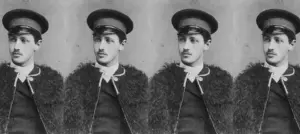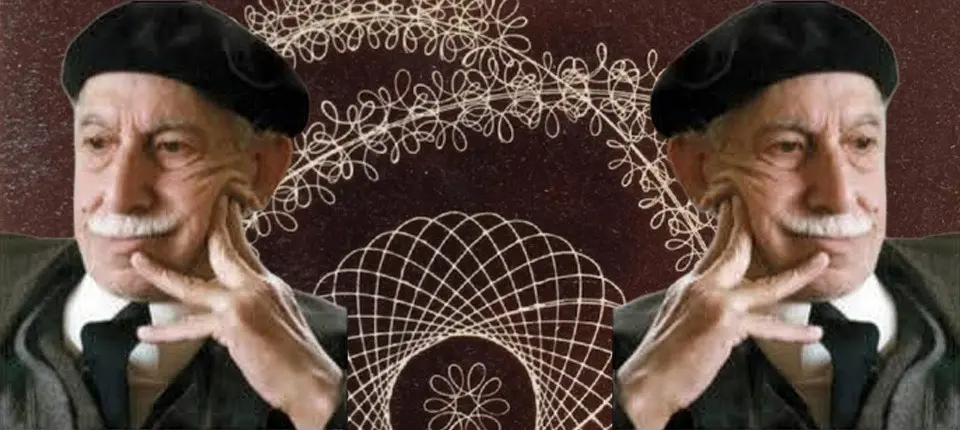
On October 9, 2026, the global literary community pauses to reflect on the legacy of one of the most influential figures in the history of Middle Eastern literature. As noted in the latest dispatches from the digital literary landscape, today marks the 128th anniversary of the birth of Tawfiq al-Hakim. Born in 1898, al-Hakim was not merely a writer; he was a foundational architect of modern Arabic drama and a novelist whose work bridged the gap between the traditional heritage of the East and the avant-garde movements of the West. His birth in Alexandria at the tail end of the 19th century set the stage for a career that would redefine the intellectual and cultural identity of Egypt and the broader Arab world for generations to come.
The commemoration of al-Hakim’s birth serves as a focal point for modern literary curation, highlighting how digital platforms continue to preserve and promote the works of masters who shaped the 20th-century canon. In an era where the "literary internet" often moves at the speed of social media trends, the spotlight on al-Hakim offers a necessary moment of historical grounding. It reminds readers and critics alike that the contemporary Arabic novel and the thriving scene of Egyptian theater owe a profound debt to the innovations al-Hakim introduced during a period of intense national and artistic transformation.
To understand the weight of al-Hakim’s contribution, one must look back at the Egypt of his youth. Raised in a family of means—his father was a judge and his mother came from an aristocratic Turkish background—al-Hakim was initially steered toward a career in law. However, the pull of the arts proved irresistible. After completing his legal studies in Cairo, he moved to Paris in the mid-1920s to pursue a doctorate. It was during this formative period in the French capital that al-Hakim’s true calling emerged. Rather than immersing himself in legal texts, he spent his days and nights in theaters, museums, and cafes, absorbing the works of European masters like Ibsen, Shaw, and Maeterlinck. This exposure to Western dramatic theory, combined with his deep-rooted knowledge of Arabic heritage, would eventually allow him to create a new, hybrid form of literature.
Upon his return to Egypt, al-Hakim faced the daunting task of establishing a serious dramatic tradition in a language that had historically favored poetry and prose over the stage. Before his intervention, Arabic theater was largely seen as a medium for light entertainment or folk performances. Al-Hakim changed this narrative with the publication of "The People of the Cave" (Ahl al-Kahf) in 1933. This play, based on the Quranic and Christian legend of the Seven Sleepers of Ephesus, was a landmark event. It was not just a script for performance; it was a philosophical exploration of time, faith, and human existence. Critics often cite this work as the birth of "intellectual theater" in the Arabic-speaking world, a genre that al-Hakim would continue to refine throughout his long career.
THE BEST OF THE LITERARY INTERNET
The digital age has allowed for a resurgence of interest in al-Hakim’s "theater of the mind." This concept, which he championed, suggested that certain plays were written primarily to be read and imagined rather than performed on a physical stage. In the 2020s, this idea resonates deeply with a new generation of readers who consume literature through diverse digital formats. The "best of the literary internet" today often includes retrospectives on how al-Hakim’s work pre-dated modern experimental narratives. By focusing on the internal psychological state of his characters and the symbolic nature of his settings, he provided a blueprint for the absurdist and existentialist movements that would later sweep through global literature.
Beyond the theater, al-Hakim was a formidable novelist. His 1933 work, "Return of the Spirit" (Awdat al-ruh), is frequently lauded as one of the first truly modern Arabic novels. Set against the backdrop of the 1919 Egyptian Revolution, the book captured the nationalistic fervor of the time and the collective awakening of the Egyptian people. It was a work of profound social and political significance, reportedly serving as a major inspiration for future leaders, including Gamal Abdel Nasser. In "Return of the Spirit," al-Hakim successfully synthesized the struggles of the common man with the grand historical narratives of his country, proving that the novel could be a potent tool for national self-definition.
Another of his seminal prose works, "Diary of a Country Prosecutor" (Yawmiyat na’ib fi-l-aryaf), published in 1937, remains a masterpiece of social critique. Drawing on his own brief experience as a prosecutor in the Egyptian provinces, al-Hakim crafted a biting, often humorous, yet deeply tragic account of the clash between the rigid, urban-centric legal system and the lived realities of the rural peasantry. The novel remains a staple of university curricula worldwide, valued for its sharp observations on bureaucracy, justice, and the enduring divide between the state and its citizens.
The anniversary of al-Hakim’s birth also invites a discussion on his role as a bridge-builder. Throughout his life, he navigated the complex relationship between tradition and modernity. He was a staunch defender of the Arabic language, yet he was never afraid to experiment with its forms. He engaged with the great thinkers of his time, including Taha Hussein and Naguib Mahfouz, contributing to a vibrant intellectual culture that positioned Cairo as the literary capital of the Middle East. His ability to draw from the stories of the Arabian Nights or the myths of Ancient Egypt while employing modern European structural techniques made his work uniquely universal.
As the literary internet celebrates al-Hakim today, it is also worth noting his later foray into the Theater of the Absurd. Works like "The Tree Climber" (Ya tali’ al-shajara) demonstrated his restless creative spirit. Even in his twilight years, al-Hakim refused to remain stagnant, embracing the surreal and the non-linear to reflect the complexities of the mid-20th century. His willingness to evolve ensured that his work remained relevant across different eras, influencing subsequent generations of writers who sought to break away from traditional realism.
The digital curation of his life and work serves a vital purpose in 2026. By highlighting the date of his birth, literary outlets ensure that the contributions of non-Western masters are not overshadowed by the sheer volume of contemporary content. For the student of world literature, al-Hakim’s bibliography offers a masterclass in how to honor one’s roots while engaging fearlessly with the global community. His legacy is found not just in the books he left behind, but in the very existence of a serious, respected, and thriving Arabic dramatic tradition.
In reflecting on Tawfiq al-Hakim’s 128th birthday, we see a man who was deeply committed to the "spirit" of his people. He believed that literature was a way to reclaim a sense of self and to project that self onto the world stage. Whether he was writing about the metaphysical struggles of ancient saints or the daily frustrations of a village lawyer, his voice was characterized by a profound humanity and an unwavering belief in the power of the intellect.
Today’s anniversary is more than a simple date on a calendar; it is a celebration of a life that was dedicated to the pursuit of artistic excellence and national identity. As readers click through the various tributes and articles shared across the literary internet, the consensus remains clear: Tawfiq al-Hakim was a giant of his age, and his influence continues to ripple through the pages of modern literature. His birth in 1898 marked the beginning of a new chapter for the Arabic word, one that continues to be written by the many authors who follow in his footsteps.