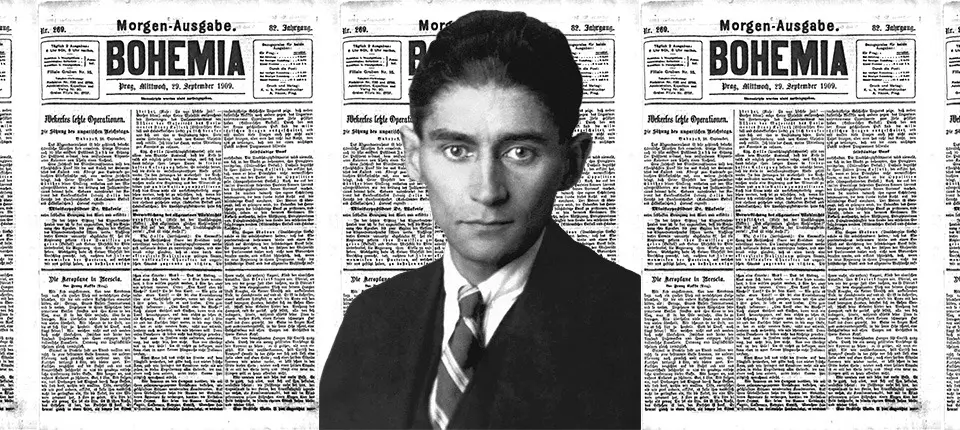
For the modern reader, the 1909 article serves as a reminder of Kafka’s versatility. He was not always the hermit of Prague, locked in a room and writing about nightmarish bureaucracies. He was a man of his time, interested in the cinema, the telephone, and, as evidenced by his trip to Brescia, the aeroplane. These technologies informed his understanding of the "modern" world—a world where old certainties were being replaced by a sense of speed, fragmentation, and the dissolution of traditional boundaries.
The "Lit Hub Daily" feature on this anniversary underscores the importance of archival discovery in literary studies. By revisiting the date of September 29, 1909, we are reminded that literature does not exist in a vacuum. It is shaped by the newspapers authors read, the events they attend, and the technological shifts they witness. Kafka’s report on the aeroplanes at Brescia is a testament to the writer’s role as a chronicler of his age, even when that writer is someone as uniquely inward-looking as Franz Kafka.
The prose in the Bohemia article also reveals Kafka’s emerging talent for finding the "extraordinary in the ordinary." He describes the way a plane, once it has landed and its engine has stopped, becomes a "lifeless heap of wood and fabric." This transition from the sublime to the mundane is a hallmark of Kafka’s later fiction. In Brescia, he saw the future taking flight, but he also saw the dust on the ground and the exhaustion of the men trying to keep those machines in the air.
As we look back at this moment from the perspective of 2026, the significance of Kafka’s journalism remains undiminished. It serves as a bridge between the nineteenth-century tradition of the "man of letters" and the twentieth-century reality of the "technological observer." Kafka’s trip to Brescia was a formative experience that allowed him to practice the kind of detached, precise observation that would eventually make him one of the most influential writers in history.
The legacy of "The Aeroplanes at Brescia" continues to be explored by biographers and literary critics who seek to understand the "Prague Circle" and the cultural environment of the early 1900s. The article remains a vibrant piece of writing, as fresh today as it was when it first appeared in the columns of Bohemia over a century ago. It reminds us that before he was the architect of the "Kafkaesque," Franz Kafka was a young man standing in an Italian field, looking up at the sky in wonder as the first aeroplanes roared overhead.