Looking ahead to the coming days, the Prime Minister clarified that the ongoing application of curfew measures will remain dynamic, adaptive, and highly responsive to evolving conditions on the ground. Addressing the potential for continued restrictions, Lecornu stated that decisions regarding whether to maintain, adjust, or lift curfews for Tuesday night would be determined systematically based on where such measures remain strictly necessary. Rather than applying a blanket policy across the entire national territory, the government is maintaining a flexible containment strategy that allows security measures to be calibrated to the specific threat level of each individual municipality and region.
Elaborating on the administrative process behind these security decisions, Lecornu took to social media to outline how operational choices are being formulated. In a post published on the platform X, formerly known as Twitter, the Prime Minister emphasized that operational choices regarding night-time restrictions are being made directly "on the ground." This administrative model relies heavily on close coordination between regional prefectures—the administrative representatives of the central government—and local city mayors, who possess direct knowledge of their respective communities and localized security dynamics.
This decentralized decision-making process ensures that municipal leaders and regional prefects retain the operational authority to assess local safety conditions in real time. Under this localized framework, mayors and regional officials in cities such as Paris, Marseille, Lyon, Bordeaux, Nice, and Lille can evaluate the immediate security environment within their jurisdictions and decide whether the continuation of curfews on Tuesday night is warranted. If local conditions in a specific city remain volatile, municipal leaders have the authority to re-impose night-time movement limits; conversely, where calm has been securely restored, localized restrictions can be eased accordingly.
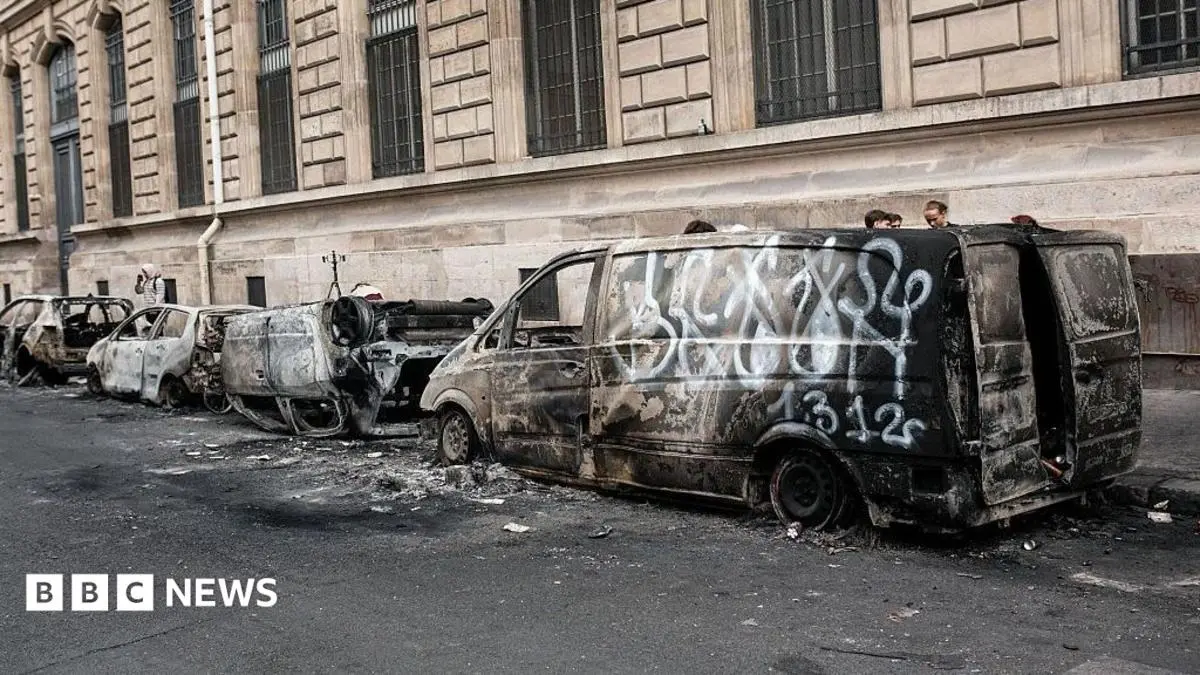
As France emerges from a high-tension weekend defined by civil unrest and widespread destruction of commercial property, the successful implementation of targeted curfews marks a critical operational turning point for law enforcement and government officials. By combining localized movement restrictions, targeted limits on youth gatherings, and a heavily reinforced security presence comprising police officers and national gendarmes, state authorities managed to secure a quiet night across major metropolitan regions stretching from the northern urban hubs to the southern coast. The coming days will test the resilience of this localized strategy, as regional authorities and local mayors continue to assess street-level conditions on the ground to determine the appropriate security posture for Tuesday night and beyond.