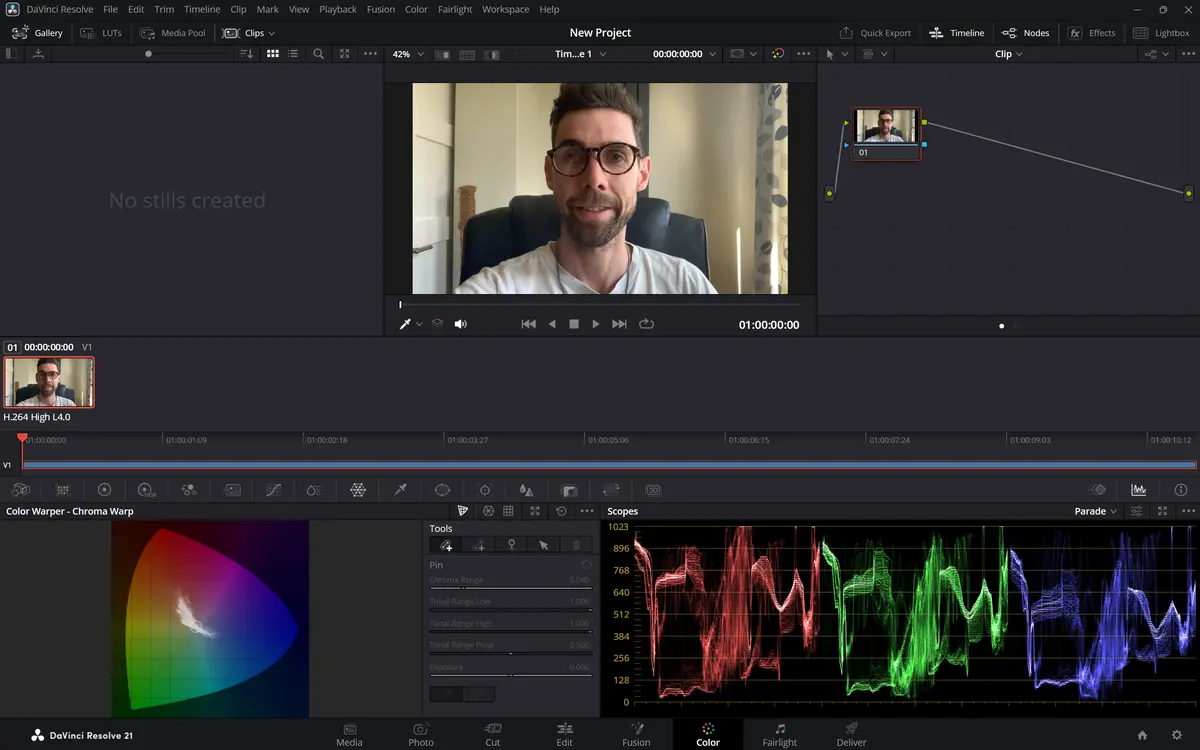
In a rare move that has caught the attention of the global creative community, Blackmagic Design has announced a significant price reduction for its flagship post-production suite, DaVinci Resolve Studio. The software, which is widely considered the industry standard for color grading and a formidable competitor in the non-linear editing (NLE) market, has seen its one-time purchase price cut by 20%. Previously retailing for $295, the full studio package is currently available for $236, marking one of the most substantial discounts in the product’s history.
For professional editors, colorists, and now photographers, the timing of this discount is notable. Blackmagic Design famously eschews the subscription-based models favored by competitors like Adobe and Avid, opting instead for a perpetual license that includes major version updates at no additional cost. Discounts on this license are exceptionally rare; the last recorded price drop occurred during the Black Friday season of 2024, nearly two years ago. This current reduction represents a significant entry point for creators looking to escape recurring monthly fees while gaining access to some of the most sophisticated AI-driven tools in the industry.
The price cut arrives alongside the continued evolution of DaVinci Resolve 21, a landmark update that fundamentally changes the software’s utility by expanding its reach into the world of still photography. While Resolve has long been the "secret weapon" of Hollywood colorists, its latest iteration seeks to challenge the dominance of photography-centric applications like Adobe Lightroom by introducing a dedicated environment for raw image processing.
Powerful Professional Video Editing Software at a Great Price
The transition of DaVinci Resolve from a niche color-grading tool into a comprehensive "all-in-one" post-production powerhouse has been a fifteen-year journey for the Australian-based Blackmagic Design. Originally a high-end hardware company known for its cinema cameras and capture cards, Blackmagic has spent the last decade and a half integrating editing, visual effects, and audio post-production into a single interface. The current version, DaVinci Resolve 21, represents the pinnacle of this integration, offering a level of depth that few other applications can match.
One of the most significant additions in the latest release is the "Photo Page." This new workspace brings the power of node-based color grading—a system where adjustments are linked in a visual flow chart rather than a linear stack—to the world of still photography. For photographers accustomed to the layer-based approach of Photoshop or the slider-heavy interface of Lightroom, the Photo Page offers a more granular, non-destructive way to manipulate raw image data. By leveraging the same color science used on major motion pictures, photographers can now achieve a "filmic" look for their stills with a level of precision that was previously difficult to replicate in traditional photo editors.
Beyond photography, DaVinci Resolve Studio 21 introduces a suite of features powered by the DaVinci Neural Engine, the company’s proprietary AI framework. These tools are designed to automate some of the most tedious aspects of the post-production workflow. For instance, the new "IntelliSearch" feature utilizes content analysis and AI-driven transcripts to allow editors to search for specific visual content within their media pools. Instead of manually scrubbing through hours of footage, an editor can search for metadata or specific spoken phrases, and the software will identify the relevant clips instantly.
The AI capabilities extend deep into the visual realm with tools such as the "Face Age Transformer," which allows for the subtle aging or de-aging of subjects, and the "Face Reshaper," which can adjust facial proportions after a subject has been tracked through a scene. These are not merely filters; they are sophisticated spatial tools that maintain the integrity of the original footage while allowing for "digital makeup" and corrective surgery that would have previously required hours of manual rotoscoping.
Another standout AI feature is "CineFocus," a tool that creates a synthetic depth map of a shot. This allows editors to adjust the focal point of a scene after it has been filmed, adding bokeh or defocusing backgrounds to draw the viewer’s eye. When combined with the "Blemish Removal" and "Motion DeBlur" tools—the latter of which can sharpen media that suffered from excessive camera shake or slow shutter speeds—the Studio version of the software provides a comprehensive toolkit for "saving" shots that might otherwise be unusable.
For those focused on motion graphics and visual effects, the Fusion page within Resolve has also received a major boost. Through the integration of Krokodove, users now have access to approximately 70 new tools and motion graphic effects. Fusion’s node-based architecture is notoriously powerful but carries a steep learning curve; however, the addition of these pre-built tools aims to make high-end VFX more accessible to the average editor. Furthermore, the 21.1 update introduced an MCP (Model Context Protocol) server, which paves the way for deeper integration with AI assistants, potentially allowing for voice-controlled editing or automated project organization in the near future.
Despite these advanced features, Blackmagic Design maintains a dual-tier system. A free version of DaVinci Resolve remains available, offering an incredible amount of functionality for hobbyists. However, the Studio version—the one currently discounted—is required for features such as 4K and 8K exports, frame rates above 60fps, advanced noise reduction, and the vast majority of the new AI-driven Neural Engine tools. For professionals, the $236 investment is often recouped quickly through the time saved by these automated processes.
The software’s professional pedigree is inseparable from Blackmagic’s hardware ecosystem. The company continues to offer discounts on its physical hardware, including dedicated editing keyboards, color grading panels, and the Fairlight audio consoles. These tools are designed to take the software’s interface off the screen and put it under the editor’s fingertips, significantly increasing the speed of the "round-trip" process between different stages of post-production.
However, with great power comes the need for significant hardware resources. While the software is remarkably well-optimized—often outperforming its rivals on Apple Silicon and modern NVIDIA GPUs—it remains demanding. Blackmagic lists a minimum requirement of 16GB of RAM and 4GB of video RAM (VRAM). For users intending to utilize the new AI features or work with high-resolution raw footage, industry experts typically recommend at least 32GB of RAM and a dedicated GPU with 8GB or more of VRAM to ensure a smooth, real-time playback experience.
The shift toward a unified video and photo workflow marks a strategic pivot for Blackmagic. By offering a 20% discount on a product that already lacked a subscription fee, the company is making a clear play for the "prosumer" market—creators who handle everything from social media content to high-end commercial photography. As the lines between different types of visual media continue to blur, DaVinci Resolve Studio 21 positions itself as a singular destination for the modern digital artist.
This rare pricing window offers a unique opportunity for those who have been hesitant to switch from more traditional editing platforms. Given that the last such discount was nearly two years ago, it is unclear how long this $236 price point will remain active. For the creative professional looking to consolidate their toolkit and eliminate monthly overhead, the current offer on DaVinci Resolve Studio represents perhaps the best value proposition in the current software landscape.
As the industry moves further into the era of AI-assisted creativity, the ability to access these tools without a recurring financial burden is becoming a major selling point. Blackmagic Design’s commitment to the perpetual license model, combined with this aggressive price cut, reinforces the software’s status not just as a technical leader, but as a disruptor in the creative economy. Whether for the Hollywood colorist or the independent photographer, the latest version of Resolve Studio offers a glimpse into a future where the barriers between different creative disciplines are finally dismantled.