As the market adjusts to higher rates, the frequency of price reductions is becoming a key indicator of shifting power dynamics. Typically, about one-third of all homes listed for sale will see at least one price cut before a deal is finalized. Earlier this year, price-cut percentages were lower than in 2025, but that trend reversed once mortgage rates moved above the 6.64% threshold.
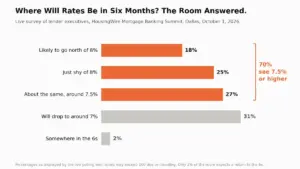
With rates now hovering near 7.5%, pricing pressure is intensifying. While last year’s rates were more than a full percentage point lower, making year-over-year comparisons somewhat lopsided, the current data shows that sellers are having to become more realistic to attract buyers.
The 2026 home-price forecast originally called for a modest national decline of -0.62% for the year. Achieving this figure may prove difficult, as many major price indexes, such as Case-Shiller and the FHFA, are still reporting year-over-year growth between 1.9% and 2.6%. However, it is important to note that these indexes often rely on lagging data. The current marketplace, defined by 7.5% rates and increasing price cuts, suggests that the forecast of a slight decline may yet prove accurate as the year-end data catches up to the reality on the ground.
Pending Sales and Purchase Applications
Leading indicators like pending sales and purchase applications are providing a real-time look at how consumers are reacting to the "scary" rate environment. Historically, housing data tends to show improvement when rates are below 6.64% and begins to deteriorate once they cross the 7% threshold.
The rapid ascent from 6.64% to 7.57% since mid-July has been particularly jarring for the market. This sharp move has hit housing demand hard, and the industry is now watching to see where the floor for demand actually lies. This period represents a significant test for the housing market; in nearly four years, there has not been a sustained period where rates remained consistently above 7.50%.
Purchase application data, which typically looks ahead 30 to 90 days, is already reflecting this softness. Last week, purchase applications were down 4% on a week-to-week basis and 14% lower than the same period last year. As the year-over-year comparisons become more difficult, this weakness is expected to persist unless there is a meaningful retreat in mortgage rates.
The Outlook for the Week Ahead
Looking forward, the market’s attention will remain fixed on the geopolitical situation in the Middle East. The conflict with Iran is the primary driver of bond market volatility, and with the midterm elections just weeks away, the political stakes are higher than ever. If no diplomatic breakthrough occurs in the near term, there is a distinct risk that the conflict—and the resulting market instability—could bleed into 2027.
On the economic front, the coming week will be relatively quiet, with the exception of ISM and PMI data. These reports have been "hot" lately, and any further signs of economic overheating could provide the Federal Reserve with the justification it needs to maintain its hawkish stance. Additionally, several scheduled speeches from Fed officials will be closely scrutinized for any signs of a pivot or a willingness to tolerate higher rates for longer. For now, the housing market remains in a defensive crouch, waiting to see if the "scary" rates of October will haunt the industry well into the new year.