Working with a nonlinear purchase journey
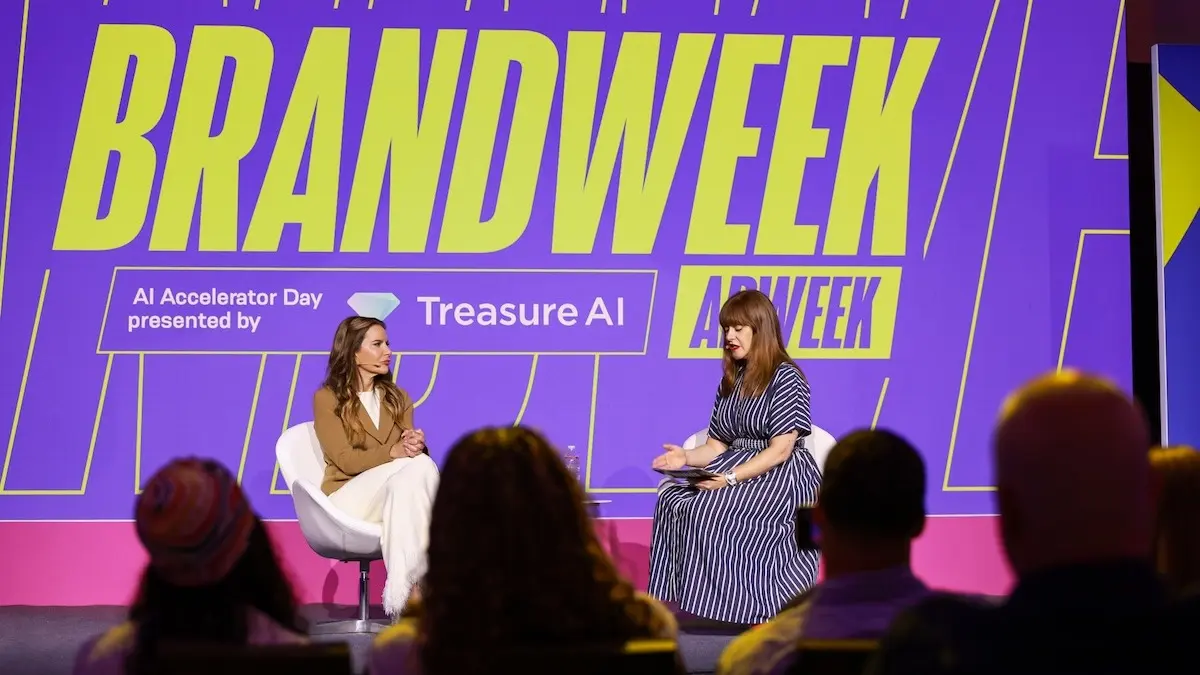
On the second day of the series, the conversation shifted toward the technical and psychological shifts in how consumers actually buy products today. Leslie Ann Hall returned to the stage to discuss a concept that is increasingly dominating the minds of modern CMOs: the nonlinear purchase journey.
The traditional marketing funnel—moving from awareness to consideration to purchase in a straight line—is largely a relic of the past. Today, a consumer might discover a product through a viral TikTok video, then immediately pivot to an AI platform or a large language model (LLM) to research ingredients or compare prices, before eventually returning to TikTok Shop or a physical storefront to complete the transaction.
Using Iced Media’s work with Moroccanoil as a primary example, Hall illustrated how brands must adapt to this circular behavior. The key, according to Hall, is ensuring that a brand’s presence is ubiquitous and consistent across every potential touchpoint. “The most important thing that brands can do is make sure they have enough content that will reach the consumer at all stages of those journeys,” she explained.

A significant part of this strategy involves what Hall and Freed identified as the growing synergy between social content and AI discovery. As AI-powered search engines and LLMs become more integrated into the shopping experience, they increasingly rely on data from high-traffic social platforms. TikTok and TikTok Shop are becoming primary data sources for these models. Therefore, a brand’s success in an AI-driven world may depend on how well it populates social platforms with high-quality, relevant content.
Emily Freed expanded on this, noting that while AI can provide data-driven recommendations, consumers still crave "human validation." The most effective marketing happens when the machine’s recommendation is backed up by the testimonial of a real person. Freed highlighted the importance of "Generative Engine Optimization" (GEO), a practice that involves structuring brand data so it is easily discoverable by machines while simultaneously ensuring there is a wealth of creator-led content ready to provide the necessary human social proof. This dual-track approach ensures that whether a consumer starts their journey with a search query or a scroll through their feed, the brand is positioned to capture their interest.
A new POV on creator partnerships
The final day of the “Agencies Doing Cool Sh*t” series turned its focus toward the creators themselves, moving beyond the "who" of creator marketing to the "how." Emily Freed introduced Alex Yang, co-founder and president of Boost Engine, to discuss how brands can move past tired tropes to find genuine resonance with their audiences.