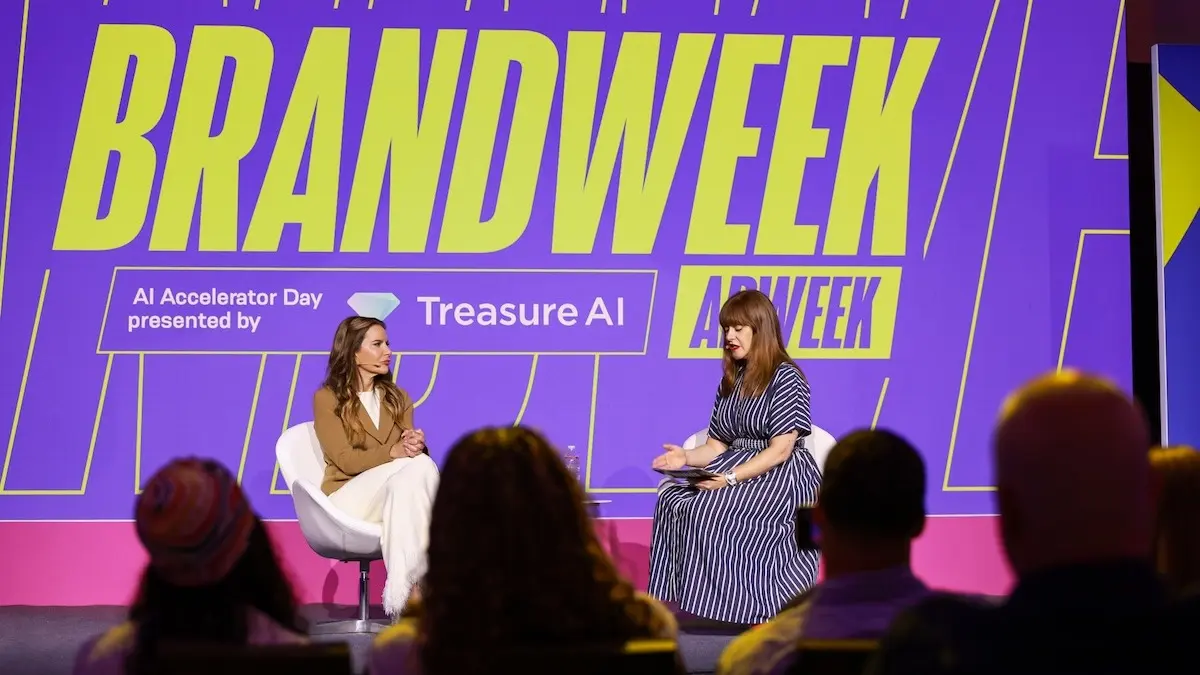
In the rapidly shifting landscape of digital marketing, the traditional linear path from brand awareness to purchase has been replaced by a complex, multi-dimensional journey. As consumers move fluidly between social discovery, AI-driven search, and community-led validation, brands are finding that legacy strategies no longer suffice. This evolution took center stage in Midtown during Brandweek 2026, where the ADWEEK House served as the epicenter for the industry’s most pressing conversations regarding the intersection of advertising, commerce, and media.
A cornerstone of the event was a three-day programming series titled “Agencies Doing Cool Sh*t,” co-hosted by TikTok. The series featured Emily Freed, General Manager of U.S. Agency at TikTok, in conversation with prominent agency leaders who are currently redefining how brands interact with creators and navigate the fragmented modern marketplace. Over the course of the three days, the discussions highlighted a fundamental truth: while social media remains a peerless tool for reaching consumers, its role in the purchase journey has fundamentally changed, requiring a more integrated and sophisticated approach to content and commerce.
Boosting a brand
The opening day of the series focused on the strategic maneuvers required to elevate a brand within one of the most saturated sectors on the internet: the beauty industry. Emily Freed was joined by Leslie Ann Hall, the founder and CEO of Iced Media. As an agency leader specializing in beauty, Hall provided a deep dive into the challenges of launching a high-science product in a medium often dominated by aesthetic trends.
The case study at the heart of the discussion was Rael, a Korean holistic cycle care brand. Rael was preparing to launch a new microneedling serum, a product that presented a unique marketing hurdle. First, the beauty category on TikTok is intensely competitive, with thousands of brands vying for a few seconds of user attention. Second, the product itself—rooted in scientific innovation—needed to be translated into a format that was digestible, engaging, and credible for a social media audience.

Hall explained that the agency’s solution was not merely to run ads, but to engineer a "demand engine" by leveraging the credibility of "mega creator" Mikayla Nogueira. By partnering with a creator of Nogueira’s stature, Iced Media was able to bridge the gap between complex product science and consumer trust. The impact of such a partnership often extends far beyond the initial post; when a top-tier creator validates a product, it frequently triggers a secondary wave of content from other creators, effectively saturating the platform with organic conversation.
“It’s about these connected systems where you’re combining performance media, social commerce, and then thinking about generative engine optimization, when you’re working with a creator like this,” Hall noted during the session. She emphasized that the modern marketer must move away from viewing TikTok as an isolated silo. Instead, she argued that the most successful campaigns treat the platform as a catalyst for omnichannel growth, where social engagement fuels sales across all retail and digital touchpoints.
Working with a nonlinear purchase journey
On the second day of the series, the conversation shifted toward the technical and psychological shifts in how consumers actually buy products today. Leslie Ann Hall returned to the stage to discuss a concept that is increasingly dominating the minds of modern CMOs: the nonlinear purchase journey.
The traditional marketing funnel—moving from awareness to consideration to purchase in a straight line—is largely a relic of the past. Today, a consumer might discover a product through a viral TikTok video, then immediately pivot to an AI platform or a large language model (LLM) to research ingredients or compare prices, before eventually returning to TikTok Shop or a physical storefront to complete the transaction.
Using Iced Media’s work with Moroccanoil as a primary example, Hall illustrated how brands must adapt to this circular behavior. The key, according to Hall, is ensuring that a brand’s presence is ubiquitous and consistent across every potential touchpoint. “The most important thing that brands can do is make sure they have enough content that will reach the consumer at all stages of those journeys,” she explained.

A significant part of this strategy involves what Hall and Freed identified as the growing synergy between social content and AI discovery. As AI-powered search engines and LLMs become more integrated into the shopping experience, they increasingly rely on data from high-traffic social platforms. TikTok and TikTok Shop are becoming primary data sources for these models. Therefore, a brand’s success in an AI-driven world may depend on how well it populates social platforms with high-quality, relevant content.
Emily Freed expanded on this, noting that while AI can provide data-driven recommendations, consumers still crave "human validation." The most effective marketing happens when the machine’s recommendation is backed up by the testimonial of a real person. Freed highlighted the importance of "Generative Engine Optimization" (GEO), a practice that involves structuring brand data so it is easily discoverable by machines while simultaneously ensuring there is a wealth of creator-led content ready to provide the necessary human social proof. This dual-track approach ensures that whether a consumer starts their journey with a search query or a scroll through their feed, the brand is positioned to capture their interest.
A new POV on creator partnerships
The final day of the “Agencies Doing Cool Sh*t” series turned its focus toward the creators themselves, moving beyond the "who" of creator marketing to the "how." Emily Freed introduced Alex Yang, co-founder and president of Boost Engine, to discuss how brands can move past tired tropes to find genuine resonance with their audiences.
Yang highlighted the work his agency has done with Bissell, a brand operating in the "CleanTok" space—a category that is both massive and prone to repetitive content. In the home-cleaning sector, "before and after" videos have become a standard cliché. To break through the noise, Yang argued that brands must grant creators the autonomy to "explore their creativity" and experiment with unconventional formats.
“For creators, if you really want to activate them and drive growth, having this mindset of exploring content in different formats and finding the winning format for your brand, for your audience profile will be crucial to success,” Yang said. This approach requires a level of trust from the brand, moving away from rigid scripts and toward a collaborative partnership where the creator’s unique voice is the primary driver of engagement.

Furthermore, Yang introduced a strategy of radical scale. Rather than relying on a handful of high-profile influencers, Boost Engine advocates for building what Yang described as an “army of your affiliates.” This involves working with thousands of creators simultaneously to create a groundswell of authentic content.
To manage such a massive ecosystem, Yang emphasized the necessity of a repeatable, respectful system. He noted that brands should treat creators as strategic partners rather than mere distribution channels. This includes providing them with the necessary tools and information to succeed, such as insights into the brand’s broader paid media strategy, assortment plans, and data on which content formats are currently performing best.
By informing creators about the business goals and the broader marketing landscape, brands empower them to create content that is not only creative but also strategically aligned with the brand’s bottom line. This shift toward a more professionalized and data-informed creator ecosystem represents the next frontier of social commerce.
As the series concluded, the overarching message from the ADWEEK House was clear: the brands that will thrive in 2026 and beyond are those that embrace the chaos of the nonlinear journey. By integrating creator authenticity with the technical requirements of AI discovery and the scale of affiliate networks, agencies like Iced Media and Boost Engine are proving that social media is no longer just a place for "cool sh*t"—it is the engine of the modern economy.