In the quiet suburbs of Chicago where Brittany and Brennan Grosvenor spent their formative years, pizza was never a subject of high-concept culinary debate. It was a staple of domestic life, a reliable constant that defined the rhythm of the week. According to the couple, who now operate Proof in Portland, Oregon, the decision-making process on a Friday night was remarkably straightforward, centered on a simple trinity of options: thin-crust, deep-dish, or double-dough.
While the world at large has long identified Chicago almost exclusively with the mountainous, cheese-laden architecture of deep-dish pizza, the Grosvenors are part of a growing movement of restaurateurs working to correct that narrative. At Proof, they specialize in the thin-crust variety, though they have seen the linguistic landscape shift beneath them. The "thin-crust" of their childhood has been rebranded for a national audience as "tavern-style," a term that has transitioned from a regional descriptor to a sweeping culinary trend appearing on menus from the Pacific Northwest to the Atlantic coast.
For Brittany Grosvenor, the distinction between the deep-dish pizzas that lure tourists to downtown Chicago and the pizzas actually consumed by residents is a matter of cultural accuracy. She notes that the thick, heavy pies so famously associated with the city are, in reality, a much less frequent indulgence for locals than the crisp, Midwestern thin-crust style. Tavern-style is the true workhorse of the region; it is the pizza of weekly family dinners, the default catering for children’s birthday parties, and the ubiquitous companion to a round of beers at a neighborhood bar.
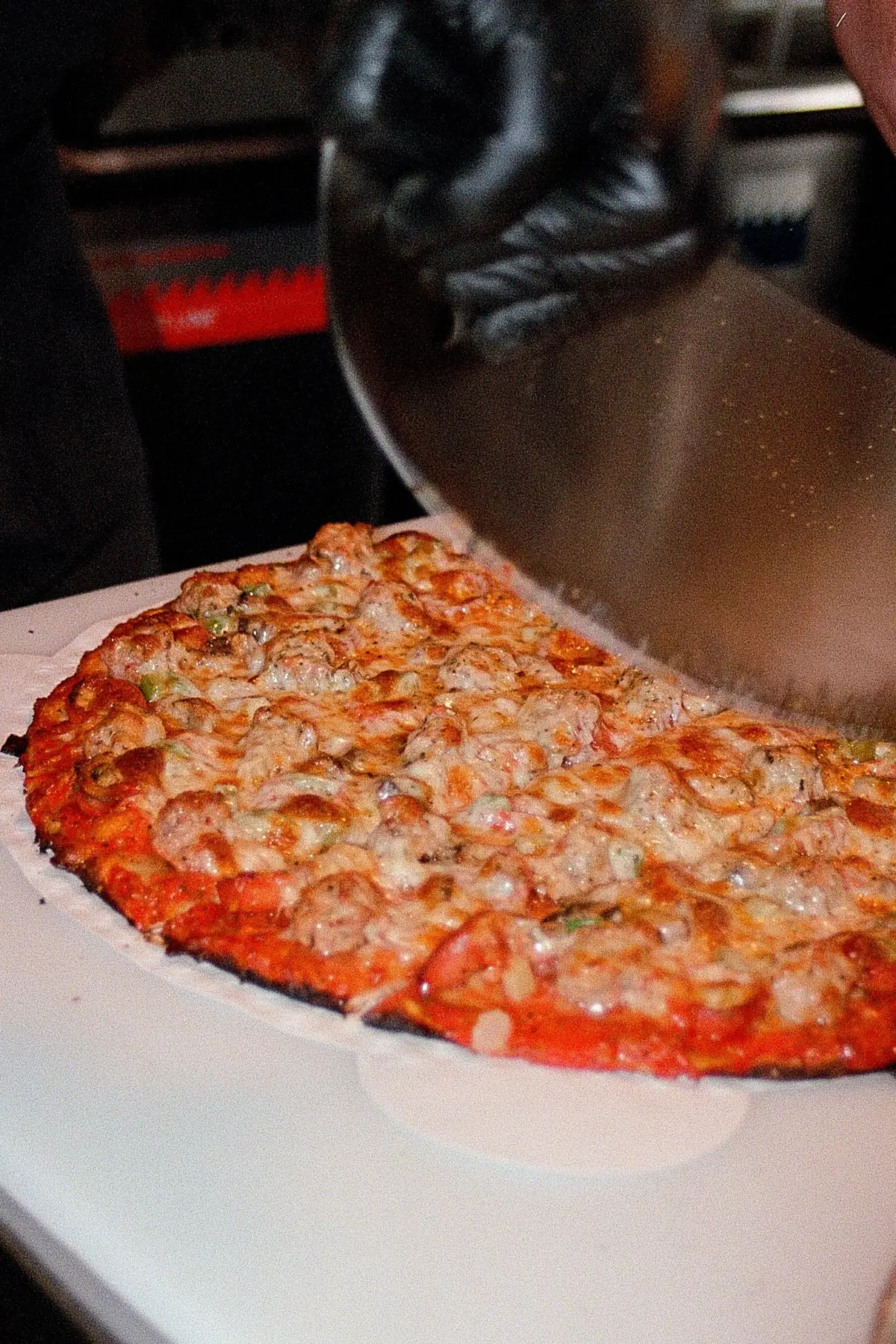
This style of pizza is a common thread that runs through the fabric of the Midwest, with Chicago, Milwaukee, St. Louis, and various cities across Minnesota all laying claim to their own specific iterations. Despite regional nuances, the core identity of the tavern-style pie remains consistent: a remarkably thin, cracker-like crust that provides a sturdy, crunchy foundation for a layer of toppings that typically extends all the way to the very edge of the dough. Perhaps its most defining characteristic, however, is the "party cut"—a lattice-like grid that results in small, bite-sized squares rather than the traditional triangular wedges found in New York or Neapolitan styles.
The rise of tavern-style pizza represents a significant shift in the American pizza zeitgeist. Writing for Esquire in 2023, critic Omar Mamoon identified the style as a necessary "foil" to the Detroit-style pizza trend that dominated the late 2010s. Where Detroit-style emphasized thick, airy dough and caramelized cheese edges, tavern-style offers lightness, crispness, and a high degree of "snackability." It is a style designed for the social environment of a bar or a crowded living room, prioritizing ease of consumption over the heavy commitment of a thick crust.
The beauty of the tavern-style pie lies in its inherent shareability. Bradley Shorten, the veteran behind Kim’s Uncle Pizza in the Chicago suburb of Westmont and the recently launched La Merna in Washington, D.C., explains that the geometry of the grid cut is simply more efficient for groups. A single pizza yields a higher volume of individual pieces when cut into a square lattice, making it the ideal "drinking food." The small squares are perfectly sized to fit on a cocktail napkin, allowing patrons to graze while maintaining a conversation or holding a drink.

According to Shorten, the hallmark of a superior tavern-style pie is the distribution of ingredients. Because the toppings are spread to the extreme perimeter, every square—even the ones toward the center—carries a balanced ratio of sauce, cheese, and protein. And then there are the corners. While the four small, triangular corner pieces might lack the structural integrity of the interior squares, they are often the most sought-after portions of the pie. For those who grew up with this style, particularly Chicagoans, the corners represent the ultimate prize: the crunchiest, most well-done bits of the crust.
This regional nostalgia is now being exported across the United States at an unprecedented rate. In recent years, as the concept of the "tavern" has become a fixation for modern restaurateurs seeking to move away from minimalist, industrial aesthetics, the tavern-style pizza has followed suit. New York City has seen the arrival of Keepers; Fort Worth, Texas, now hosts One Trick Pony; and Tillie’s Tavern Pizza has established a foothold in Wheat Ridge, Colorado. Even within Chicago, new venues like Zarella and Dimmi Dimmi Corner Italian are doubling down on the style, reinforcing its status as the city’s true culinary signature.
For many Midwesterners living outside their home states, these openings are more than just new dining options; they are an opportunity to reclaim their heritage. The national obsession with deep-dish has long frustrated Chicagoans who feel their actual food culture has been overshadowed by a tourist-centric caricature. By bringing tavern-style to the coasts, these chefs are presenting a more authentic, lived-in version of Midwestern life.
However, as the style travels, it inevitably undergoes a process of evolution—what some chefs describe as a culinary "game of telephone." Mike Fadem, the owner of the acclaimed Brooklyn pizzeria Ops, recently sought to introduce a thin-crust option to his menu. Fadem, who hails from St. Louis, grew up with that city’s specific version of the tavern pie, which is famous for its unleavened, cracker-thin crust and the use of Provel—a processed, gooey blend of cheddar, Swiss, and provolone.
While Fadem maintains a deep affection for his hometown style, he acknowledges its polarizing nature, particularly regarding the cheese. He notes that the trajectory of tavern-style pizza is one of constant divergence. St. Louis style was originally a derivative of the thin-crust Chicago style, which itself was an American evolution of the original Neapolitan traditions brought over by immigrants. With each geographic jump, the recipe changed.
In developing a version for Ops, Fadem drew inspiration from multiple sources. One of his employees, a New Jersey native, advocated for the "bar pie" traditions of the Garden State, which share the thin-crust DNA of the Midwest but possess their own distinct character. Fadem also looked toward the legendary thin-crust institutions of Milwaukee, which he eventually determined produced some of the finest examples of the craft.
The result of this research is the "Tavernetta," a regionally agnostic pie that incorporates the sourdough and whole-grain expertise for which Ops is known. It aims for a level of extreme crispness that Fadem believes is particularly appealing to the New York palate. Rather than replacing the restaurant’s signature wood-fired, Neapolitan-esque pizzas, the Tavernetta has become a supplemental order; most groups now add one to their table as an appetizer or a side dish, further proving the style’s versatility.

The trend has even reached the cocktail-centric culture of Los Angeles. At Bar Next Door, a West Hollywood establishment, owner and bar director Brynn Smith recently introduced a "bar pie" menu to mark the venue’s third anniversary. Previously, the bar allowed guests to bring in square slices from the neighboring Prince Street Pizza. However, Smith noticed that the heavy, thick-crust slices often led to "food comas," prompting customers to end their night early.
The switch to a tavern-style format was a strategic business move. Because the pies are lighter and more manageable, guests can snack without feeling overly full, encouraging them to stay longer and order more drinks. The pizzas are produced exclusively for the bar by the team at Prince Street, but they are branded as bar pies to align with the establishment’s identity as a social hub rather than a traditional restaurant.
Ultimately, the resurgence of tavern-style pizza is inseparable from a broader cultural longing for the "tavern" as a social institution. For Bradley Shorten and his wife Meg Schmitt, who co-operates La Merna in D.C., the goal was to recreate the specific "vibe" of a Chicago dive bar or a classic Wisconsin supper club. These are spaces defined by wood-paneled walls, checkered floors, and red leather booths—environments that feel homey, lived-in, and entirely devoid of pretense.
This shift in restaurant design reflects a move away from the "millennial minimalism" of the 2010s toward a more maximalist, cozy, and nostalgic aesthetic. The tavern-style pizza shop, with its roots in a simpler era of American dining, fits perfectly into this new landscape. It offers diners a sense of familiarity and comfort, inviting them to sprawl out, stay for hours, and share a meal that was designed from the ground up for communal enjoyment.
In Portland, the Grosvenors are leaning into this total immersion. Beyond the pizza itself, they have expanded their menu to include other Midwestern cultural touchstones, such as Bosco sticks—the cheese-filled breadsticks famous in Midwestern school cafeterias—and Italian beef sandwiches served with spicy giardiniera. Their mission is not just to sell a product, but to embody a specific feeling.
"We’re just trying to embody the feeling," Brennan Grosvenor says of their approach. "If you went into a tavern in Chicago, what could you order there?" That question is being answered in cities across the country, as the "party cut" continues its steady march across the American map, one crispy, square-cut slice at a time.