The journey begins in the early hours of the morning in Brooklyn, a borough that has become Sze’s professional and personal home. His first stop is Bakeri, a neighborhood staple known for its rustic, transportive atmosphere and its commitment to traditional baking methods. For Sze, the appeal of Bakeri lies in its ability to elevate simple ingredients through meticulous execution. While the bakery offers a wide array of sophisticated pastries and loaves, Sze’s ritualistic order is a sandwich that balances sweetness, acidity, and creaminess: a combination of honey, crisp apple, and brie, all served on a classic, crunchy baguette. This choice reflects a chef’s appreciation for contrast. The baguette provides a structural, shattering crust that gives way to a soft interior, acting as the perfect vessel for the yielding texture of the brie and the sharp, fresh snap of the apple slices. It is a breakfast that avoids the heaviness of more traditional morning fare, providing a bright start to a day dedicated to exploration.
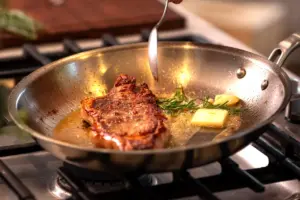
As the morning progresses, Sze’s itinerary shifts from the delicate world of flour and yeast to the more rugged, craft-oriented environment of The Meat Hook. Located in the heart of Brooklyn’s artisanal food scene, The Meat Hook is more than just a retail shop for Sze; it is a vital part of his professional ecosystem. The shop serves as the primary meat supplier for Wenwen, creating a bridge between the chef’s commercial kitchen and his personal pantry. On his day off, the relationship shifts from business to pleasure as Sze selects cuts for a home-cooked dinner. His preferences lean toward the specialized and the time-honored, specifically seeking out unique cuts of steak and the shop’s renowned dry-aged short ribs. The Meat Hook has earned a reputation for its commitment to whole-animal butchery and local sourcing, and Sze’s reliance on them underscores the importance of provenance in his culinary philosophy. By choosing dry-aged ribs, he looks for the concentrated, umami-rich depth that only time and controlled environments can impart to beef—a flavor profile that mirrors the complexity he strives for in his own cooking.

No culinary tour of New York City would be complete without a deep dive into the city’s most iconic food group: pizza. For Sze, the current gold standard is found at Chrissy’s Pizza, where chef Chris Hansell has spent years in a relentless pursuit of the perfect New York-style pie. Hansell’s approach is one of refinement and patience, treating the classic pizza format with the reverence usually reserved for fine dining. Sze’s order of choice is the jalapeño and garlic pie, a selection that highlights Hansell’s ability to achieve perfect proportions. In a city where toppings can often overwhelm the foundation, this pie is celebrated for its balance. The heat of the jalapeño and the aromatic pungency of the garlic are calibrated to complement, rather than mask, the doughy, yeasted crust. The crust itself is a point of particular admiration for Sze; it possesses the characteristic chew and structural integrity of a well-fermented dough, providing a base that is both substantial and airy. This stop at Chrissy’s represents the intersection of tradition and modern technique, showcasing how a staple food can be elevated through obsessive attention to detail.
As the day transitions into the afternoon, Sze leaves the familiar streets of Brooklyn for the vibrant, sensory-rich environment of Flushing, Queens. This leg of the journey is perhaps the most personal, as it takes him to Maxi’s Noodle 2, a destination that serves as a culinary North Star for his Taiwanese heritage. The restaurant is helmed by Maxi Lau-O’Keefe, a figure Sze holds in high regard for her mastery of traditional Chinese and Taiwanese comfort foods. For Sze, the food at Maxi’s Noodle 2 is an antidote to the homesickness he has experienced since leaving Taiwan. It is a place where the flavors are unadulterated and the techniques are preserved with exacting care.
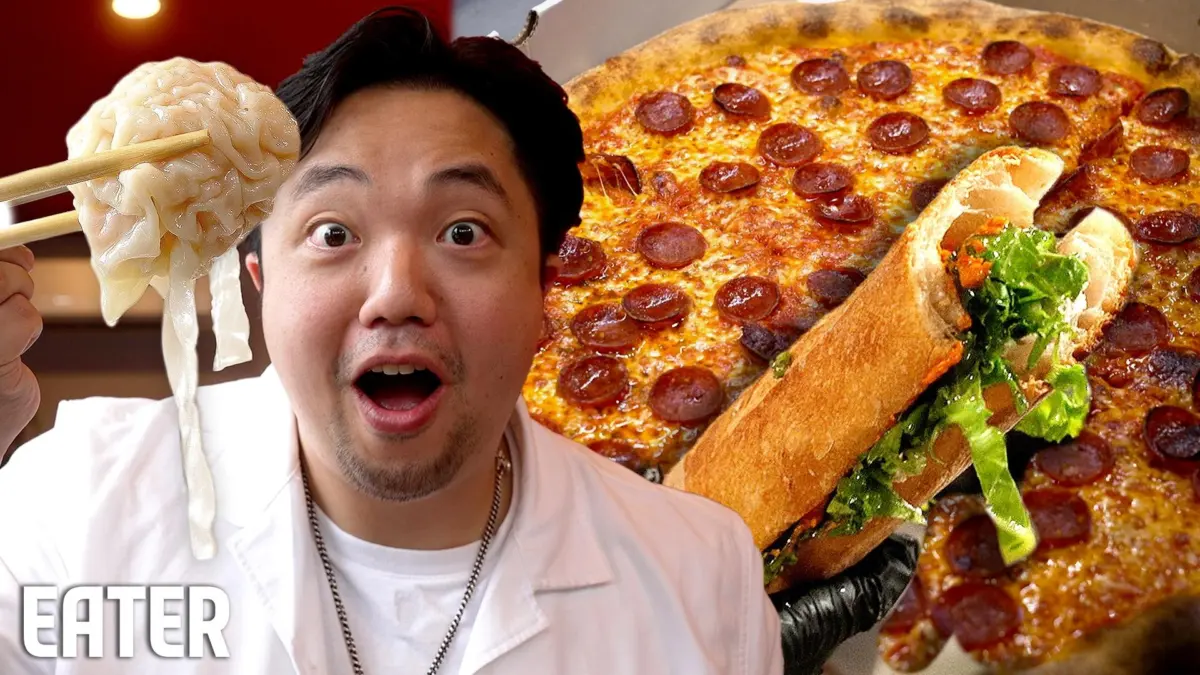
Central to the experience at Maxi’s are the iconic wontons. During his visit, Sze steps behind the counter to observe and participate in the preparation of these oversized delicacies. Filled with a precise mixture of shrimp and pork, the wontons require a specific folding technique that is as much an art form as it is a culinary task. Despite his own professional standing, Sze admits to being humbled by the complexity of the process. The "expert fold" practiced by Lau-O’Keefe and her team is a testament to years of repetition and a deep understanding of how the wrapper interacts with the filling during the cooking process. It is a moment of apprenticeship that highlights a fundamental truth of the culinary world: there is always more to learn, even for those who have reached the top of their field.

Once the work is done, Sze settles into a meal that captures the essence of his cravings. The centerpieces are the thin noodles, which are crafted using duck eggs. The use of duck eggs instead of standard chicken eggs is a critical detail; it lends the noodles a richer color, a more supple texture, and a distinctive "snap" that is highly prized in traditional noodle making. These are served in a clear, soul-warming soup alongside the aforementioned wontons and a deeply flavored beef soup. This meal is not merely about sustenance; it is a connection to a lineage of flavors that spans generations and geography. For a chef like Sze, who spends his professional life interpreting Taiwanese cuisine for a New York audience, eating at Maxi’s Noodle 2 is a way to recalibrate his palate and reconnect with the source of his inspiration.
The "Chef’s Day Off" segment featuring Eric Sze offers a rare glimpse into the life of a restaurateur when the pressure of the service clock is removed. It illustrates a day defined by community, respect for fellow artisans, and an enduring curiosity about the craft of food. From the quiet morning baguette at Bakeri to the bustling, steam-filled dining room in Flushing, Sze’s journey is a celebration of the diversity and depth of the New York City food landscape. It reveals that for those truly dedicated to the culinary arts, the line between work and life is perpetually blurred, as every meal becomes an opportunity to explore, to remember, and to appreciate the skill of others.
Through these visits, Sze highlights the importance of the local food economy, supporting the butchers, bakers, and pizza makers who contribute to the city’s reputation as a global gastronomic capital. His day off is not a retreat from the world of food, but a deeper immersion into it, proving that the best way to recharge a creative spirit is often to return to the simple, foundational joys of a well-made meal. As he returns to Wenwen to begin another week of service, he carries with him the flavors and techniques of his peers, further enriching the vibrant tapestry of the city’s dining scene.