As the autumn of 2026 settles into the global consciousness, the literary world finds itself at a peculiar and profound crossroads. The week of October 5 through October 9 has emerged as a microcosm of the broader tensions defining contemporary life: the friction between artificial intelligence and human creativity, the weight of historical legacy against the urgency of current political crises, and the persistent effort to find language for identities that refuse to be easily categorized. At the center of this week’s literary discourse is a celebration of the past and a bracing look at a future that feels increasingly uncertain.
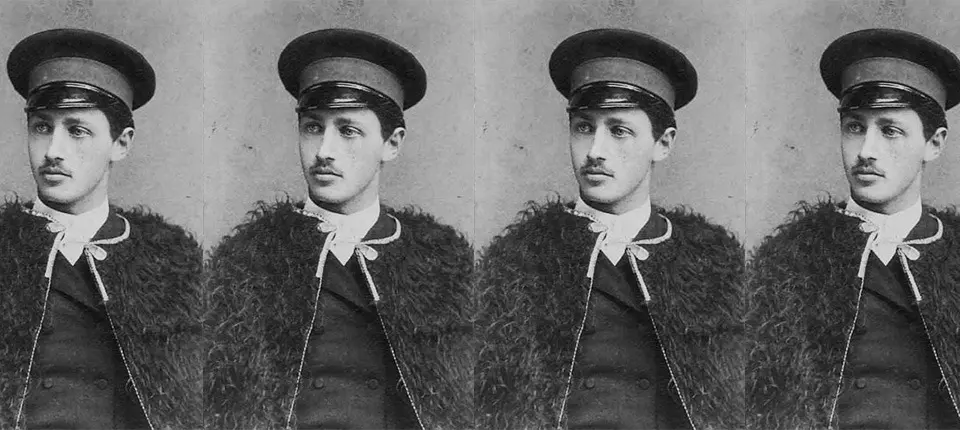
The week began with a significant historical milestone: the anniversary of the birth of Ivan Bunin in 1870. As the first Russian writer to be awarded the Nobel Prize in Literature, Bunin’s legacy remains a cornerstone of prose that prioritizes the sensory, the melancholic, and the deeply human. His inclusion in this week’s highlights serves as more than just a chronological marker; it sets the stage for a recurring theme in the current discourse—the endurance of the human "soul" in the face of displacement and technological advancement. Bunin, who lived much of his life in exile, understood the precarity of the written word, a sentiment that resonates deeply in today’s landscape of global conflict and digital transformation.
THE BEST OF THE LITERARY INTERNET
The defining debate of the current moment centers on the encroachment of artificial intelligence into the creative arts. In an era where generative models can mimic style and structure with unsettling accuracy, the literary community is increasingly vocal about the one element that remains beyond the reach of the algorithm: the writer’s soul. This week, critics and creators alike have argued that while AI can replicate the mechanics of a sentence, it cannot replicate the lived experience, the idiosyncratic grief, or the spiritual "soul" that is forged through human existence. This defense of the intangible is not merely a rejection of technology, but an assertion that literature serves as a building where the human spirit must remain the primary inhabitant.
This search for the "soul" of writing extends into the realm of identity and the evolving nature of language. The discourse surrounding Latinx identity continues to shift, reflecting a community that is far from monolithic. Writers are grappling with the limitations of labels and the necessity of creating a "medicine" through literature that addresses the complexities of heritage and belonging. Similarly, the exploration of trans poetics highlights a fascinating paradox: the "failure" of language to fully capture the nuances of gender "becoming." Rather than viewing this failure as a deficit, contemporary poets are embracing the gaps in language as a space of creative potential, where the inability to be perfectly defined becomes a form of liberation.
The literary week also cast a long look back at the figures who shaped the 20th-century canon, specifically the enduring influence of Sylvia Plath. The preservation of Plath’s legacy has often been a contentious subject, but new insights this week have shed light on the pivotal role played by feminist activist Robin Morgan. Morgan’s influence helped safeguard Plath’s work from being reduced to mere pathology, instead framing it within the broader context of women’s intellectual and creative struggles. This is further complemented by a deep dive into the cycles of life and death that pulse through Plath’s poetry, reminding readers that her work remains a living, breathing entity rather than a static relic of the past.
In a similar vein of historical recovery, the week highlighted the work of Ettie Stettheimer, specifically her century-old novel Love Days. Through the lens of Mabel Capability Taylor, readers are invited to revisit an unsung masterpiece from an intellectual New York family that navigated the complexities of social status and romantic entanglement. The act of revisiting such "unsung" novels is a recurring theme, seen also in the curation of fiction centered on the experience of being "the poorest person in the room." These narratives of class and economic precarity remain essential, providing a necessary counter-narrative to the often-glamorized depictions of literary life.
The intersection of literature and politics has never felt more urgent than it does in October 2026. The world is currently witnessing a series of "political convulsions," particularly in Brazil, which offer a grim window into the global rise of the far-right. These developments are being analyzed not just as isolated events, but as part of a broader historical pattern. In a sobering comparison, literary commentators have drawn parallels between the electoral victory of Adolf Hitler on March 5, 1933, and the atmosphere surrounding the 2026 American midterms. This analysis suggests that the destruction of democracy is rarely a sudden event, but rather a slow erosion of norms—a process that literature is uniquely positioned to document and critique.
The physical reality of war also looms large over the week’s reports. The ongoing conflict involving Russia has led to the systematic destruction of Ukrainian books and cultural institutions. Oleksandr Mykhed’s reflections on losing libraries to Russian bombs serve as a harrowing reminder that the war against a people is often accompanied by a war against their literature. This "undocumented war" extends to the machinery of violence within the American deportation system, which some writers are now framing as a domestic conflict that targets the vulnerable through administrative and physical force.
Amidst these heavy themes, the week also offered insights into the craft and personal lives of writers who continue to find beauty in the mundane and the extraordinary. Barbara Kingsolver, a perennial favorite of the literary establishment, shared the practicalities of her process, explaining why she prefers to write standing up—a physical stance that perhaps mirrors the alertness required of a novelist in turbulent times. Lydia Millet, in conversation with Jane Ciabattari, discussed the emotional and structural challenges of writing a "double novel" centered on grief and loss, while Nafissa Thompson-Spires provided a stunningly literal example of how life can alter one’s perspective: describing how being struck by lightning reshaped her identity and, consequently, the characters she creates.
The literary world’s fascination with the personal also extended to the long-standing friendship between Hannah Arendt and Mary McCarthy. Their decades-long correspondence remains a gold standard for intellectual companionship, proving that the life of the mind is best lived in dialogue with others. This sense of community was also reflected in the reports from the Frankfurt Book Fair, specifically the "incomparable" translation prize dinner, which serves as a reminder that the global literary market is built on the labor of those who bridge the gaps between languages.
Cultural icons were not left out of the week’s reflections. The "confident complexity" of Whitney Houston’s legendary performance at Super Bowl XXV was revisited, framing her not just as a pop star, but as a figure whose presence at a massive national event carried immense cultural and political weight. This intersection of high art and mass culture is also found in the history of iconic women spies in comics, a genre that has often been overlooked by serious critics but which provides essential insights into how we conceptualize female agency and power.
As the week comes to a close, the role of the editor has been highlighted as the silent force that shapes the relationship between the reader and the writer. It is through this partnership that the joy of reading is sustained, much like the army librarians of World War II who brought literature to the front lines to provide a sense of normalcy and hope in the midst of chaos.
Whether it is Bill McKibben discussing the "long, slow process" of climate activism or Deesha Philyaw on the importance of raising the stakes in fiction, the message of the week is clear: literature is not a luxury, but a necessity for navigating the complexities of the human condition. From the Anishinaabe poet finding their way in a world dominated by fiction writers to the trans poet exploring the failures of language, the "best of the literary internet" this week serves as a testament to the resilience of the written word. In a time of war, political instability, and technological upheaval, the writer’s soul remains the ultimate, irreplicable defense against the darkening of the world.