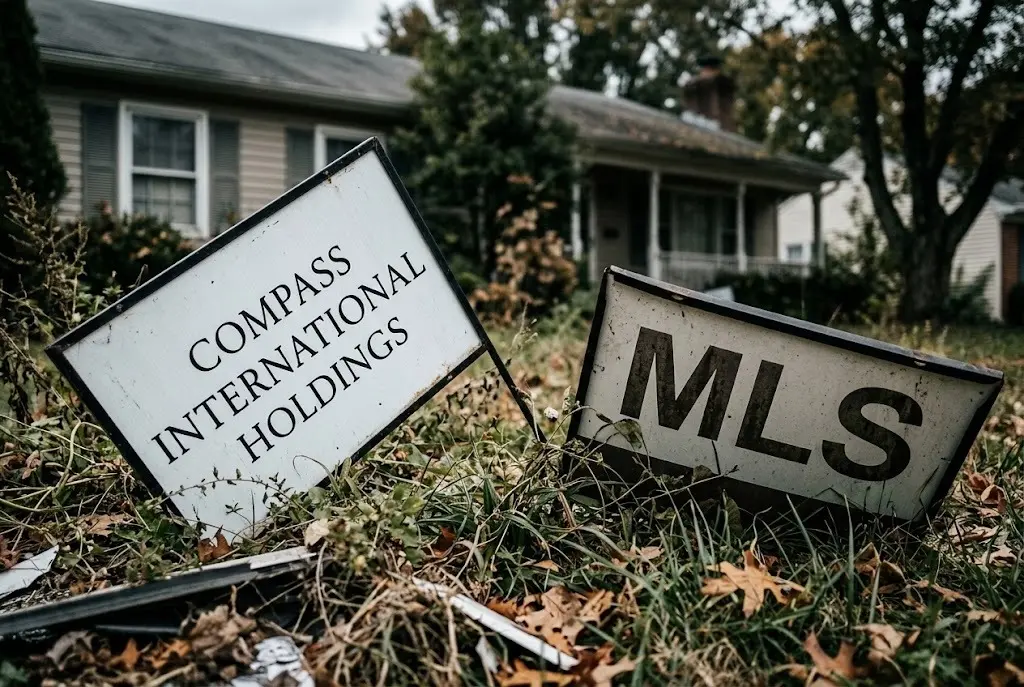
Mutually Assured Destruction
The sentiment of a potential industry-wide collapse is shared by Anthony Lamacchia, the broker-owner of New England-based Lamacchia Realty. Lamacchia views the current trajectory as a dangerous game that could result in the death of the small brokerage.
"People will look at Compass and say, ‘Ok, if you are going to hoard your listings and not share them with the MLS, we are going to hoard ours,’" Lamacchia told HousingWire. He described the situation in geographic terms, noting that while his firm’s hoarding of listings might impact Compass agents in certain regions like Northern Massachusetts or New Hampshire, a similar move by Compass in a stronghold like Boston would be a "nightmare" for his agents.
"This is literally what I see as mutually assured destruction," Lamacchia said. He argued that the MLS serves as the great equalizer; without a robust, centralized database where all firms share information, small-scale brokerages would be unable to compete with the massive internal networks of national conglomerates. "If they take it that far, it would blow the whole system up and that won’t be good for anybody."
The "Free Rider" Debate: If You Don’t Like It, Leave
As the debate intensifies, some industry leaders are questioning why Compass remains part of the MLS system if it finds the regulations so restrictive. James Dwiggins, president of NextHome, has been blunt in his assessment of the brokerage’s demands, characterizing them as an attempt to "free ride" on the collective efforts of the industry.
"If you don’t want to follow the rules, then leave," Dwiggins said. "These demands are essentially a request to free ride—it is only agreeing to participate when it is convenient for them. You don’t get to have your cake and eat it too—it doesn’t work that way. There is no requirement for Compass to be part of the MLS."
Dwiggins argues that the mandatory submission rules, such as Clear Cooperation, are what make the MLS a "true cooperative." By ensuring that every participant contributes their data to the pool, the system creates a comprehensive resource that powers the American real estate economy. Without this mandatory participation, the system loses its integrity.
The consequences of a collapsed MLS infrastructure would be far-reaching. Dwiggins pointed out that the loss of centralized data would cripple the ability of agents to perform comparable market analyses (comps) and make it nearly impossible for appraisers to accurately value homes. The standardized process of searching for a home, which consumers currently take for granted, would vanish.
"This is a very fragile moment in our industry," Dwiggins warned. "If the MLS doesn’t get this right, the fragmentation that will occur will be severe and the system will eventually collapse."
The Seller’s Dilemma and the "Killer of Value"
Compass CEO Robert Reffkin has offered a different perspective, focusing on what he believes is the harm caused to sellers by the current system. In a recent appearance on CNBC’s The Exchange, Reffkin described the public nature of the MLS as a "killer of value." He specifically cited the public tracking of "days on market" and price history as data points that can negatively impact a seller’s negotiating position.