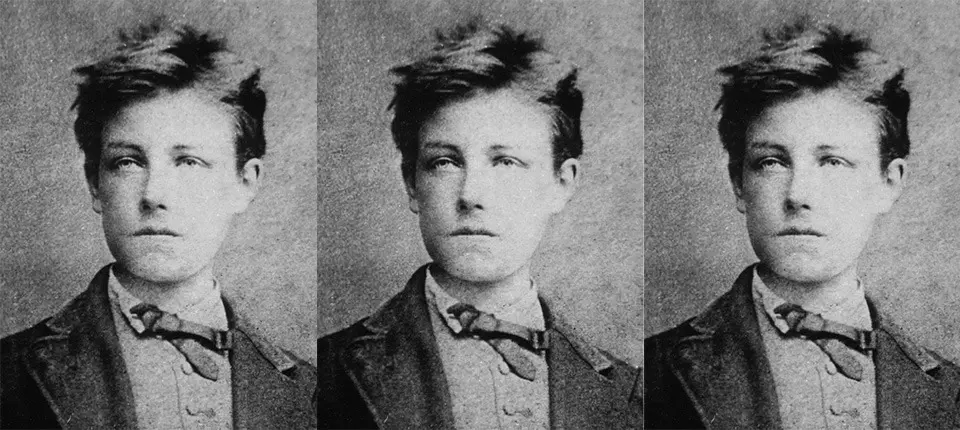
On this day, the global literary community pauses to reflect on the birth of a figure whose brief but incandescent career fundamentally reshaped the landscape of modern poetry. As highlighted in the latest installment of Lit Hub Daily’s “The Best of the Literary Internet,” October 20 marks the anniversary of the birth of Arthur Rimbaud in 1854. Born in the small town of Charleville in northeastern France, Rimbaud would go on to become one of the most influential and enigmatic figures in the history of Western literature, a poet who effectively dismantled traditional verse before abandoning the craft entirely by the age of twenty.
The inclusion of Rimbaud’s birthday in the daily literary digest serves as a reminder of how deeply the "enfant terrible" of French letters continues to permeate contemporary thought, art, and digital discourse. Despite the passage of nearly 172 years since his birth, Rimbaud’s life and work remain a primary touchstone for those seeking to understand the intersection of rebellion, visionary aesthetics, and the limits of language. His legacy is not merely one of historical interest but a living influence that informs everything from modern songwriting to the avant-garde movements of the 21st century.
THE BEST OF THE LITERARY INTERNET
In its curation of the day’s most significant literary developments, Lit Hub Daily places Rimbaud at the center of the cultural conversation. This recognition underscores the poet’s unique position as both a historical titan and a modern icon. To understand why a poet who stopped writing before the age of majority still commands such attention, one must look at the explosive nature of his creative output and the radical philosophy that underpinned it.
Arthur Rimbaud was born into a strictly controlled environment, the son of a career soldier who was largely absent and a mother, Vitalie Rimbaud, whose rigid discipline and provincial piety provided the perfect foil for her son’s burgeoning rebellion. From an early age, it was clear that Rimbaud possessed a terrifying intelligence. He was a prodigy of Latin verse, winning numerous academic prizes and displaying a mastery of traditional forms that most poets take a lifetime to achieve. However, for Rimbaud, mastery of the old ways was merely a prerequisite for their destruction.
By the time he was sixteen, Rimbaud was already seeking an escape from the "small-town idiocy" of Charleville. His early poems began to move away from the Parnassian style of the era toward something more visceral and experimental. It was during this period, in May 1871, that he penned the famous "Lettre du voyant" (The Letter of the Seer). In this manifesto, sent to his teacher Georges Izambard and later to Paul Demeny, Rimbaud articulated a revolutionary poetic theory. He argued that the poet must become a "seer" through a "long, immense, and reasoned derangement of all the senses." For Rimbaud, the goal of poetry was not merely to describe the world, but to reach the unknown by exhausting all forms of love, suffering, and madness.