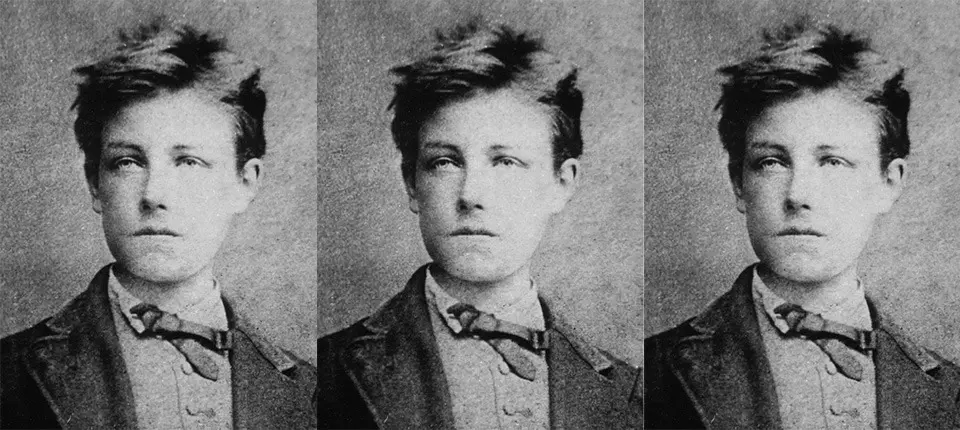
This philosophical shift coincided with a period of intense political and social upheaval in France. The Franco-Prussian War and the subsequent rise and fall of the Paris Commune provided a chaotic backdrop for Rimbaud’s formative years. The violence and idealism of the Commune, in particular, resonated with his own desire to tear down the established order. His poetry from this era reflects a deep cynicism toward bourgeois morality and a yearning for a new, more authentic mode of existence.
The most infamous chapter of Rimbaud’s life began in late 1871 when he sent several poems to the established poet Paul Verlaine. Impressed and intrigued by the young man’s talent, Verlaine invited him to Paris, famously writing, "Come, dear great soul. We await you; we desire you." What followed was a tumultuous and destructive affair that would scandalize the Parisian literary scene. Rimbaud arrived in the capital as a disheveled, arrogant teenager, frequently intoxicated and openly hostile to the literary elite. His relationship with Verlaine, who was married and several years his senior, was characterized by passion, alcoholism, and physical violence.
Despite the chaos of his personal life, this period was remarkably productive. Rimbaud’s work moved toward the prose poem, a form he would help perfect in his collections Illuminations and Une Saison en Enfer (A Season in Hell). In these works, he abandoned the constraints of traditional meter and rhyme, creating a hallucinatory, fragmented style that anticipated the Surrealist and Symbolist movements. A Season in Hell, written in the aftermath of his final break with Verlaine—a break punctuated by Verlaine shooting Rimbaud in the wrist during a drunken argument in Brussels—is a harrowing psychological self-portrait. It is a work of profound disillusionment, in which Rimbaud examines his own failure to achieve the visionary status he once sought.
Perhaps the most baffling aspect of Rimbaud’s biography, and the one that contributes most to his enduring mystique, is his sudden and total abandonment of poetry. By 1875, at the age of twenty-one, the man who had revolutionized French literature simply stopped writing. He spent the remainder of his life as a wanderer and merchant. His travels took him across Europe, to the Dutch East Indies, and eventually to the Horn of Africa.
In Aden and later in Harar, Ethiopia, Rimbaud lived a life that bore almost no resemblance to his youth as a Parisian provocateur. He worked for a French trading company, dealing in coffee, hides, and, according to some historical accounts, firearms. His letters from this period are devoid of poetic flourish, focusing instead on the mundane details of trade, finances, and his deteriorating health. This "second life" has long fascinated scholars and biographers, who struggle to reconcile the visionary poet with the pragmatic, often frustrated businessman of Harar.