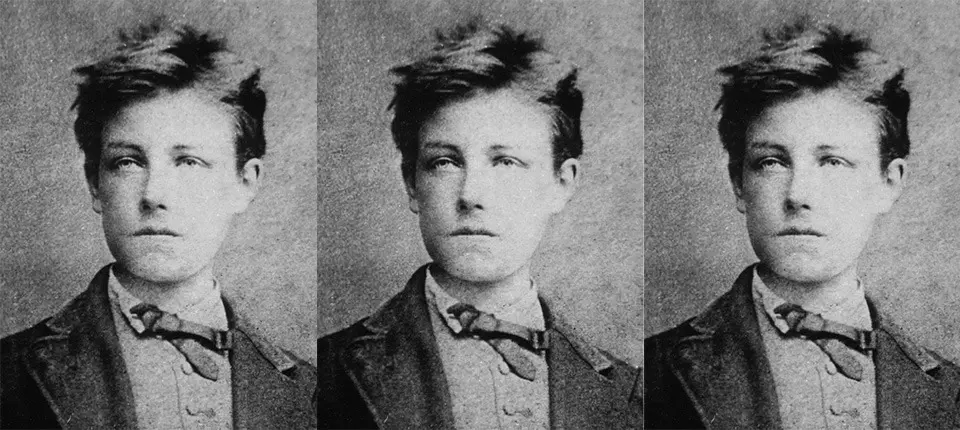
The silence that followed his poetic career only served to amplify his voice in the decades after his death. Rimbaud returned to France in 1891 to seek treatment for a cancerous tumor in his right leg. Following an amputation in Marseille, he died on November 10, 1891, at the age of thirty-seven. He was largely unaware of the growing fame his work was achieving back in Paris, where Verlaine had published his poems and championed his genius.
As Lit Hub Daily observes, the "Best of the Literary Internet" continues to find new ways to engage with Rimbaud’s ghost. His influence is visible in the works of countless artists who followed. The Surrealists, led by André Breton, claimed him as a primary ancestor. In the mid-20th century, his image and words became a staple of countercultural movements. Musicians such as Bob Dylan, Patti Smith, and Jim Morrison frequently cited Rimbaud as a major inspiration, drawn to his image of the poet as an outlaw and a visionary.
In the digital age, Rimbaud’s relevance has not waned. The brevity of his career and the intensity of his language make his work uniquely suited to a contemporary audience that values both aesthetic density and the myth of the radical individual. Online archives, literary journals, and social media platforms dedicated to classic verse ensure that "The Drunken Boat" and "Vowels" continue to reach new generations of readers.
The celebration of Rimbaud’s birth is not just an exercise in nostalgia; it is an acknowledgment of the enduring power of the written word to disrupt and transform. Rimbaud’s life remains a testament to the idea that literature can be a dangerous, life-altering pursuit. By pushing the boundaries of what language could express, he opened doors that have never been closed.
As we look at the literary landscape today, we see the remnants of Rimbaud’s "derangement of the senses" in the fragmented narratives of modern fiction and the experimental structures of contemporary poetry. His insistence on the "absolute necessity of being modern" remains a guiding principle for artists across all disciplines. Whether he is being discussed in the hallowed halls of the Académie Française or featured in a digital newsletter for the modern reader, Arthur Rimbaud continues to demand our attention, reminding us that true genius is often as brief as it is brilliant.