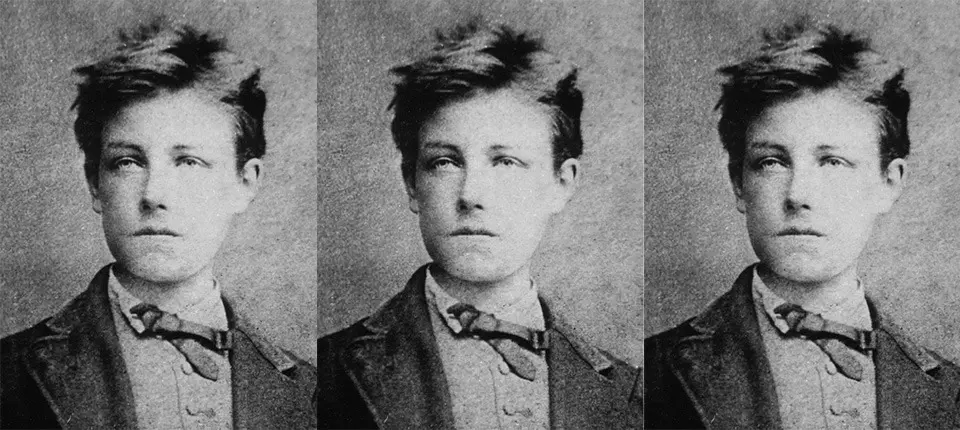
On this day, the global literary community pauses to reflect on the birth of a figure whose brief but incandescent career fundamentally reshaped the landscape of modern poetry. As highlighted in the latest installment of Lit Hub Daily’s “The Best of the Literary Internet,” October 20 marks the anniversary of the birth of Arthur Rimbaud in 1854. Born in the small town of Charleville in northeastern France, Rimbaud would go on to become one of the most influential and enigmatic figures in the history of Western literature, a poet who effectively dismantled traditional verse before abandoning the craft entirely by the age of twenty.
The inclusion of Rimbaud’s birthday in the daily literary digest serves as a reminder of how deeply the "enfant terrible" of French letters continues to permeate contemporary thought, art, and digital discourse. Despite the passage of nearly 172 years since his birth, Rimbaud’s life and work remain a primary touchstone for those seeking to understand the intersection of rebellion, visionary aesthetics, and the limits of language. His legacy is not merely one of historical interest but a living influence that informs everything from modern songwriting to the avant-garde movements of the 21st century.
THE BEST OF THE LITERARY INTERNET
In its curation of the day’s most significant literary developments, Lit Hub Daily places Rimbaud at the center of the cultural conversation. This recognition underscores the poet’s unique position as both a historical titan and a modern icon. To understand why a poet who stopped writing before the age of majority still commands such attention, one must look at the explosive nature of his creative output and the radical philosophy that underpinned it.
Arthur Rimbaud was born into a strictly controlled environment, the son of a career soldier who was largely absent and a mother, Vitalie Rimbaud, whose rigid discipline and provincial piety provided the perfect foil for her son’s burgeoning rebellion. From an early age, it was clear that Rimbaud possessed a terrifying intelligence. He was a prodigy of Latin verse, winning numerous academic prizes and displaying a mastery of traditional forms that most poets take a lifetime to achieve. However, for Rimbaud, mastery of the old ways was merely a prerequisite for their destruction.
By the time he was sixteen, Rimbaud was already seeking an escape from the "small-town idiocy" of Charleville. His early poems began to move away from the Parnassian style of the era toward something more visceral and experimental. It was during this period, in May 1871, that he penned the famous "Lettre du voyant" (The Letter of the Seer). In this manifesto, sent to his teacher Georges Izambard and later to Paul Demeny, Rimbaud articulated a revolutionary poetic theory. He argued that the poet must become a "seer" through a "long, immense, and reasoned derangement of all the senses." For Rimbaud, the goal of poetry was not merely to describe the world, but to reach the unknown by exhausting all forms of love, suffering, and madness.
This philosophical shift coincided with a period of intense political and social upheaval in France. The Franco-Prussian War and the subsequent rise and fall of the Paris Commune provided a chaotic backdrop for Rimbaud’s formative years. The violence and idealism of the Commune, in particular, resonated with his own desire to tear down the established order. His poetry from this era reflects a deep cynicism toward bourgeois morality and a yearning for a new, more authentic mode of existence.
The most infamous chapter of Rimbaud’s life began in late 1871 when he sent several poems to the established poet Paul Verlaine. Impressed and intrigued by the young man’s talent, Verlaine invited him to Paris, famously writing, "Come, dear great soul. We await you; we desire you." What followed was a tumultuous and destructive affair that would scandalize the Parisian literary scene. Rimbaud arrived in the capital as a disheveled, arrogant teenager, frequently intoxicated and openly hostile to the literary elite. His relationship with Verlaine, who was married and several years his senior, was characterized by passion, alcoholism, and physical violence.
Despite the chaos of his personal life, this period was remarkably productive. Rimbaud’s work moved toward the prose poem, a form he would help perfect in his collections Illuminations and Une Saison en Enfer (A Season in Hell). In these works, he abandoned the constraints of traditional meter and rhyme, creating a hallucinatory, fragmented style that anticipated the Surrealist and Symbolist movements. A Season in Hell, written in the aftermath of his final break with Verlaine—a break punctuated by Verlaine shooting Rimbaud in the wrist during a drunken argument in Brussels—is a harrowing psychological self-portrait. It is a work of profound disillusionment, in which Rimbaud examines his own failure to achieve the visionary status he once sought.
Perhaps the most baffling aspect of Rimbaud’s biography, and the one that contributes most to his enduring mystique, is his sudden and total abandonment of poetry. By 1875, at the age of twenty-one, the man who had revolutionized French literature simply stopped writing. He spent the remainder of his life as a wanderer and merchant. His travels took him across Europe, to the Dutch East Indies, and eventually to the Horn of Africa.
In Aden and later in Harar, Ethiopia, Rimbaud lived a life that bore almost no resemblance to his youth as a Parisian provocateur. He worked for a French trading company, dealing in coffee, hides, and, according to some historical accounts, firearms. His letters from this period are devoid of poetic flourish, focusing instead on the mundane details of trade, finances, and his deteriorating health. This "second life" has long fascinated scholars and biographers, who struggle to reconcile the visionary poet with the pragmatic, often frustrated businessman of Harar.
The silence that followed his poetic career only served to amplify his voice in the decades after his death. Rimbaud returned to France in 1891 to seek treatment for a cancerous tumor in his right leg. Following an amputation in Marseille, he died on November 10, 1891, at the age of thirty-seven. He was largely unaware of the growing fame his work was achieving back in Paris, where Verlaine had published his poems and championed his genius.
As Lit Hub Daily observes, the "Best of the Literary Internet" continues to find new ways to engage with Rimbaud’s ghost. His influence is visible in the works of countless artists who followed. The Surrealists, led by André Breton, claimed him as a primary ancestor. In the mid-20th century, his image and words became a staple of countercultural movements. Musicians such as Bob Dylan, Patti Smith, and Jim Morrison frequently cited Rimbaud as a major inspiration, drawn to his image of the poet as an outlaw and a visionary.
In the digital age, Rimbaud’s relevance has not waned. The brevity of his career and the intensity of his language make his work uniquely suited to a contemporary audience that values both aesthetic density and the myth of the radical individual. Online archives, literary journals, and social media platforms dedicated to classic verse ensure that "The Drunken Boat" and "Vowels" continue to reach new generations of readers.
The celebration of Rimbaud’s birth is not just an exercise in nostalgia; it is an acknowledgment of the enduring power of the written word to disrupt and transform. Rimbaud’s life remains a testament to the idea that literature can be a dangerous, life-altering pursuit. By pushing the boundaries of what language could express, he opened doors that have never been closed.
As we look at the literary landscape today, we see the remnants of Rimbaud’s "derangement of the senses" in the fragmented narratives of modern fiction and the experimental structures of contemporary poetry. His insistence on the "absolute necessity of being modern" remains a guiding principle for artists across all disciplines. Whether he is being discussed in the hallowed halls of the Académie Française or featured in a digital newsletter for the modern reader, Arthur Rimbaud continues to demand our attention, reminding us that true genius is often as brief as it is brilliant.