The landscape of mobile computing is currently undergoing a seismic shift, driven by the emergence of new processor architectures that promise to redefine what we expect from professional laptops. While much of the recent industry buzz has centered on the transition to Arm-based silicon for Windows machines, the arrival of the Nvidia RTX Spark platform marks perhaps the most significant challenge to the status quo yet. In the new ASUS ProArt P14, we find the first true consumer-facing vessel for this technology—a machine that attempts to marry the efficiency of Arm-based processing with the raw graphical power of Nvidia’s latest Blackwell architecture.

This review focuses specifically on the ASUS ProArt P14 rather than treating the RTX Spark platform as a purely abstract concept. However, it is impossible to separate the hardware from the silicon it houses. The P14 is a device of immense promise, characterized by exceptional benchmark scores, a beautifully realized thin-and-light chassis, and the kind of battery life that was once the exclusive domain of the MacBook Pro. Yet, as with all first-generation hardware, it faces the inevitable hurdles of early-stage software compatibility and a premium price tag that may give even the most successful creative professionals pause.
Key Specifications and the RTX Spark Architecture
To understand the ProArt P14, one must first look under the hood at the RTX Spark N1X SoC (System on a Chip). Nvidia has leveraged its Grace microarchitecture—previously a staple of high-end server environments—to create a 20-core CPU for the mobile market. This configuration is sophisticated, utilizing ten Cortex-X925 cores designed for high-intensity, single-threaded tasks, alongside ten Cortex-A725 cores optimized for power efficiency. This balance is intended to provide a "best of both worlds" scenario: peak performance when editing 8K video or rendering 3D scenes, and low power draw when handling routine administrative tasks.
The graphical heavy lifting is handled by a Blackwell-generation GPU featuring 6,144 CUDA cores. In terms of raw specifications, this places the Spark’s graphical capabilities somewhere between the laptop versions of the RTX 5070 and RTX 5080. What makes this particularly interesting for creatives is the NVLink-C2C interconnect, which facilitates 600 GB/s of bidirectional bandwidth between the CPU and GPU. This is significantly faster than standard PCIe connections, ensuring that data bottlenecks are virtually eliminated.
Furthermore, the RTX Spark platform adopts a unified memory architecture. Unlike traditional laptops where the CPU and GPU have separate pools of RAM and VRAM, the ProArt P14 shares a single high-speed pool of 32GB (9400MT/s) memory. While this approach—famously utilized by Apple’s M-series chips—allows for much more efficient data handling, it does mean that users must be certain of their memory requirements at the point of purchase, as the memory is not user-upgradeable.
Design, Build, and the Lumina OLED Display
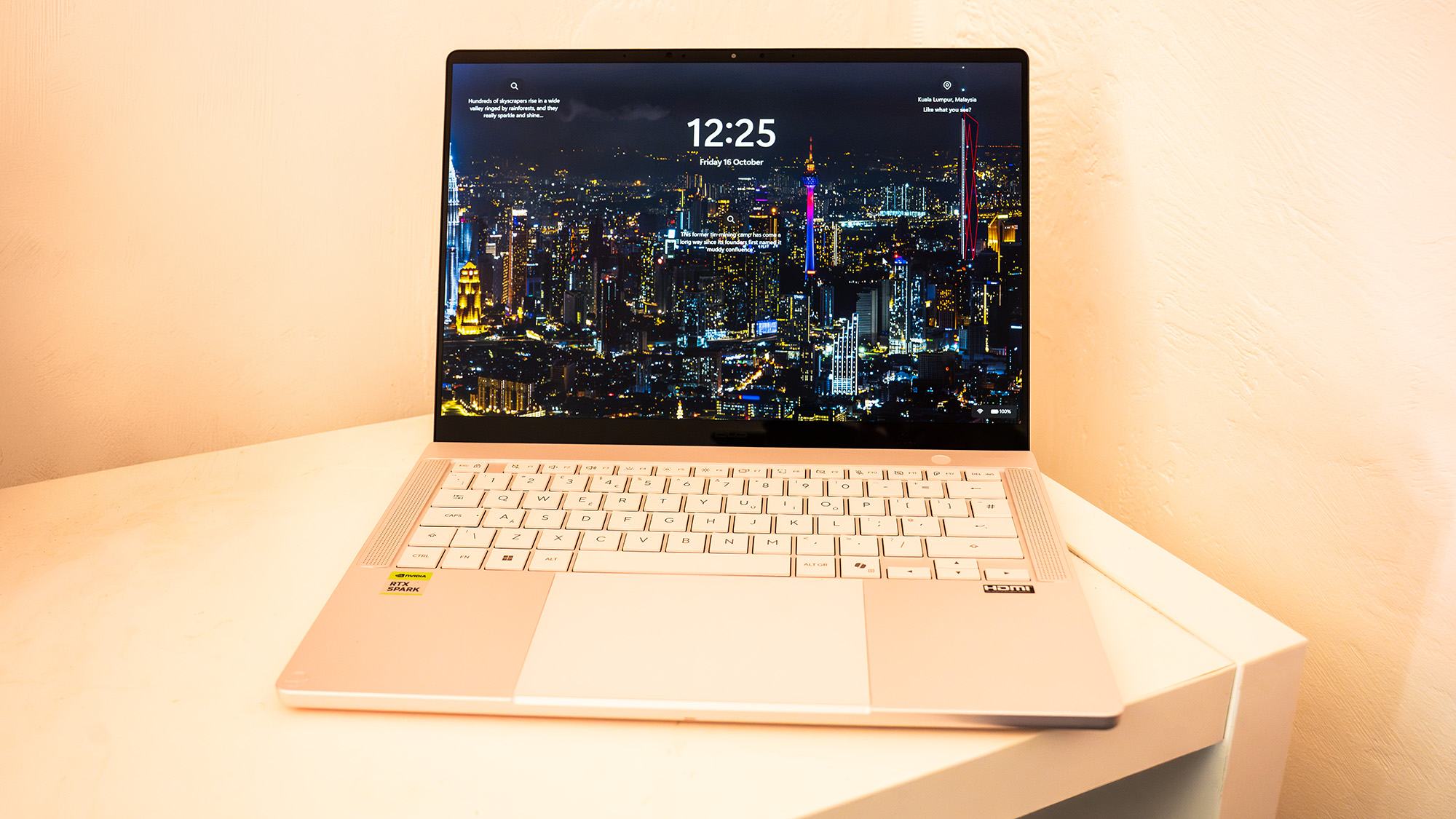
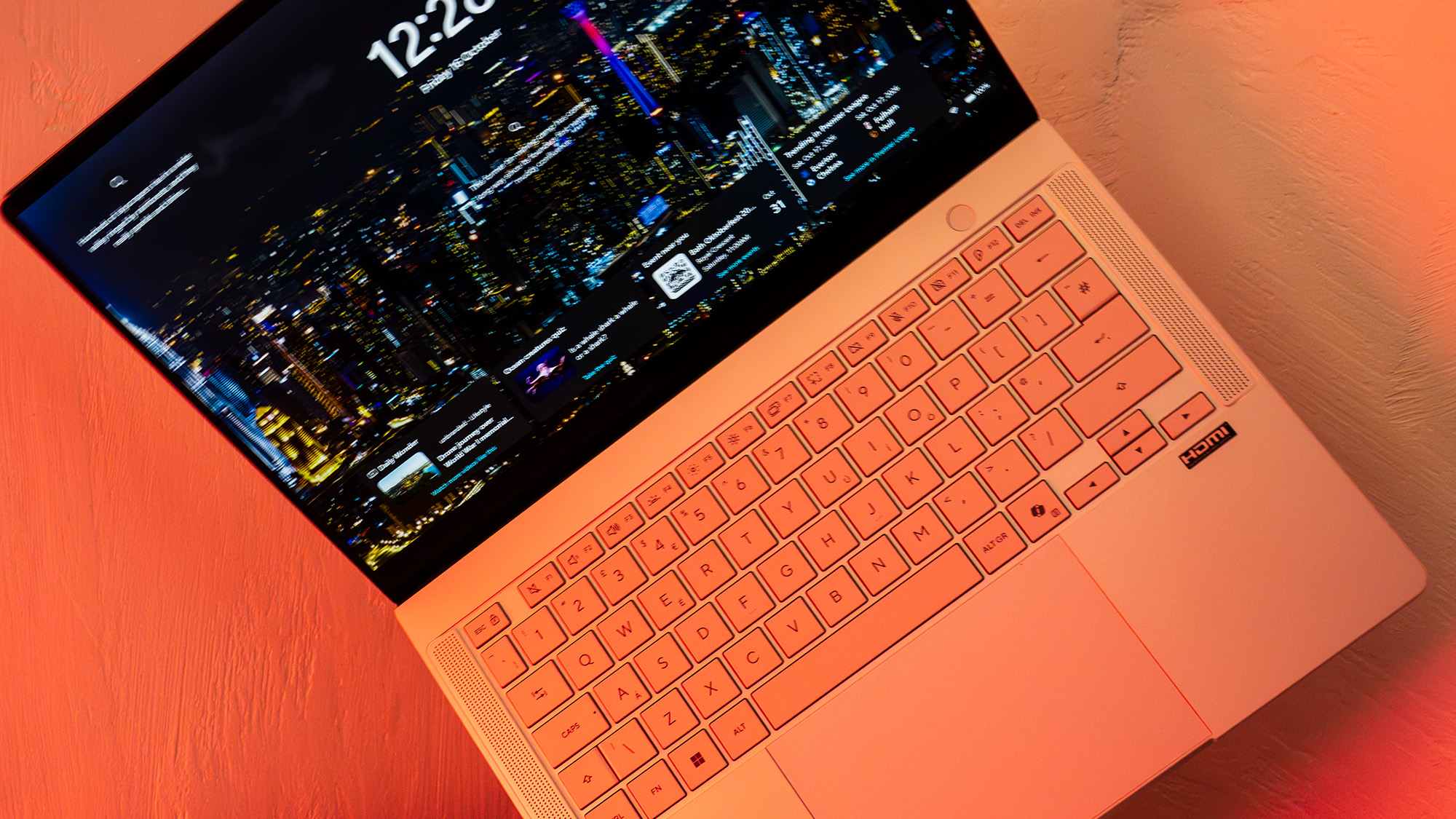
The ASUS ProArt P14 is the more compact sibling to the larger P16, and its design reflects a clear desire to capture the "pro-on-the-go" market. Weighing in at just 1.48kg with a thickness of 16mm, it is a remarkably portable machine that feels sturdy thanks to its high-quality metal shell. ASUS has opted for a minimalist aesthetic here; the loud "Republic of Gamers" styling of its other lines has been replaced by subtle ProArt branding and a sophisticated finish that leans more toward a matte magnesium look than the darker Space Grey of its competitors.
The tactile experience of the device is equally refined. The keyboard offers a surprising amount of travel for such a thin chassis, providing a more satisfying and "clicky" feedback than the relatively shallow keys found on the current MacBook Pro 14. Large speakers flank the keyboard, delivering clear, upward-firing audio that rounds out the premium feel of the build.