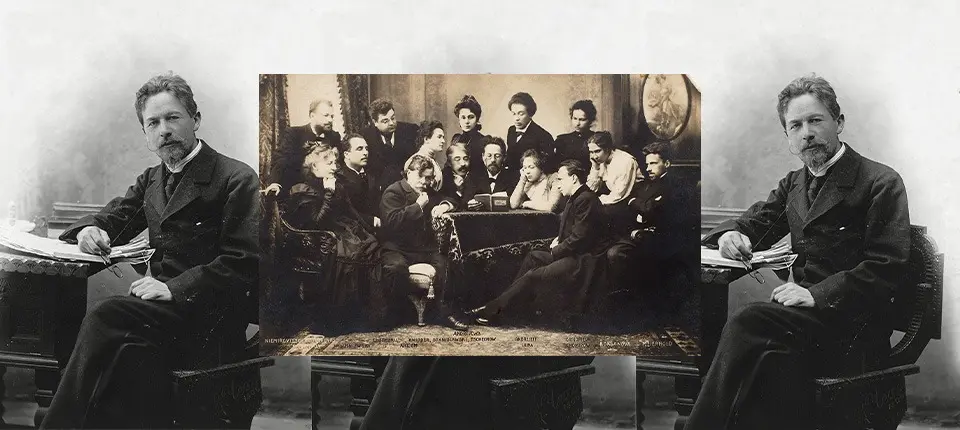
The history of literature is often written as a series of triumphs, but its most enduring lessons frequently begin in the depths of failure. On this day in 1896, Anton Chekhov’s The Seagull premiered at the Alexandrinsky Theatre in St. Petersburg. The production was a disaster of such proportions that the audience hissed at the stage, and Chekhov, devastated by the reception, famously retreated backstage and declared that he would never write another play, even if he lived to be seven hundred years old. Of course, Chekhov did not wait seven centuries to return to the stage; his eventual collaboration with the Moscow Art Theatre transformed The Seagull into a cornerstone of modern drama. This tension between immediate reception and lasting impact remains a central theme in the literary world, a sentiment reflected in the wide-ranging discussions currently shaping the "literary internet."
In the current landscape, literature serves not only as a record of artistic endeavor but as a vital tool for processing global crises and societal shifts. This week, the literary community has turned its attention toward the Middle East, specifically examining how the ongoing genocide in Gaza has fundamentally reshaped the region. This is not merely a political reckoning but a "reckoning with civilization itself," as writers and thinkers attempt to articulate the scale of loss and the shifting geopolitical realities that will define the coming decades. The role of the writer as a witness is further emphasized by Oksana Lutsyshyna, who has curated a list of essential Ukrainian literature. Through the works of Artur Dron, Andriy Lyubka, and Lena Lyagushonkova, Lutsyshyna highlights the "work of witnessing"—the necessity of documenting the human experience amidst the brutality of war and the struggle for national identity.
The intersection of history and personal narrative continues to be a fertile ground for new fiction and non-fiction alike. Adam Johnson recently engaged in a deep-dive conversation with Amitav Ghosh regarding Ghosh’s latest work, The Wayfinder. Their discussion explores the myriad ways a single story can be told, emphasizing the fluidity of narrative and the importance of perspective in historical storytelling. Similarly, Bonnie Garmus, the acclaimed author of Lessons in Chemistry, spoke with Jane Ciabattari about her new novel, Peck & Peck. Garmus’s latest venture is a coming-of-age story centered on poets and poetry, a departure that explores the internal lives of those who choose to live through verse. The craft of writing itself is further explored by Will Maclean, who offers a visceral take on the creative process by describing the necessity of "fucking up a notebook" to eventually produce a coherent novel.
The literary world is also grappling with the darker corners of history and the systemic forces that have shaped modern society. A recent exploration of medieval European witch hunts sheds light on the systemic slaughter of nonconformist women, a historical trauma that resonates with contemporary discussions of gender and power. In a more modern context, the legacy of the American civil rights movement is brought to the fore as Al Sharpton remembers his mentor, Jesse Jackson. Sharpton’s reflections, bolstered by insights from Anand Giridharadas, illustrate how "The Rev" has worked to shape narratives of justice in America, moving beyond mere protest to influence the very stories the nation tells about itself. This work of historical recovery is also seen in the story of Biddy Mason, the Black matriarch who helped build Los Angeles. Mason’s life, transitioning from enslavement to becoming a wealthy philanthropist and community leader, serves as a crucial corrective to the often-whitewashed history of the American West.