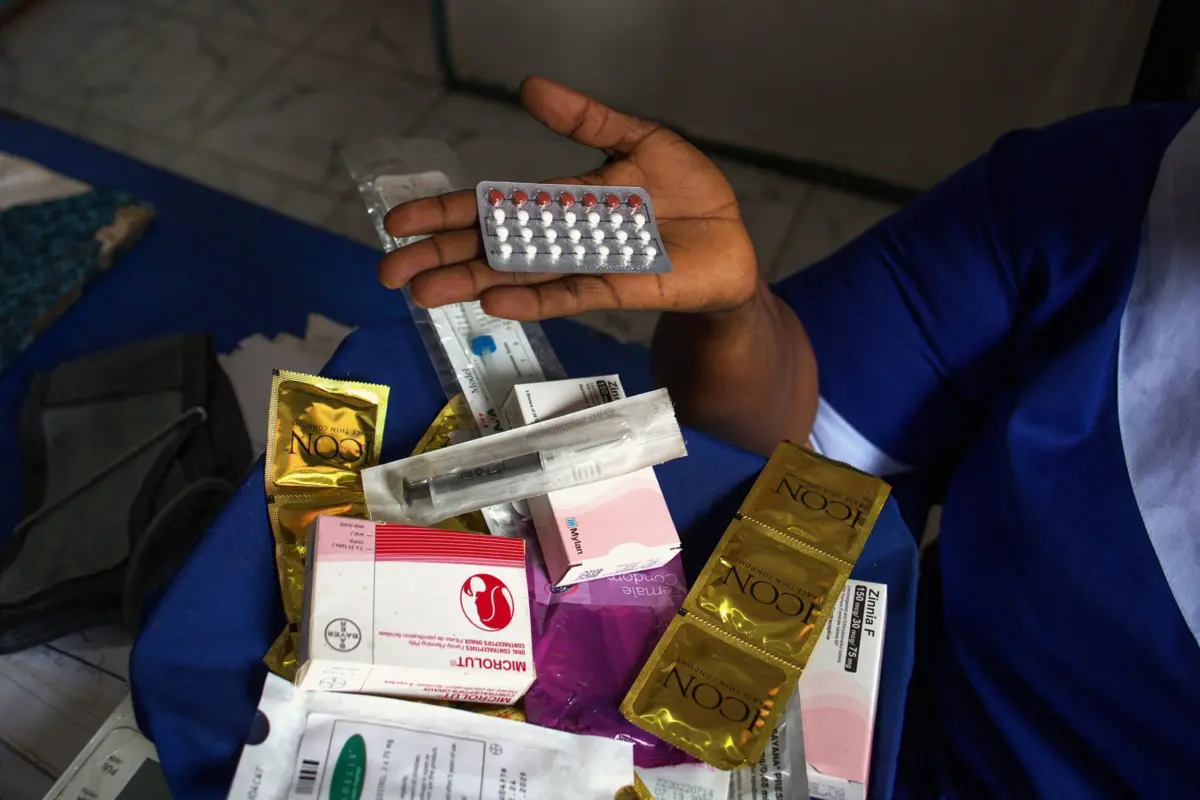
“No one will know, it becomes your own secret,” Nhedega said. She noted that even when there is an agreement with a partner to use protection, the weight of community stigma remains a daunting hurdle to overcome.
Foreign aid support is drying up
The mobile clinic in Epworth is operated by Population Services Zimbabwe (PSZ), an affiliate of MSI Reproductive Choices. Since 2021, this single caravan has provided more than 100,000 adolescents in Epworth and its surrounding farming communities with a range of services, including contraceptives, treatment for sexually transmitted infections, and vital reproductive health counseling.
Pester Siraha, the director of Population Services Zimbabwe, explained that these mobile units are essential for reaching vulnerable populations who cannot or will not visit traditional hospitals. However, the future of these services is now in jeopardy as international funding streams evaporate.
The organization recently suffered a major blow when it lost a five-year, $9 million grant that had been awarded in 2023. The funding was rescinded after the Trump administration in 2025 dismantled various foreign aid programs. According to the organization, over $6 million of that grant remained unspent when the plug was pulled.
In an attempt to stabilize its operations, PSZ turned to Swedish development funding. While this provided a temporary lifeline, that support also came to an abrupt end in August. The Swedish government made the decision to phase out development assistance to several countries, including Zimbabwe, Tanzania, Mozambique, Liberia, and Bolivia, in order to prioritize aid for Ukraine following the ongoing conflict there.
“We were quite excited when Sweden came in,” Siraha said. “Then, suddenly, boom, Sweden said they were leaving.”
Siraha warned that the withdrawal of these funds will almost certainly lead to an increase in unplanned pregnancies and a rise in unsafe abortions, which are a leading cause of maternal death in the region. The financial strain is so severe that the four-decade-old organization may be forced to shut down its outreach activities entirely, or potentially its entire country program.
While the Zimbabwean government has attempted to step in, the scale of the need is immense. Health Minister Douglas Mombeshora stated that Zimbabwe has spent approximately $6.3 million on purchasing contraceptives since 2022. The government has further pledged to allocate $2.25 million annually for contraceptives in 2026 and 2027. However, health advocates argue that government procurement is only one piece of the puzzle.
Stigma and consent barriers limit access
Even when contraceptives are physically present in a country, social and legal barriers often prevent them from reaching the hands of adolescent girls. Across Africa, the issue of parental consent remains a significant point of contention and confusion.
In neighboring Zambia, Inonge Wina Chinyama, the director at MSI Zambia, highlighted how uncertainty regarding consent laws can effectively block access for minors. She pointed out that the cultural expectation of parental involvement is often at odds with the reality of adolescent behavior.