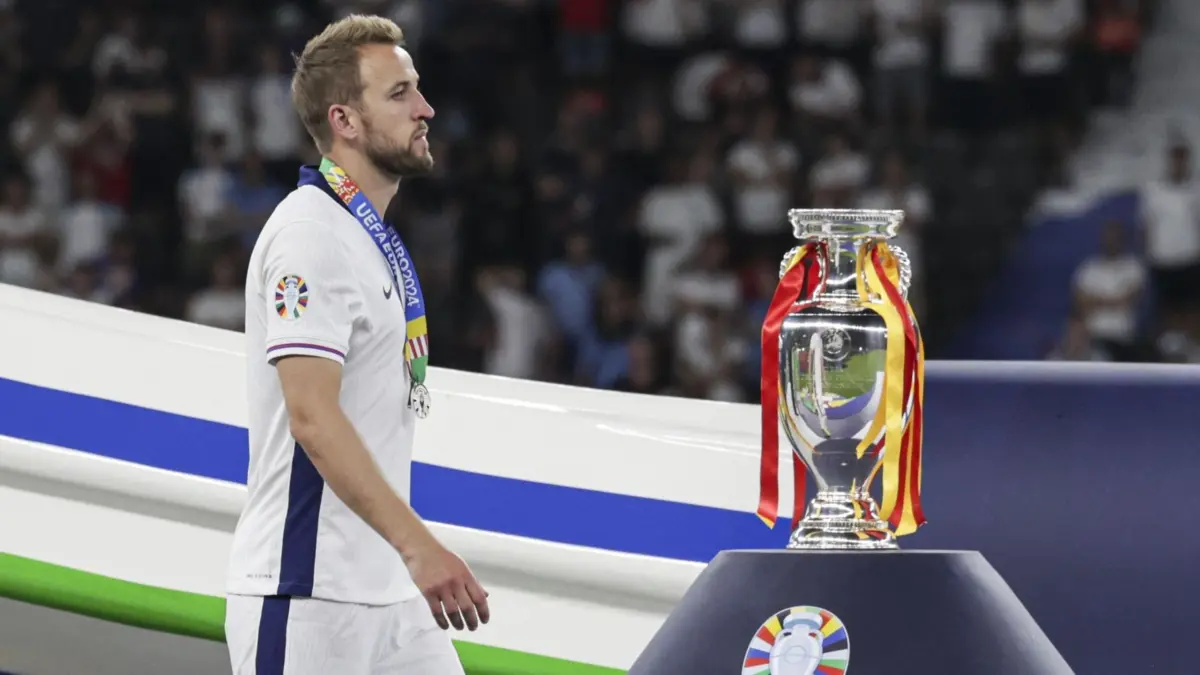
"I think with England now that is where we need to look," Kane added. "We are very close, we have been very close but ultimately, we don’t need to fear anyone. We just need to be ourselves in the biggest moments and hopefully get over the line."
Same questions continue to resurface – analysis
The trajectory of the England men’s national team over the past several years has undoubtedly been upward, but as they transition into a new era under Thomas Tuchel, the fundamental question remains unanswered: can this team learn to dominate possession and dictate play against the world’s best?
At Euro 2020, the historic round-of-16 victory over Germany at Wembley was hailed as a watershed moment. It was a rare tournament victory over an old rival, but critics were quick to point out that Germany was a superpower in transition, ranked outside the world’s top 10 at the time. When England faced a tactically sophisticated Italy in the final, they took an early lead through Luke Shaw but quickly surrendered the initiative, retreating into a defensive shell, giving up possession, and ultimately succumbing in a painful penalty shootout.
A similar pattern emerged at the 2022 World Cup in Qatar. England began the tournament with an expansive, free-flowing 6-2 demolition of Iran, showcasing a tactical fluidity that delighted fans. Yet, when confronted with world-class opposition in the quarter-finals, the old shortcomings returned. Despite matching France for long periods and arguably being the better side on the night, a missed penalty from Kane and the clinical, tournament-hardened know-how of Les Bleus saw England eliminated.
By the time Euro 2024 arrived, the Gareth Southgate era was reaching its natural conclusion. The team appeared fatigued and struggled to find tactical cohesion, relying heavily on moments of individual brilliance to paper over the cracks.
In the semi-final against the Netherlands, it took a magnificent, last-gasp strike from substitute Ollie Watkins to secure passage to the final. But with Kane struggling for peak physical fitness and the midfield unable to retain the ball, England were thoroughly outplayed in the final by a vibrant, technically superior Spain side that fully deserved their European crown.
With a flawless 2026 World Cup qualifying campaign under their belts and the appointment of a proven, elite tactical mind in Thomas Tuchel, many believed England were finally primed to break their trophy drought.
Yet, despite demonstrating immense resilience, grit, and tactical discipline in a hard-fought round-of-16 victory over Mexico, the same old vulnerabilities ultimately cost them against Argentina in the semi-finals.
The persistent inability to translate a squad packed with world-class, technically gifted individuals into a cohesive unit that can control the tempo of a football match remains England’s great unresolved dilemma.
Tuchel himself has acknowledged this challenge, suggesting that he may have to "embrace the chaos" of the traditional English game rather than trying to force the team into a rigid possession-based template. It is a sentiment echoed by winger Anthony Gordon, who has suggested that England might benefit from leaning into their natural, direct, and high-tempo heritage.
Whether Tuchel opts for tactical control or structured chaos, the Nations League opener against Spain at Wembley represents more than just three points. It is a vital examination of England’s identity, and a chance to prove they can finally stand toe-to-toe with the very best.