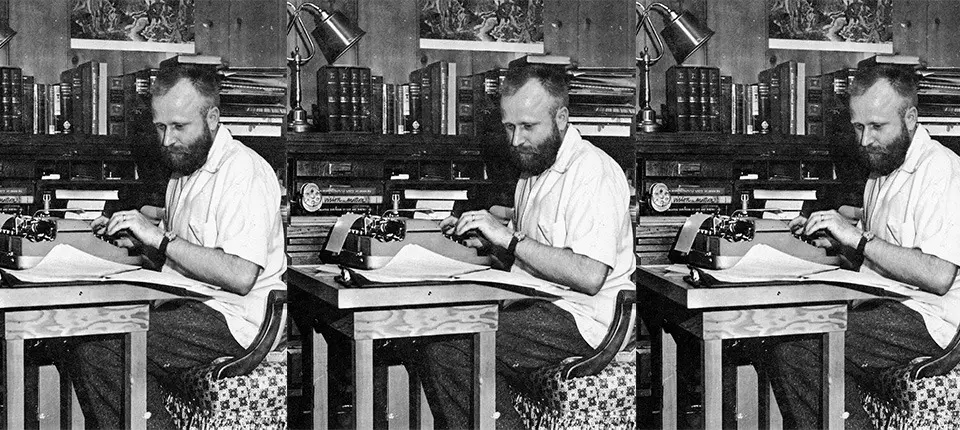
The impact of Frank Herbert is also visible in the works of those who followed him. From the sprawling space operas of Star Wars to the intricate world-building of modern fantasy and science fiction authors like George R.R. Martin and Kim Stanley Robinson, the DNA of Herbert’s writing is everywhere. He elevated science fiction from the realm of "bug-eyed monsters" and ray guns to a sophisticated literary medium capable of addressing the most profound questions of human existence. He proved that a story about the far future could be, in essence, a story about the present.
As Lit Hub Daily and other literary outlets celebrate Herbert’s birth, they also celebrate the enduring power of the written word to provoke thought and inspire change. Herbert was a man who looked at a sand dune and saw the history of a civilization. He looked at a politician and saw the potential for a catastrophe. He looked at the stars and saw the future of the human spirit. His ability to synthesize disparate fields of knowledge into a cohesive and gripping narrative is what makes him a permanent fixture in the literary canon.
The ongoing digital conversation surrounding Frank Herbert ensures that his ideas are not static relics of the past but living, breathing concepts that continue to evolve. In the comments sections of literary blogs, in the threads of social media, and in the classrooms where his books are taught, the dialogue continues. We discuss the ethics of the Bene Gesserit, the tragedy of the Atreides family, and the terrifying necessity of the "Golden Path." We do so because Herbert gave us a mirror in which to see our own world, distorted by the lens of the future but recognizable in its fundamental struggles.
Today, 106 years after his birth, Frank Herbert’s voice remains as clear and commanding as a "Voice" from the Dune universe. He taught us that "the mystery of life isn’t a problem to solve, but a reality to experience." In experiencing his reality—the harsh, beautiful, and complex universe he created—we are better equipped to face the mysteries of our own. The literary world remains indebted to the man from Tacoma who taught us to look at the world, and the universe, with eyes wide open to the complexities of the system.