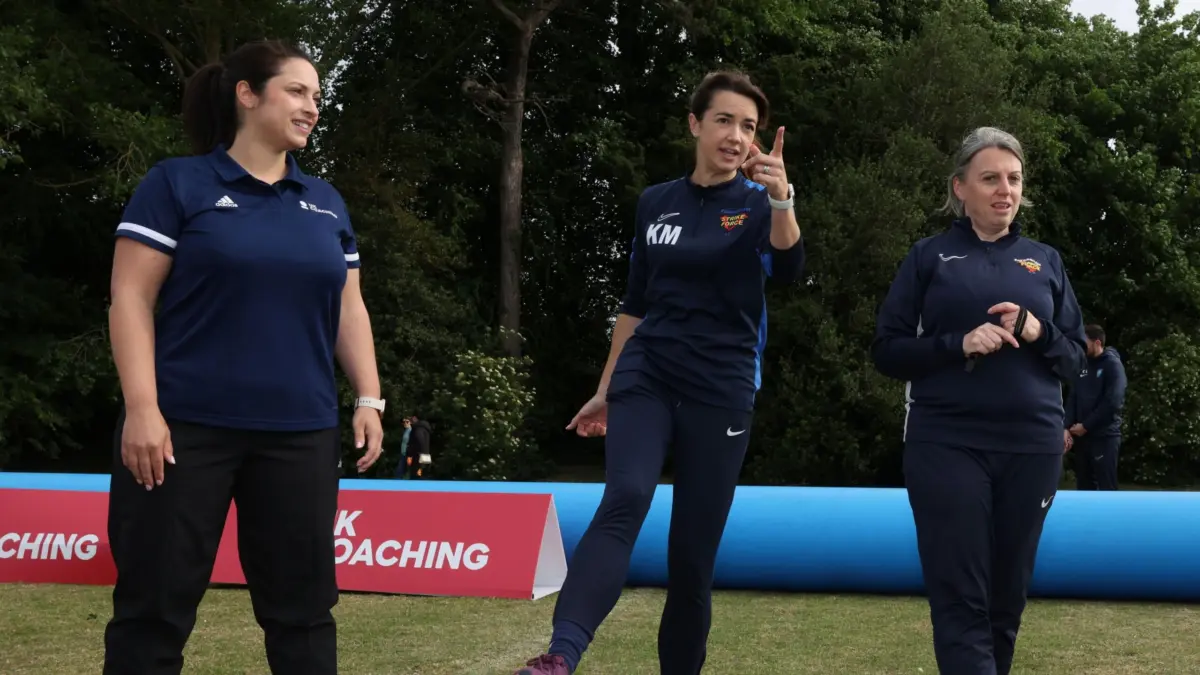
The paradox of modern women’s sport in the United Kingdom is stark. While the elite level enjoys unprecedented television coverage, record-breaking stadium attendances, and historic triumphs—such as the Lionesses’ European Championship victories and the Red Roses’ rugby dominance—a quiet crisis is unfolding behind the scenes. The women responsible for guiding and nurturing athletic talent are disappearing from the sidelines.
According to Emily Handyside, the head of Britain’s professional sports coach association, female coaches face an uphill battle that their male counterparts rarely experience. Despite the increased media exposure and public enthusiasm for women’s sports, Handyside asserts that female coaches "must work twice as hard as a man to be respected and credible."
This assertion is backed by troubling data. A recent study conducted by UK Coaching reveals a 6% decline in the overall number of female coaches across the country. The drop-off is even more pronounced at the foundational level of sport: there has been a 10% dip in the number of female volunteer coaches at the grassroots level. This decline severely impacts the pathways available in amateur sport, threatening to choke off the pipeline of female leadership before it can even reach the semi-professional or elite stages.
"When people imagine a coach, they imagine a man first, people expect a man," Handyside, a former Wales netball coach and current lead at UK Coaching, told BBC Sport. "These assumptions make people feel like they don’t belong there. Women must work twice as hard to be respected, to be credible."
The challenges are not merely psychological; they are systemic. Additional research has highlighted a range of deeply entrenched barriers that women coaches routinely face, including bullying, harassment, and unequal access to development opportunities.
The consequences of this deficit are felt most acutely by the young players themselves. New data released this week by the Bloomsbury Football Foundation, in association with the Football Association (FA), underscores the vital social and emotional role that female coaches play. The study found that half of all girls who play organised football would tell a female coach something they could not share with a parent or guardian. By contrast, only one in eight girls felt they could confide to the same degree in a male coach.
Despite this clear need for female mentors, only 7% of the people coaching grassroots football in England are women. This disconnect means that the vast majority of young female players are deprived of relatable role models. The Bloomsbury and FA study also revealed a stark participation gap: only 13% of teenage girls play organised football at least once a week, compared to 46% of boys. For the girls who do participate, just 49% are mostly or always coached by someone of their own gender, whereas 85% of boys are coached by a man.

While high-profile opportunities are slowly increasing at the very top of the professional pyramid, for the vast majority of women on the ground, the reality of coaching has remained stagnant and exclusionary.
‘Cost barriers are greater for women’
The elite level of women’s football offers a rare glimmer of structural progress, particularly within the Women’s Super League (WSL). In January 2023, only four of the 12 head coaches in the WSL were women. Today, the landscape has shifted significantly: eight out of 14 managers in the English top tier are women. This group includes the managers of all three newly promoted sides: Amy Merricks at Birmingham, Crystal Palace’s Jo Potter, and Karen Hills of Charlton Athletic.
This shift has been aided in part by international policy, such as a new FIFA quota mandating that women’s teams must employ either a female head coach or a female assistant coach.
However, beneath this elite tier, grassroots and amateur coaching remains a financial minefield. The barriers of cost and childcare prevent even former international players from pursuing coaching careers.
"That number is a shock," said former England international Fara Williams, speaking on the BBC’s Women’s Football Fallout programme regarding the declining coaching statistics.
Williams, one of the most decorated players in English football history, explained that the financial math of coaching qualifications simply does not add up for most women. "The cost to do B and A licences, and the salaries or opportunities you will get from that investment, it does not quite marry up. They are quite costly, those badges."
For Williams, the financial realities of post-playing life clashed directly with her coaching ambitions. "I tried it [the coaching pathway], it was not feasible to take up that opportunity. Some can take that risk, but our generation of players, we were not paid enough to go mortgage free, bills must be paid. I needed to do something that would pay the bills, and football coaching was not that."

During her playing career, Williams was highly active in developmental coaching, working with academy teams at Everton, Liverpool, and Reading. Yet transitioning that passion into a viable career proved impossible. "When you are playing you don’t have the opportunities to coach at a higher level, then when you come out the game you don’t have the money," she explained.
The financial hurdles are steep. The UEFA Pro Licence—the mandatory qualification required to manage at the highest level of English professional football—costs £14,000, with intake limited to just 24 places per cycle. Even lower-level qualifications present significant financial hurdles. A UEFA C licence, which represents the lowest professional certification level, costs £650. While subsidies exist, they are generally only accessible if the applicant is already actively affiliated with an FA-registered club, creating a classic chicken-and-egg dilemma for aspiring coaches trying to get their foot in the door.
Handyside acknowledges that these financial barriers are a universal challenge, but notes that they carry a heavier burden for women. "The top three barriers are the same for men and women, and cost was in there for both," she said. "It is seen as a bigger barrier for women because when you must work twice as hard, the risk and reward balance is more outmatched. If you are a female looking at that cost and think you will also be overstretched and under supported, that £650 will have more of an impact."
‘To get club support, you have to stay for years’
Handyside, who coached the Wales national netball team for four years before stepping down after the Commonwealth Games, is currently leading UK Coaching’s new Women in Coaching Plan. The initiative coincides with the organisation’s signing of the Brighton Plus Helsinki Declaration, an international treaty and framework designed to advance gender equality in global sport.
According to Handyside, reversing the downward trend will require direct government intervention and structural accountability. "I would love for there to be more mandates from government about coaching metrics, including retention as a performance indicator with funding attached to that," she stated.
While the drop in coaching numbers came as a shock to former elite players like Williams, it is a familiar reality for those working on the ground in local communities.
Zoe Conning balances her role as a coach at Manchester Laces, a community-focused club, with her day job as a disability access officer at Wolverhampton Wanderers. A UEFA B licence holder, Conning has spent five years coaching, which included a full-time professional spell with Macclesfield.

"There is an immense disconnect between top level and grassroot football," Conning told BBC Sport. She pointed out the structural catch-22 built into the qualification system: "For your B licence, you need another 12 months in coaching in an elite environment. How am I supposed to go to an elite club with no elite experience?"
While Conning was able to secure financial assistance to help cover the £1,250 cost of her UEFA B licence, she still had to personally fund her travel expenses to commute between Wolverhampton and Manchester to attend the course.
When it came to taking the next step—the UEFA A licence, which costs £4,150—the financial reality forced her to stop. The top-tier Pro Licence was entirely out of the question.
"Cost is definitely one of the major impacts," Conning said. "You can get bursaries and grants; but for the Pro licence, where is that sort of money coming from when you are at grassroots or in voluntary roles? It is not feasible. There is definitely more work that can be done in advertising bursaries and support; maybe something similar to student loans. Coaches simply must be better paid—so often it is voluntary or minimum wage. Anything government funded would be good."
‘People deserve respect and protection’
While financial strain affects coaches of all genders, the demands of family planning, pregnancy, and childcare disproportionately impact women.
Former England defender Anita Asante began her coaching journey immediately after retiring from her playing career, securing prominent roles including a coaching stint with Bristol City in the WSL 2 and working with the England Under-23 national team. Yet, speaking on the BBC’s Women’s Football Fallout, Asante explained how she was quickly forced to choose between her career and her family.
"For myself, the doors did open—I was fortunate to go into Bristol City and work with them, then with England Under-23s," Asante said. "But it became a choice for me; we have a young child at home, and for players so much of our playing career has been missing out on events and family—you want that time back."

Asante notes that the systemic lack of resources in coaching often exacerbates these personal pressures. "There are many young women who want to go into coaching but don’t have the support. Then when coaches get there, they are often under-resourced, so the job becomes less about coaching, and it takes a toll on people."
Some local clubs are beginning to recognise this issue and are actively trying to accommodate mothers. Handyside highlighted an initiative by Kent-based non-league club Faversham Town, which launched a targeted campaign designed specifically to bring mothers into coaching roles. However, such initiatives remain rare exceptions rather than the industry standard.
"What can be unique about a woman’s experience is the life stages—such as becoming a parent, as women carry the child," Handyside said. "It disproportionately affects women. We need job shares, more part-time coaching roles. If you need to step away for a while, you should not have to step away forever."
At the grassroots level, the lack of formal employment protection often leaves women vulnerable to being sidelined permanently once they start a family—a stark contrast to the elite level, where coaches are better protected by employment legislation.
"What has struck me at grassroots level is women being written off as soon as they have a family, which does not happen at elite level as much as they are protected by employment law," Handyside noted. "All coaches need to have agreements and contracts in place—if you need to step away, you should have guarantees where you can come back. People deserve a level of respect and protection at grassroots level."
‘This isn’t about blaming men’
The cultural perception of sport as a male-dominated environment remains a powerful deterrent, even in an era of unprecedented success for women’s national teams.
Conning recalled her own isolation while moving through the qualification system. "I have done a few coaching courses, and there has been one female coaching mentor," she said. "And on my B licence, it was 28 men taking the course, and three women. It is an intimidating environment to go into."

This imbalance persists on matchdays at the local level. "In our [Manchester Laces’] division, there are maybe a handful of female coaches. On a matchday there will be a male referee, male coaches; it can be intimidating."
Through the implementation of the Women in Coaching plan, Handyside and her colleagues at UK Coaching want to move beyond superficial representation and empty slogans.
"This is not ‘see it to be it’, that does not sit well with me," Handyside said. "We want to show that the sports sector really values women and wants them around."
For Handyside, resolving the coaching crisis is not about creating division, but about fundamentally restructuring the demanding, uncompromising nature of sporting environments. "This isn’t about blaming men; it is about the nature of high-performance sport—all or nothing. It is the culture, the stereotypes that exist."