WASHINGTON — In a move that has sent shockwaves through the halls of Congress and raised immediate questions regarding the future of U.S. foreign policy in Eastern Europe, President Donald Trump signed an executive order late Friday to place a hold on a comprehensive new sanctions package aimed at the Russian economy. The decision to pause the implementation of the law comes despite the President himself having signed the underlying legislation into effect just last month, and only two days before a critical deadline for its enforcement.
The President informed Congress that the suspension was necessary because it serves the "national interest." However, the timing of the order, issued late in the evening and posted to the White House website with little initial fanfare, has ignited a firestorm of criticism from across the political aisle, particularly among Democrats who view the move as a capitulation to Moscow at a time when the war in Ukraine continues to escalate.
The sanctions package, officially named after the late South Carolina Senator Lindsey Graham, was designed to be one of the most aggressive economic measures ever leveled against the Kremlin. Its primary objective was to rapidly choke off the financial resources that have fueled Russia’s ongoing invasion of Ukraine, a conflict that has now dragged on for more than four years. By targeting the core of Russia’s economic engine—its energy sector and financial institutions—the bill sought to force a diplomatic resolution by making the cost of the war unsustainable for President Vladimir Putin.
Sanctions were seen as part of Graham’s legacy
The legislation was deeply personal for many in the Senate. Lindsey Graham, a long-standing titan of the Republican Party and a close, albeit occasionally critical, ally of the President, had made the defense of Ukraine a cornerstone of his final years in office. Graham had only just returned from a high-profile visit to Kyiv when he unexpectedly passed away in July. In the wake of his death, his colleagues in both the House and Senate moved with rare bipartisan speed to pass the sanctions bill as a tribute to his legacy and his commitment to checking Russian expansionism.
The bill was co-drafted by Senator Richard Blumenthal, a Democrat from Connecticut, and received overwhelming support in both chambers. It was designed to hit Moscow where it would hurt most: by sanctioning high-ranking Russian officials, major banking institutions, and the "shadow fleet" of tankers that Russia has used to circumvent existing international energy restrictions. Perhaps most significantly, the law directed the President to impose tariffs of up to 100% on the top five global importers of Russian oil or natural gas. While it included exceptions for countries importing less than 15% of their gas from Russia—provided they were taking steps to reduce that dependency—the law was intended to create a global economic blockade.
When President Trump signed the bill last month, it was viewed as a rare moment of unity in a fractured Washington. However, Friday’s executive order has effectively neutralized the measure before it could take flight. The White House notification noted that a formal report explaining the decision had been submitted to Congress, though the administration did not immediately provide a public justification for why the sanctions would be detrimental to U.S. interests at this time.
Senator Blumenthal reacted sharply to the news, accusing the President of abandoning both the will of Congress and the nation’s international obligations. "These waivers have nothing to do with our national security, and everything to do with sucking up to Vladimir Putin," Blumenthal said in a scathing statement. He argued that the President was turning his back on "the majority of Americans, their representatives in both houses of Congress, and our European allies."
The criticism was echoed by Representative Don Beyer, a Democrat from Virginia, who noted on social media that he and several other lawmakers had anticipated such a pivot. Beyer, who had previously criticized the bill’s structure during its initial debate, called on his colleagues to "fix this flawed law to stop Trump from capitulating to Putin and ensure that it truly supports Ukraine."
Trump’s action follows announced diesel deal with Putin
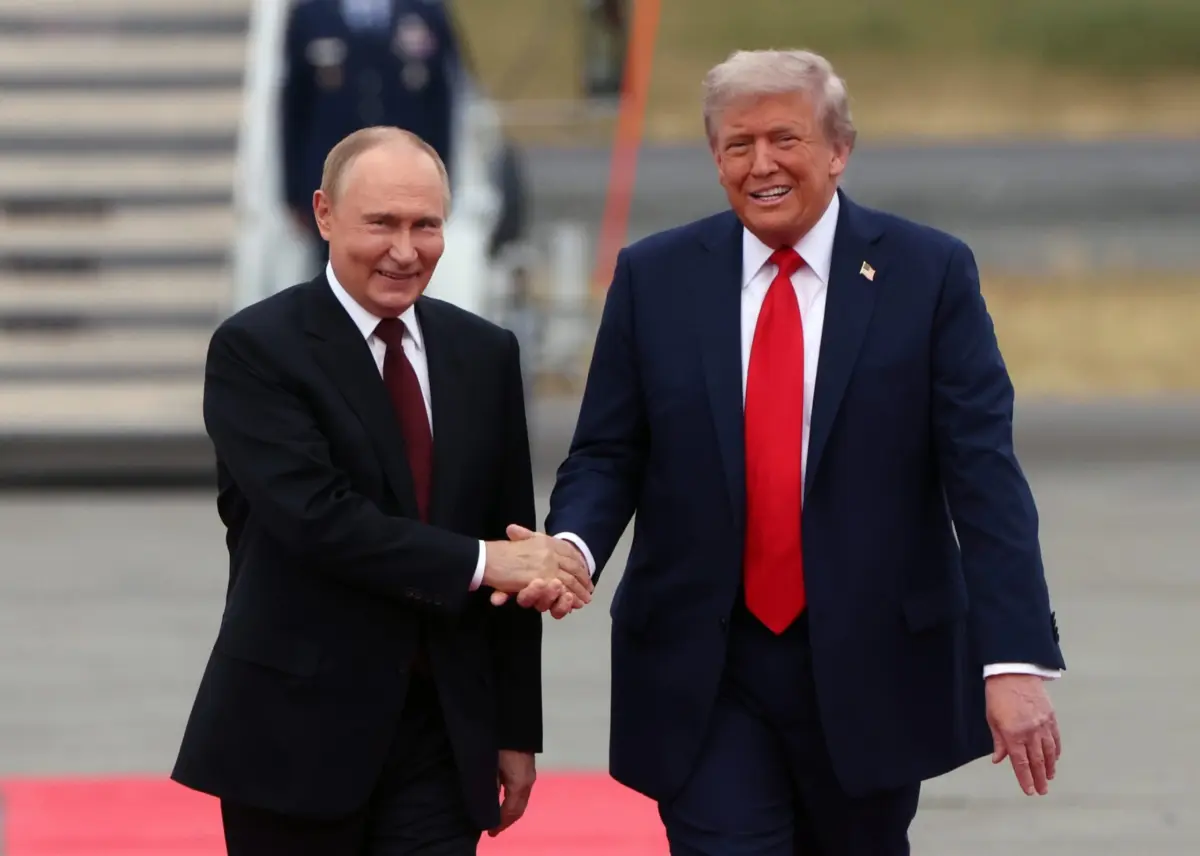
The decision to pause the sanctions does not exist in a vacuum. It follows a stunning announcement made by the President just last week, in which he revealed that the United States had reached an agreement to purchase hundreds of thousands of tons of diesel from Russia. According to the terms of that deal, Russia is set to supply 300,000 tons of diesel immediately, with an additional 500,000 tons scheduled for November and 1 million tons shortly thereafter.
The President has defended the diesel purchase as a pragmatic move to lower global energy prices, which have spiked significantly in recent months. However, the move has been pilloried by a broad spectrum of lawmakers who argue that purchasing Russian fuel directly subsidizes Putin’s military operations. Critics further point out that global fuel prices remain elevated largely due to the Trump administration’s ongoing war with Iran, suggesting that the Russian deal is a self-inflicted necessity born of the administration’s own Middle East policies.
The geopolitical friction is compounded by the President’s increasingly hostile rhetoric toward Ukrainian President Volodymyr Zelenskyy. In recent public appearances, Trump has lashed out at the Ukrainian leader, blaming him for the continuation of the war and suggesting that Zelenskyy has failed to negotiate a peace deal with Putin. This shift in tone has worried diplomats who see the U.S. as Ukraine’s most vital benefactor.
The domestic political stakes are equally high. The United States is less than a month away from midterm elections on November 3, and Republicans are fighting to maintain control of both the House and the Senate. President Trump’s approval ratings have hovered near historic lows, according to recent data. An AP-NORC Center for Public Affairs Research poll published on October 1 indicated that a majority of Americans disapprove of the President’s handling of the war in Iran and specifically blame his administration for the rising cost of living and energy prices.
This economic pressure appears to be driving the administration’s recent maneuvers. By pausing the sanctions and importing Russian diesel, the White House seems to be betting that lower prices at the pump will resonate more with voters than the nuances of Eastern European security.
The political fallout of the sanctions pause is also being felt in South Carolina, where the late Senator Graham’s seat is currently held by his sister, Darline Graham. Appointed to serve out the remainder of her brother’s term, Darline Graham is now running to hold the seat permanently in a high-stakes election against Democratic nominee Annie Andrews.
Darline Graham has found herself in a delicate position, attempting to honor her brother’s hawkish stance on Russia while remaining a steadfast ally of the President, who has endorsed her candidacy. Following the bill’s signing last month, she expressed pride in the achievement, stating, "I wish Lindsey were here to celebrate this historic day."
However, during a debate in Columbia earlier this week, she took a more measured tone regarding the President’s authority over the law’s implementation. While she expressed pride in helping pass the measure, she acknowledged that the ultimate decision-making power rests with the executive branch.
"It gives the president tools that he can use if he so chooses, to end the war through economic sanctions," Graham said during the debate. "So that’s up to him as to whether or not he wants to use it, or whether he wants to use something else, but I think the purpose of it is to bring down the gas prices and ultimately end the war. And when the war ends, gas prices will fall."
As the November 3 election approaches, the suspension of the Lindsey Graham Sanctions Act is likely to remain a central flashpoint in the national discourse. For proponents of the bill, the pause represents a missed opportunity to cripple the Russian war machine. For the administration, it is framed as a necessary step to stabilize a volatile domestic economy. Whether the "national interest" cited by the President will satisfy a skeptical Congress—and an even more skeptical electorate—remains to be seen as the report detailing the administration’s reasoning undergoes legislative scrutiny.